Wednesday, Aug 07, 2024

Planetary Picture of the Day

Week of July 29, 2024


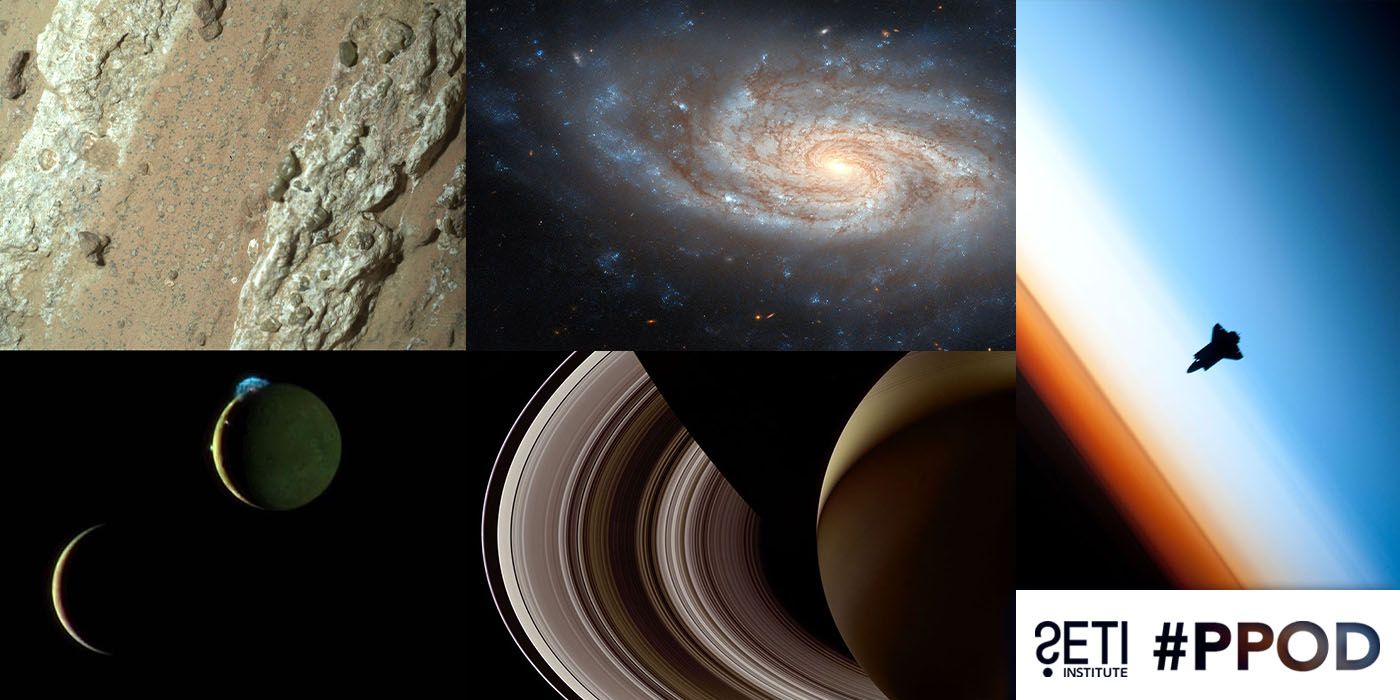
Enjoy classic imagery of Saturn, Jupiter's moons, and a Space Shuttle above Earth. Plus, interesting rocks recently found on Mars and a gorgeous galaxy from Hubble.

Monday, 29 July 2024
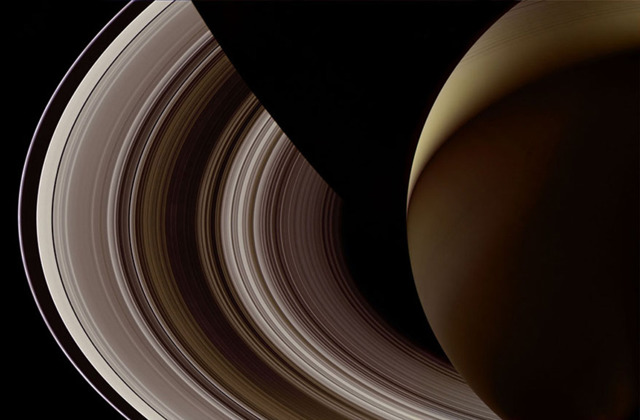

Credit: NASA / JPL-Caltech / Space Science Institute / CICLOPS / Michael Benson


The Lord of the Rings

NASA's Cassini spacecraft captured this fantastic night-side view of Saturn and its rings on October 28, 2006. Mosaic composite processed by Michael Benson (https://buff.ly/3A49ZPH).


Tuesday, 30 July 2024
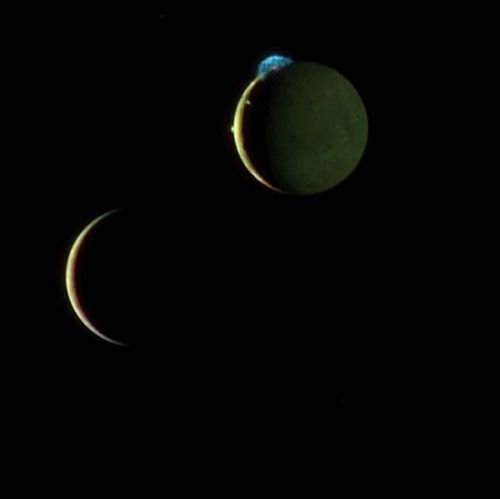

Credit: NASA/Johns Hopkins University Applied Physics Laboratory/Southwest Research Institute


Galilean Pair

This is a composite image of Jupiter's volcanic moon Io and Europa taken during a March 2, 2007 flyby by NASA's New Horizons spacecraft. Here Io (top) steals the show with its beautiful display of volcanic activity. Three volcanic plumes are visible. Most conspicuous is the enormous 300-kilometer (190-mile) high plume from the Tvashtar volcano at the 11 o'clock position on Io's disk.


Wednesday, 31 June 2024
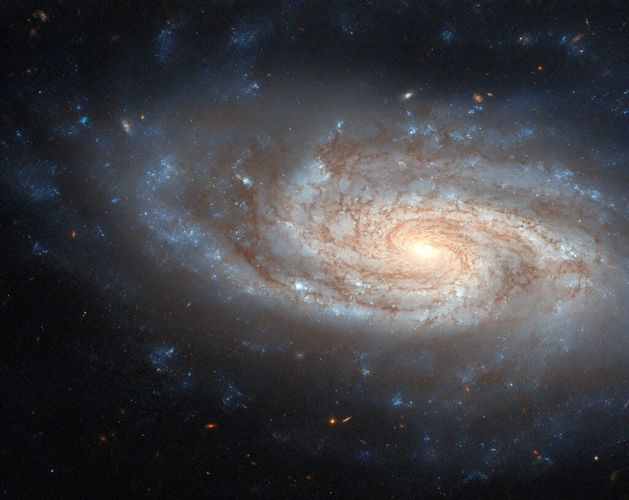

Credit: ESA/Hubble & NASA, C. Kilpatrick


Hubble Images a Classic Spiral

This NASA/ESA Hubble Space Telescope image is a wonderfully detailed snapshot of the spiral galaxy NGC 3430 that lies 100 million light-years from Earth in the constellation Leo Minor.


Thursday, 1 August 2024

Credit: NASA/JPL-Caltech/MSSS


Leopard Spots

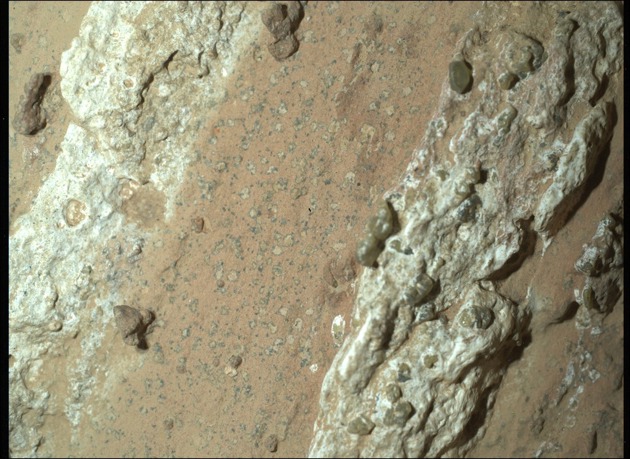
NASA's Perseverance Mars rover captured this image of a rock nicknamed "Cheyava Falls" on July 18, 2024. Running the length of the rock are large white calcium sulfate veins. Between those veins are bands of material whose reddish color suggests the presence of hematite, one of the minerals that gives Mars its distinctive rusty hue. Scientists are particularly interested in the millimeter-size, irregularly shaped light patches on the central reddish band (from lower left to upper right of the image) that are surrounded by a thin ring of dark material, akin to leopard spots. Spotting of this type on sedimentary terrestrial rocks can occur when chemical reactions involving hematite turn the rock from red to white. Those reactions can also release iron and phosphate, possibly causing the black halos to form, and they can be an energy source for microbes, hence the association between such features and microbes in a terrestrial setting.


Friday, 2 August 2024

Credit: NASA


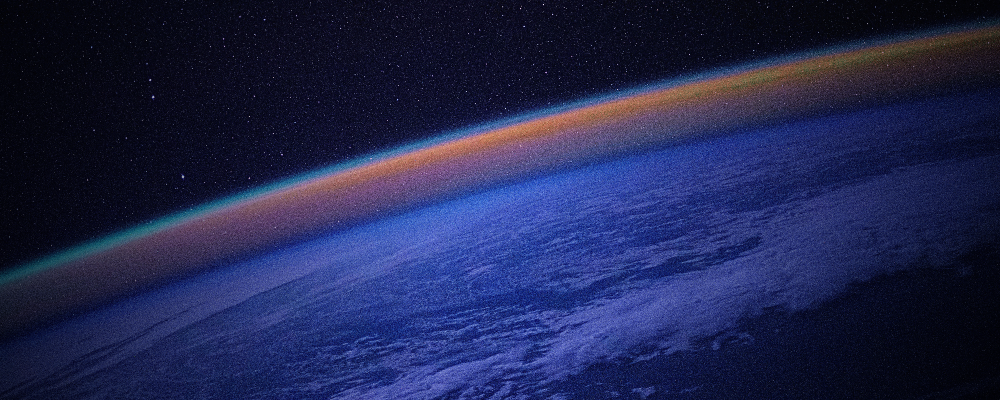
Shuttle Silhouette

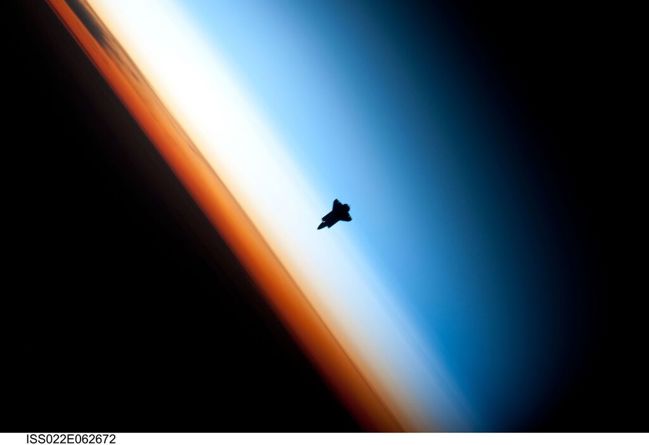
Space Shuttle Endeavour approaches the ISS on 10 February 2010 on its mission to install its primary payloads, the Tranquility Node-3 module and Cupola, the European-built observatory module.


News

Related News

Featured Image
Jun 3, 2026
Planetary Picture of the Day - Week of May 25, 2026
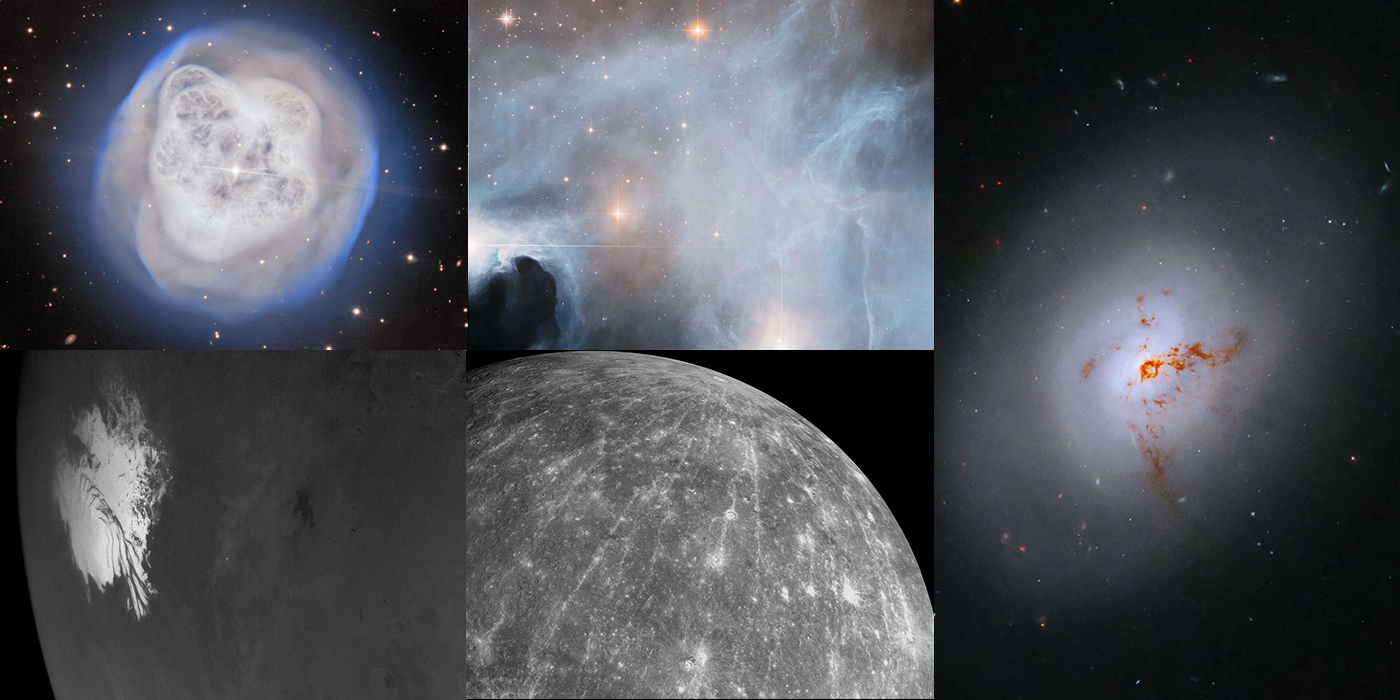
This week's images journeyed from the shimmering Crystal Ball Nebula to the icy south pole of Mars, highlighting beauty and change across our solar system and beyond. The collection also captured stars being born in a ghostly nebula, the dramatic rays of Mercury’s Hokusai Crater, and a distant galaxy caught in transition—offering a striking look at cosmic evolution across space and time. #PPOD
Featured Image
May 27, 2026
Planetary Picture of the Day - Week of May 18, 2026
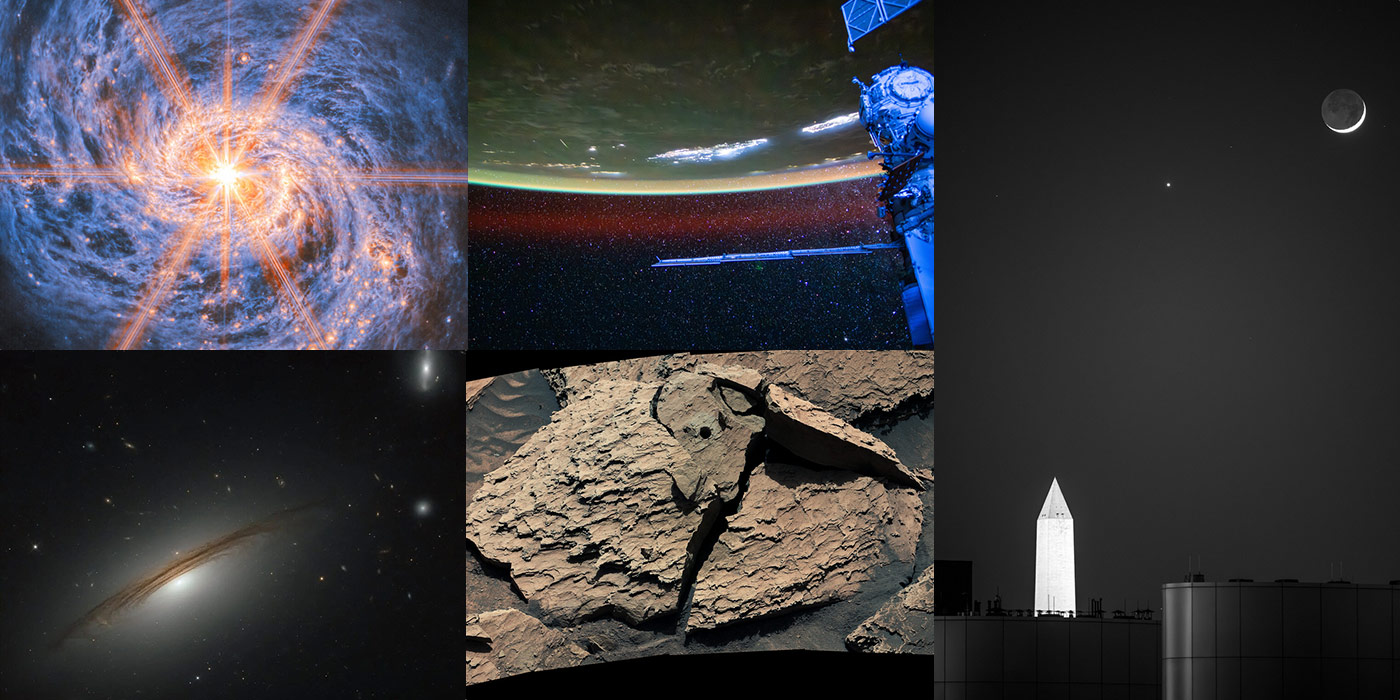
Moments both fleeting and immense—from a Moon–Venus conjunction over Washington, D.C. to a meteor streaking through Earth’s atmosphere as seen from the International Space Station. These images also spanned the cosmic scale, featuring a massive hybrid galaxy, a stubborn rock sampled by the Curiosity rover on Mars, and a stunning mid-infrared view of Messier 77 from JWST. #PPOD
Featured Image
May 21, 2026
Planetary Picture of the Day - Week of May 11, 2026
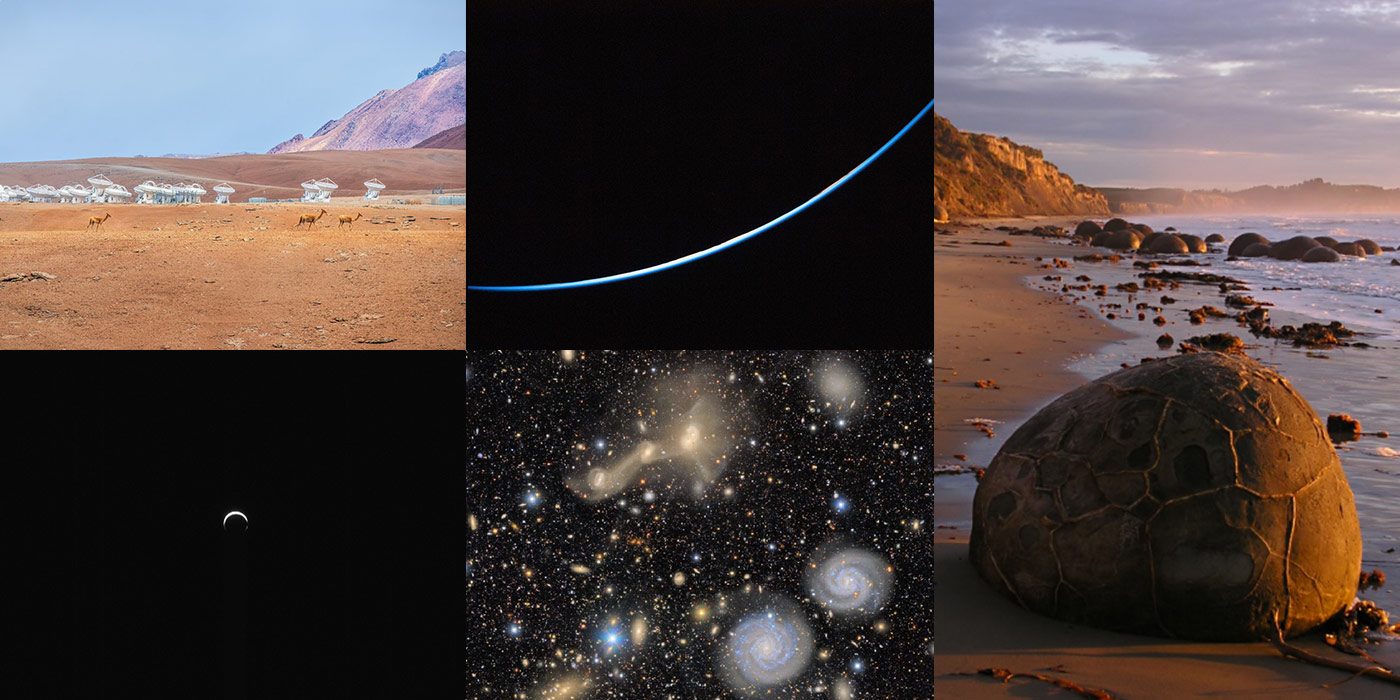
Where the round things are: From spherical boulders and circular radio telescope dishes to the curve of our blue marble, distant Mars, and far-away spiral galaxies, the universe comes back to circles. #PPOD
Featured Image
May 13, 2026
Planetary Picture of the Day - Week of May 04, 2026
From blooming tulip fields in the Netherlands to the glowing shell of the Bubble Nebula, last week’s PPOD images celebrated color and contrast across Earth, the Moon, and deep space. The collection also highlighted exploration and change—from unusual rocks studied by Perseverance rover on Mars to dramatic lunar shadows captured by Artemis II and the soft glow of May’s Flower Moon. #PPOD
Featured Image
May 6, 2026
Planetary Picture of the Day - Week of April 27, 2026
Dark and light play together in this week's photos, as we examine ash spreading across Mars over decades, night and day on the Moon, and the interplay of colors in a distant nebula. #PPOD
Featured Image
Apr 29, 2026
Planetary Picture of the Day - Week of April 20, 2026
This week's planetary images took us from the fractured ice of Europa and the shadowed edge of the Moon to a fiery-looking sunset cloud glowing above Earth, captured from the International Space Station. They also revisited landmark discoveries and changing worlds, from the first images revealing Charon to dark volcanic ash slowly spreading across Mars's surface. #PPOD
Research

Related Projects

Featured Image
SkyMapper • SETI • Citizen Science • Astronomy
SkyMapper: Expanding Access to Real-time Astronomy Through a Global Astronomical Network
SkyMapper and the SETI Institute are connecting educators, students and the public to live astronomical observations through a distributed astronomical network. #SkyMapper #SETI #Citizen Science #Astronomy
Featured Image
VPL
Virtual Planetary Laboratory
How can we best assess whether an exoplanet supports life? #VPL
Featured Image
Discovery and Futures Lab
What happens if life beyond Earth is discovered? The Discovery and Futures Lab at the SETI Institute fosters novel and anticipatory research at the intersection of science, society, our planet, and the search for life beyond Earth.  #Discovery and Futures Lab
Support Us

Support the
SETI Institute

Scientists are getting closer in their search for life beyond earth. But with limited federal funding for the search for extraterrestrial intelligence, supporters are the reason cutting-edge scientists can keep their eyes on the sky.