



Science is fantastic, and this week showcases wonders both planetary and astrophysical. We start with new images from the VLT and JWST of a supernova remnant and a nebula, respectively. Then, we examine a striking structure on Mars and the birth of a distant planetary system. Finally, we present a short video of the closest images ever taken of the Sun.
Monday, 14 July 2025
Double-Detonation Supernova
This image, taken with ESO’s Very Large Telescope (VLT), shows the supernova remnant SNR 0509-67.5. These are the expanding remains of a star that exploded hundreds of years ago in a double-detonation – the first photographic evidence that stars can die with two blasts.
The data were captured with the Multi-Unit Spectroscopic Explorer (MUSE) instrument at the VLT. MUSE allows astronomers to map the distribution of different chemical elements, displayed here in different colours. Calcium is shown in blue, and it is arranged in two concentric shells. These two layers indicate that the now-dead star exploded with a double-detonation. Hydrogen (H alpha) is shown in orange.
Tuesday, 15 July 2025
Cat's Paw
NASA’s JWST team released this image of the Cat’s Paw Nebula on July 10, 2025, in honor of the telescope’s third anniversary. JWST's NIRCam (Near-Infrared Camera) revealed never-before-seen structural details and features: Massive young stars carve away at nearby gas and dust. At the same time, their bright starlight produces a bright nebulous glow represented in blue. As a consequence of these massive stars’ lively behavior, the local star formation process will eventually come to a stop.
Wednesday, 16 July 2025
Hebes Chasma Mesa
The details of the central mesa inside Hebes Chasma on Mars are seen in close-up detail in this perspective view taken using ESA's Mars Express. A horseshoe-shaped chunk has been removed from one side of the mound (left in this image); the material has slumped down onto the valley floor below. A dark patch appears to pool like spilled ink across the debris. It is most likely loose material that has slid down from an intermediate layer onto the walls. Melted ice could have played a role in weakening the rocks, creating a flow-like appearance.
Along the side of the mound, fine horizontal layering is seen. The layers likely comprise a mix of wind-blown dust and ancient lake sediments, along with remnants of the older plateau.
Thursday, 17 July 2025
Dawn of a New Stellar System
This is HOPS-315, a baby star where astronomers have observed evidence for the earliest stages of planet formation. The image was taken with the Atacama Large Millimeter/submillimeter Array (ALMA). Together with data from JWST, these observations show that hot minerals are beginning to solidify.
In orange, we see the distribution of carbon monoxide, blowing away from the star in a butterfly-shaped wind. In blue, we see a narrow jet of silicon monoxide, also beaming away from the star. These gaseous winds and jets are common around baby stars like HOPS-315.
Together, the ALMA and JWST observations indicate that, in addition to these features, there is also a disc of gaseous silicon monoxide around the star that is condensing into solid silicates– the first stages of planetary formation.
Credit: NASA/Johns Hopkins APL/Naval Research Lab
Friday, 18 July 2025
Closest-Ever Images to Sun
This video, made from images taken by Parker Solar Probe’s WISPR instrument during its record-breaking flyby of the Sun on Dec. 25, 2024, shows the solar wind racing out from the Sun’s outer atmosphere, the corona.
News
Related News
Planetary Picture of the Day - Week of May 25, 2026
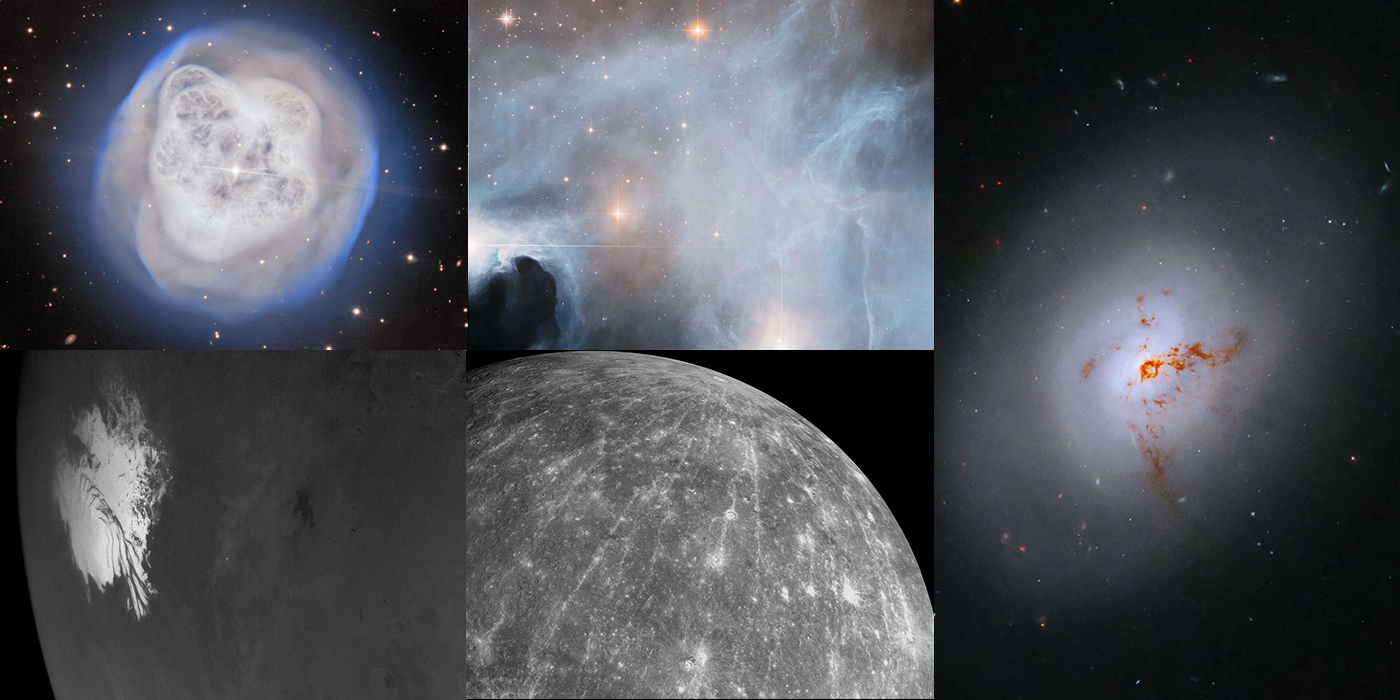
This week's images journeyed from the shimmering Crystal Ball Nebula to the icy south pole of Mars, highlighting beauty and change across our solar system and beyond. The collection also captured stars being born in a ghostly nebula, the dramatic rays of Mercury’s Hokusai Crater, and a distant galaxy caught in transition—offering a striking look at cosmic evolution across space and time. #PPOD
Planetary Picture of the Day - Week of May 18, 2026
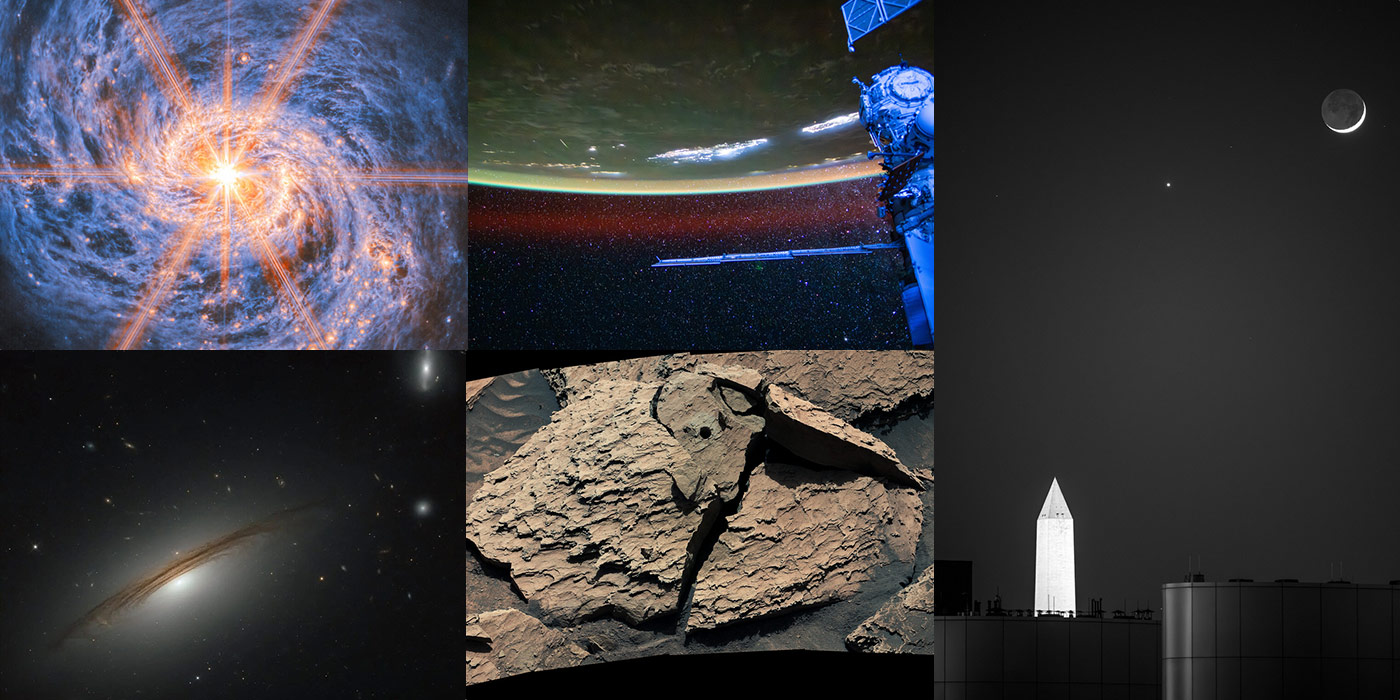
Moments both fleeting and immense—from a Moon–Venus conjunction over Washington, D.C. to a meteor streaking through Earth’s atmosphere as seen from the International Space Station. These images also spanned the cosmic scale, featuring a massive hybrid galaxy, a stubborn rock sampled by the Curiosity rover on Mars, and a stunning mid-infrared view of Messier 77 from JWST. #PPOD
Planetary Picture of the Day - Week of May 11, 2026
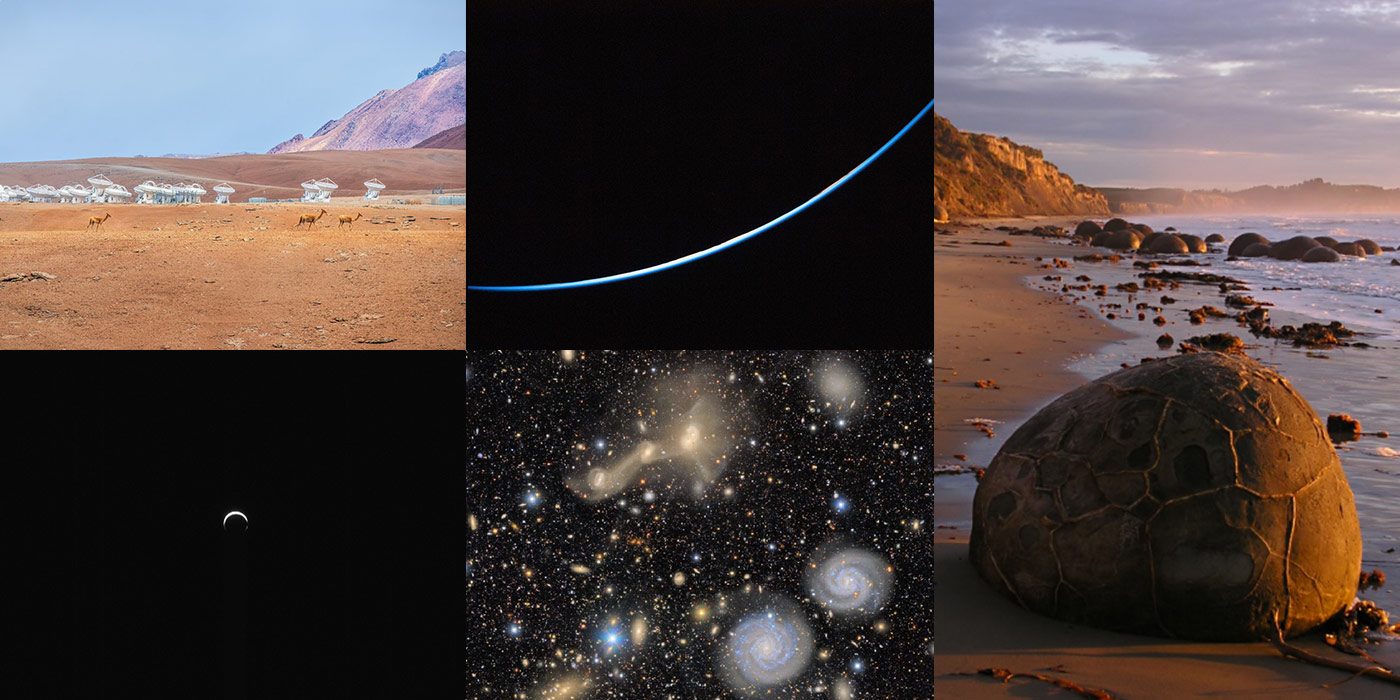
Where the round things are: From spherical boulders and circular radio telescope dishes to the curve of our blue marble, distant Mars, and far-away spiral galaxies, the universe comes back to circles. #PPOD
Planetary Picture of the Day - Week of May 04, 2026
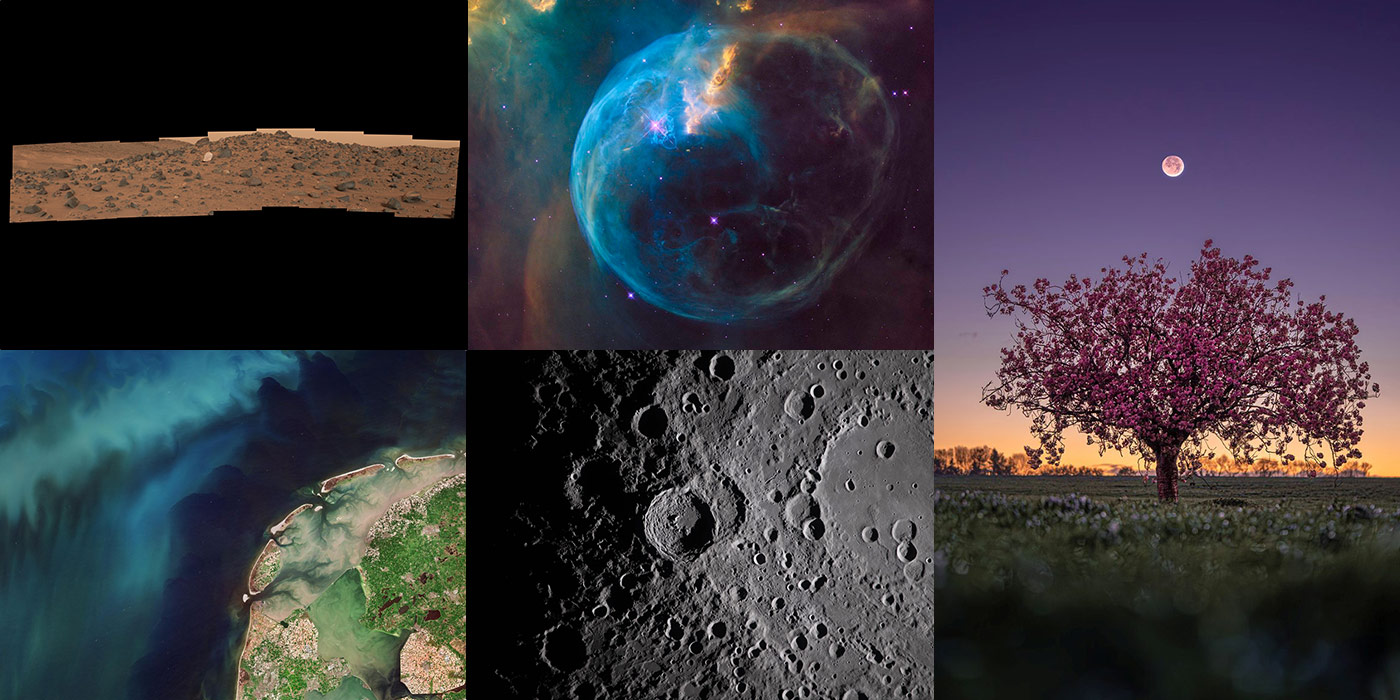
From blooming tulip fields in the Netherlands to the glowing shell of the Bubble Nebula, last week’s PPOD images celebrated color and contrast across Earth, the Moon, and deep space. The collection also highlighted exploration and change—from unusual rocks studied by Perseverance rover on Mars to dramatic lunar shadows captured by Artemis II and the soft glow of May’s Flower Moon. #PPOD
Planetary Picture of the Day - Week of April 27, 2026
Dark and light play together in this week's photos, as we examine ash spreading across Mars over decades, night and day on the Moon, and the interplay of colors in a distant nebula. #PPOD
Planetary Picture of the Day - Week of April 20, 2026
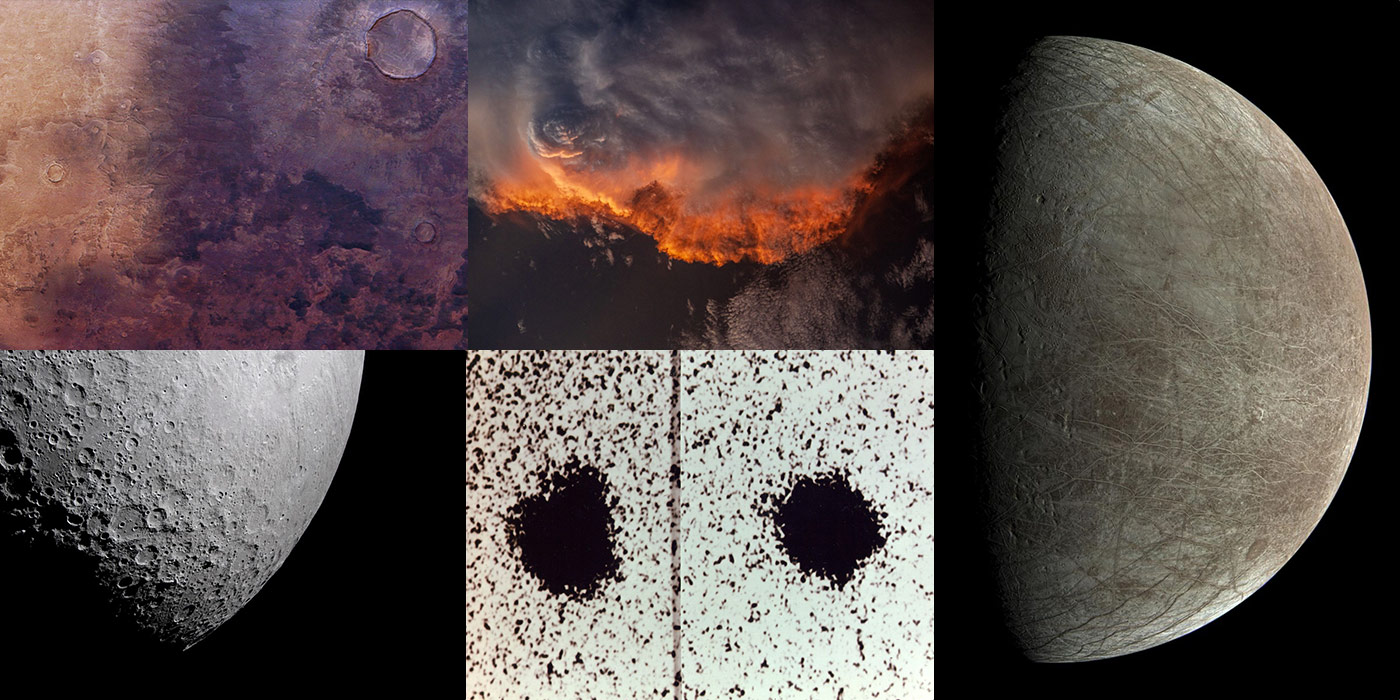
This week's planetary images took us from the fractured ice of Europa and the shadowed edge of the Moon to a fiery-looking sunset cloud glowing above Earth, captured from the International Space Station. They also revisited landmark discoveries and changing worlds, from the first images revealing Charon to dark volcanic ash slowly spreading across Mars's surface. #PPODResearch
Related Projects
SkyMapper: Expanding Access to Real-time Astronomy Through a Global Astronomical Network
SkyMapper and the SETI Institute are connecting educators, students and the public to live astronomical observations through a distributed astronomical network. #SkyMapper #SETI #Citizen Science #Astronomy
Virtual Planetary Laboratory
How can we best assess whether an exoplanet supports life? #VPL
Discovery and Futures Lab
What happens if life beyond Earth is discovered? The Discovery and Futures Lab at the SETI Institute fosters novel and anticipatory research at the intersection of science, society, our planet, and the search for life beyond Earth. #Discovery and Futures LabSupport the
SETI Institute
Scientists are getting closer in their search for life beyond earth. But with limited federal funding for the search for extraterrestrial intelligence, supporters are the reason cutting-edge scientists can keep their eyes on the sky.