




Monday, 16 February 2026
Dusty Water Ice in Mars’ Terra Sirenum
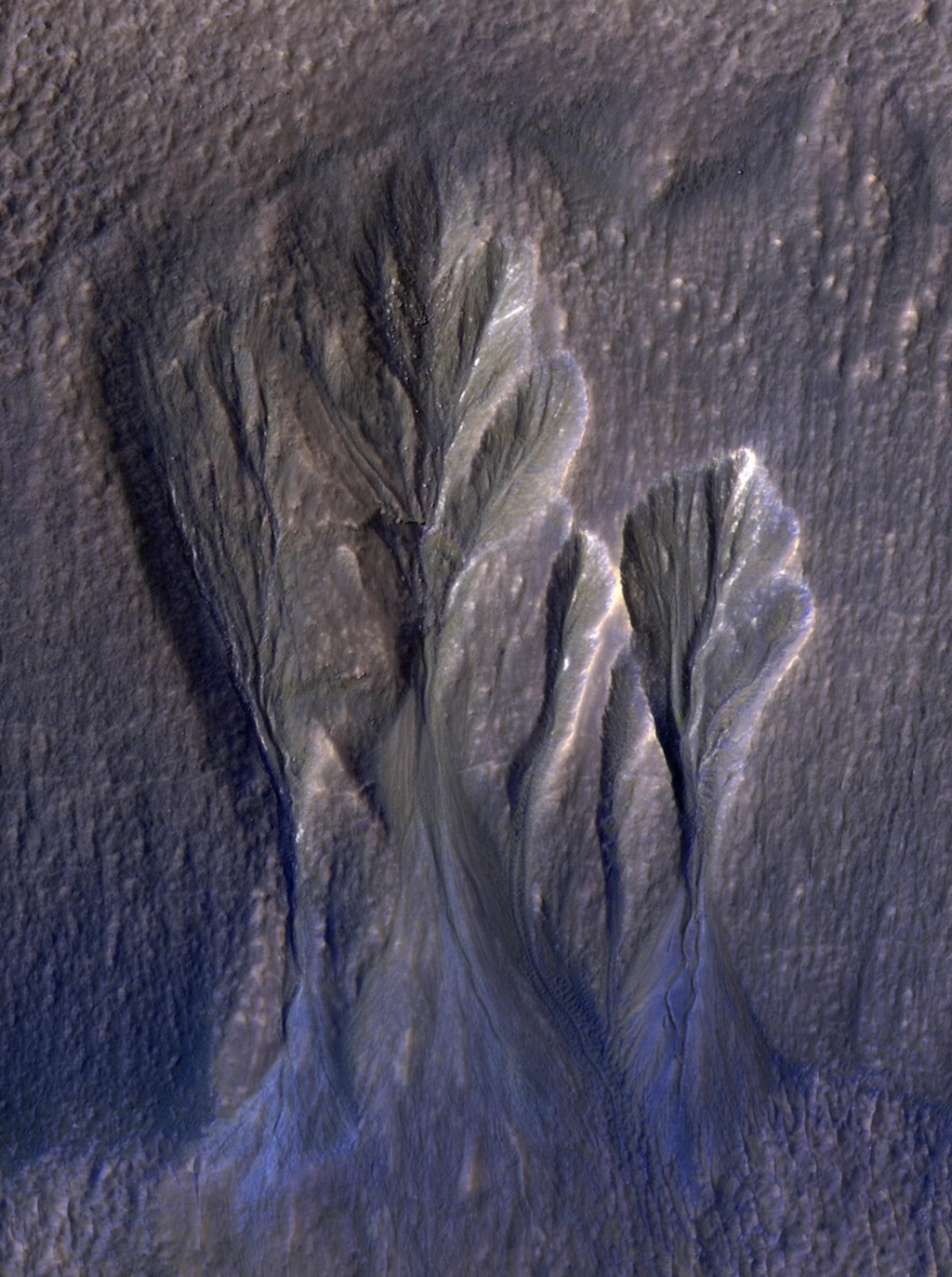
This image from NASA's Mars Reconnaissance Orbiter (MRO) shows white material believed to be dusty water ice lining the edges of Martian gullies in a region named Terra Sirenum. Scientists believe dust particles within this ice act similarly to dust that falls onto glaciers on Earth, warming up in sunlight and causing subsurface pockets of meltwater to form.
This enhanced-color image was captured by MRO's HiRISE (High-Resolution Imaging Science Experiment) camera on Dec. 25, 2016.
The blue color at the bottom of the gullies is likely coarse sand (not ice); the hue would not actually be perceptible to the human eye. HiRISE can detect this color by looking at the scene in far-infrared wavelengths.
Tuesday, 17 February 2026
Stellar Surface Bubbles
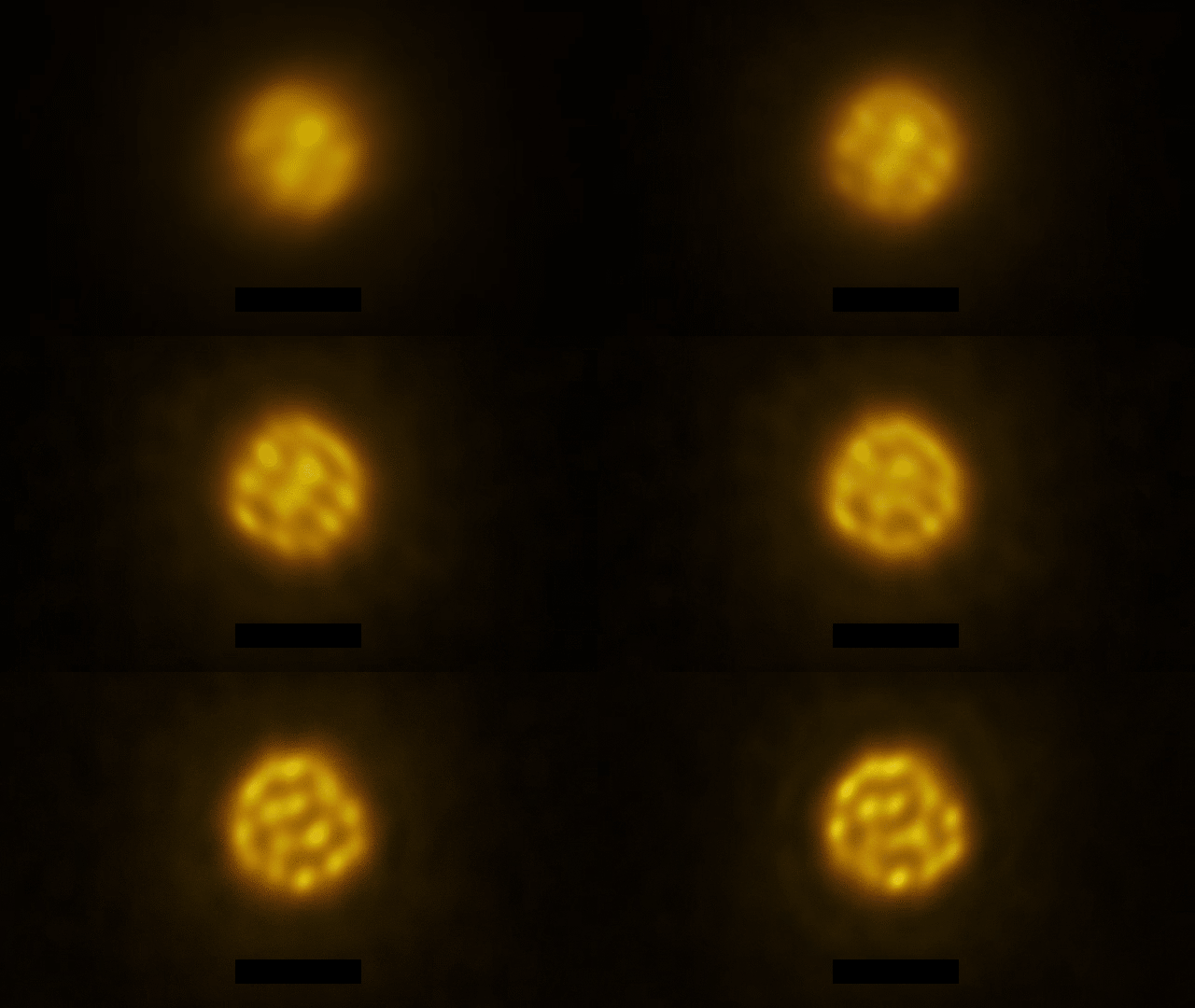
Astronomers have captured images of a star other than the Sun in enough detail to track the motion of bubbling gas on its surface. The images of the star R Doradus were obtained with the Atacama Large Millimeter/submillimeter Array (ALMA) in July and August 2023. This video shows a time-lapse of the star’s surface, where giant, hot bubbles of gas — 75 times the size of the Sun — are seen appearing on the surface and sinking back into the star’s interior. All images featured in this video are real images taken with ALMA.
Wednesday, 18 February 2026
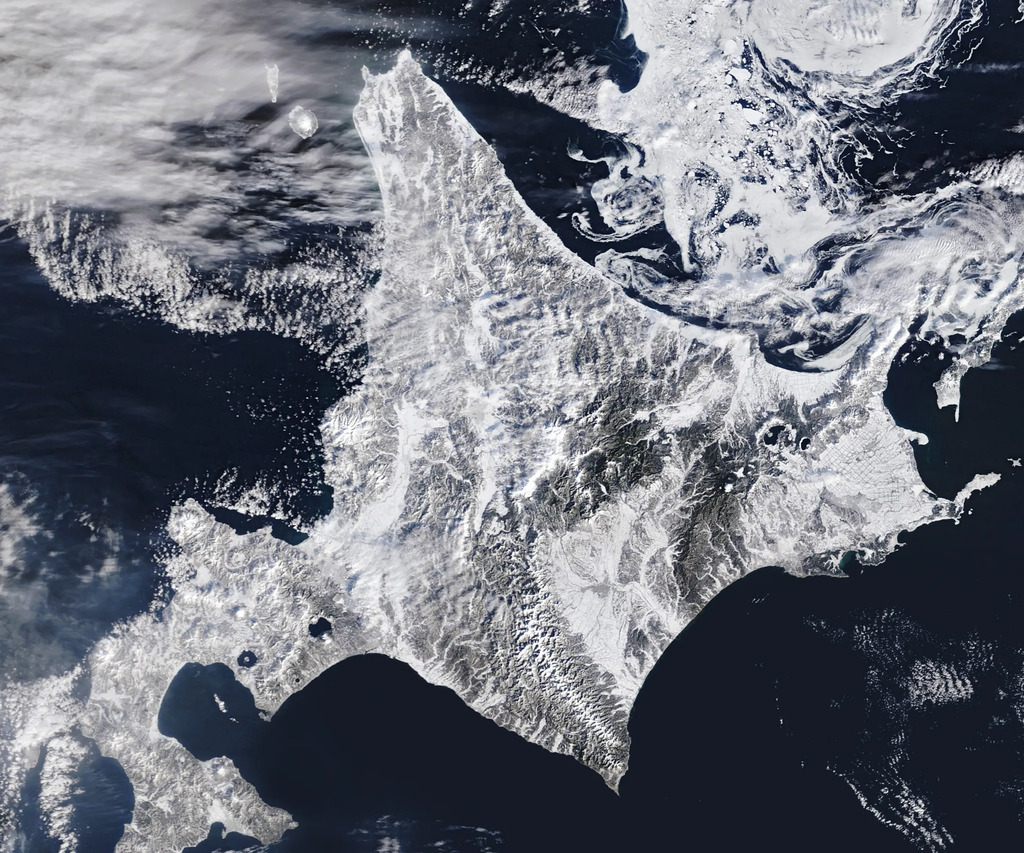
Stormy, Snowy Winter
On February 5, 2026, the MODIS (Moderate Resolution Imaging Spectroradiometer) on NASA’s Terra satellite acquired this image of snow-covered landscapes across Hokkaido. With more than 31 active volcanoes, the island features several large caldera lakes, including at least five that are visible in the image. (Calderas are large depressions formed by volcanic eruptions.) In the east, forested windbreaks around Nakashibetsu form a checkerboard pattern, while to the north, swirling drifts of sea ice adorn the Sea of Okhotsk.
Thursday, 19 February 2026
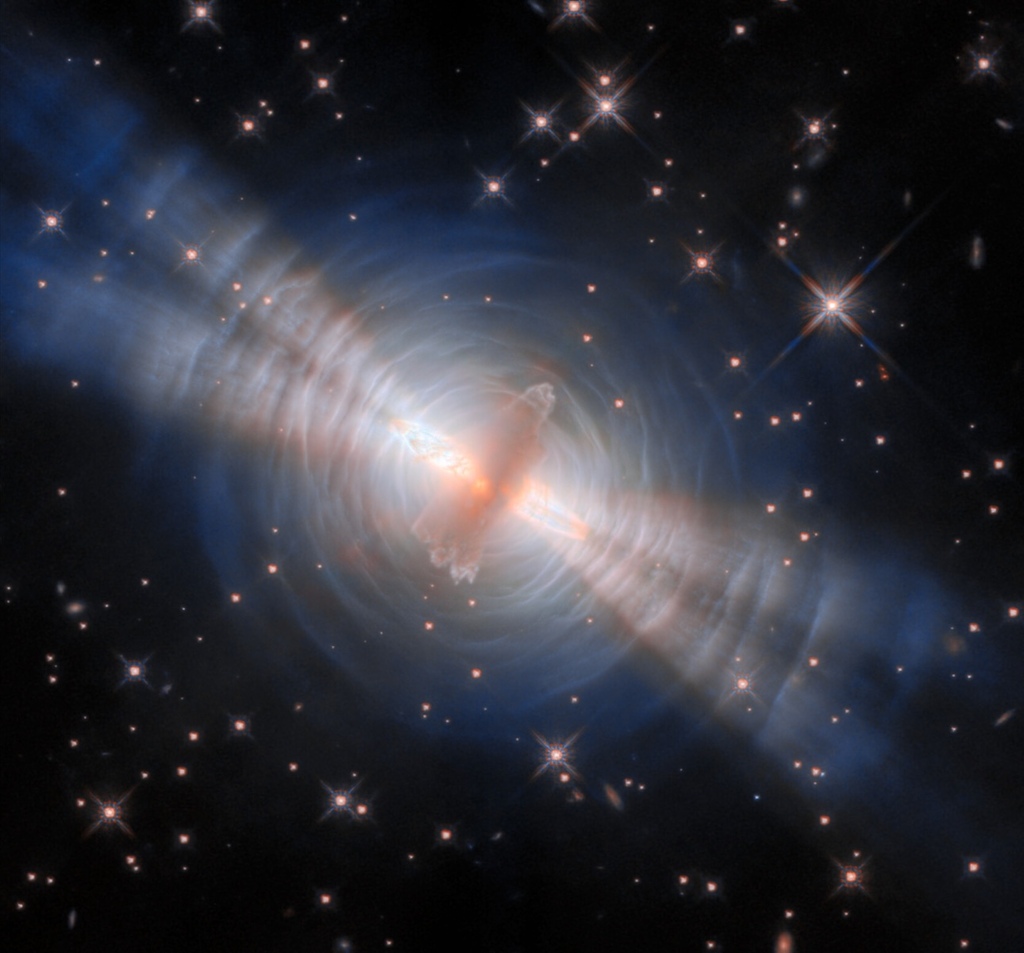
Dying Star's Light Show
This stunning image from the NASA/ESA Hubble Space Telescope reveals a dramatic interplay of light and shadow in the Egg Nebula, sculpted by freshly ejected stardust. Located approximately 1000 light-years away in the constellation Cygnus, the Egg Nebula features a central star obscured by a dense cloud of dust. Only Hubble’s sharpness can unveil the intricate details that hint at the processes shaping this enigmatic structure.
The Egg Nebula, also known as CRL 2688, is located in the constellation Cygnus (the Swan). It is the first, youngest, and closest pre-planetary nebula ever discovered.
Friday, 20 February 2026
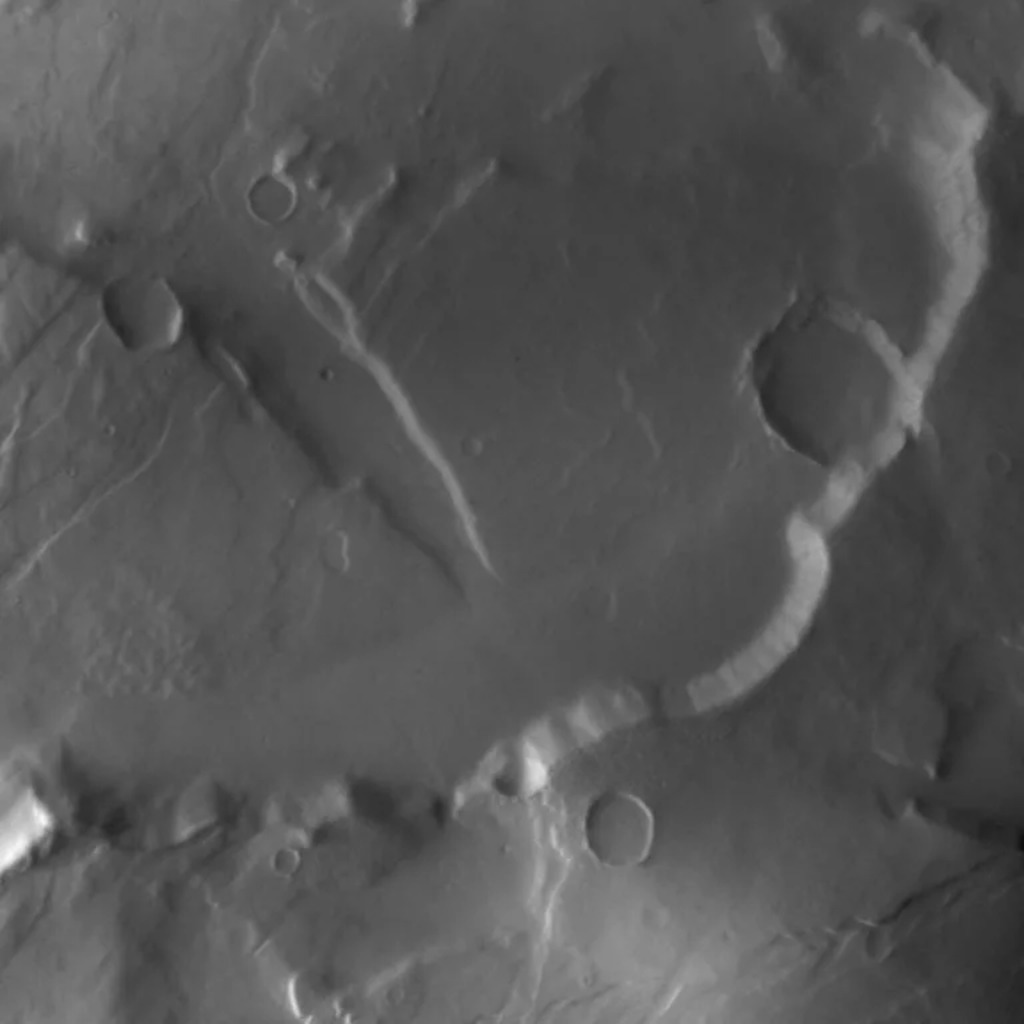
Dawn Image of Tempe Terra, Mars
This image of Mars was captured by the Dawn spacecraft near its closest approach during its February 17, 2009, gravity assist flyby. The photo wasn't taken for scientific purposes, as Mars is already being studied well by orbiters in place; instead, what we know about Mars was being used here to test the performance of Dawn's cameras. The image shows a portion of the fretted and cratered northwest margin of Tempe Terra, Mars. The scarp of the highland/lowland boundary is illuminated by the light of dawn, and traces of fog appear in the lower portion. The area covered by the image is about 55 kilometers across.
News
Related News
Planetary Picture of the Day - Week of July 13, 2026
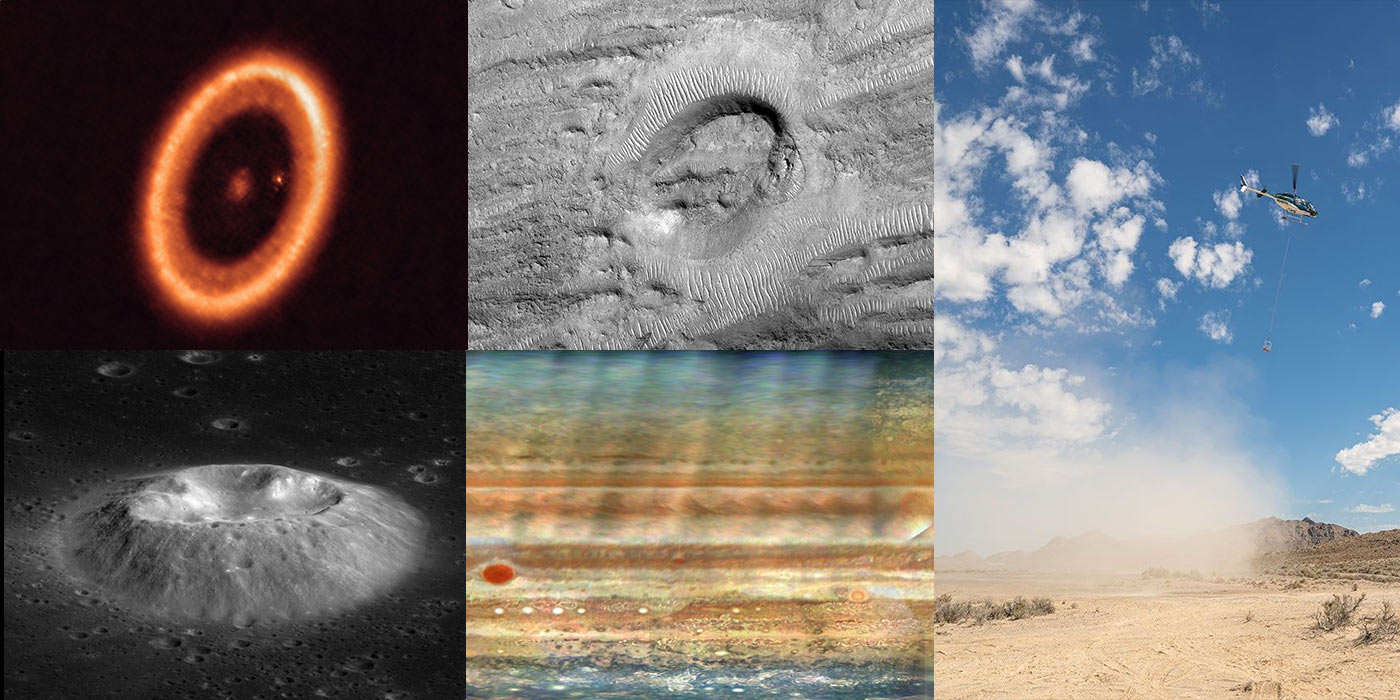
This week, we explore worlds in the making, from the first-ever evidence of moons forming around a distant exoplanet to ancient volcanic and flood-carved landscapes preserved on the Moon and Mars. The images also celebrate the science behind exploration, featuring new global views of Jupiter and Earth-based testing for NASA’s upcoming DAVINCI mission to Venus. #PPOD
Planetary Picture of the Day - Week of July 6, 2026
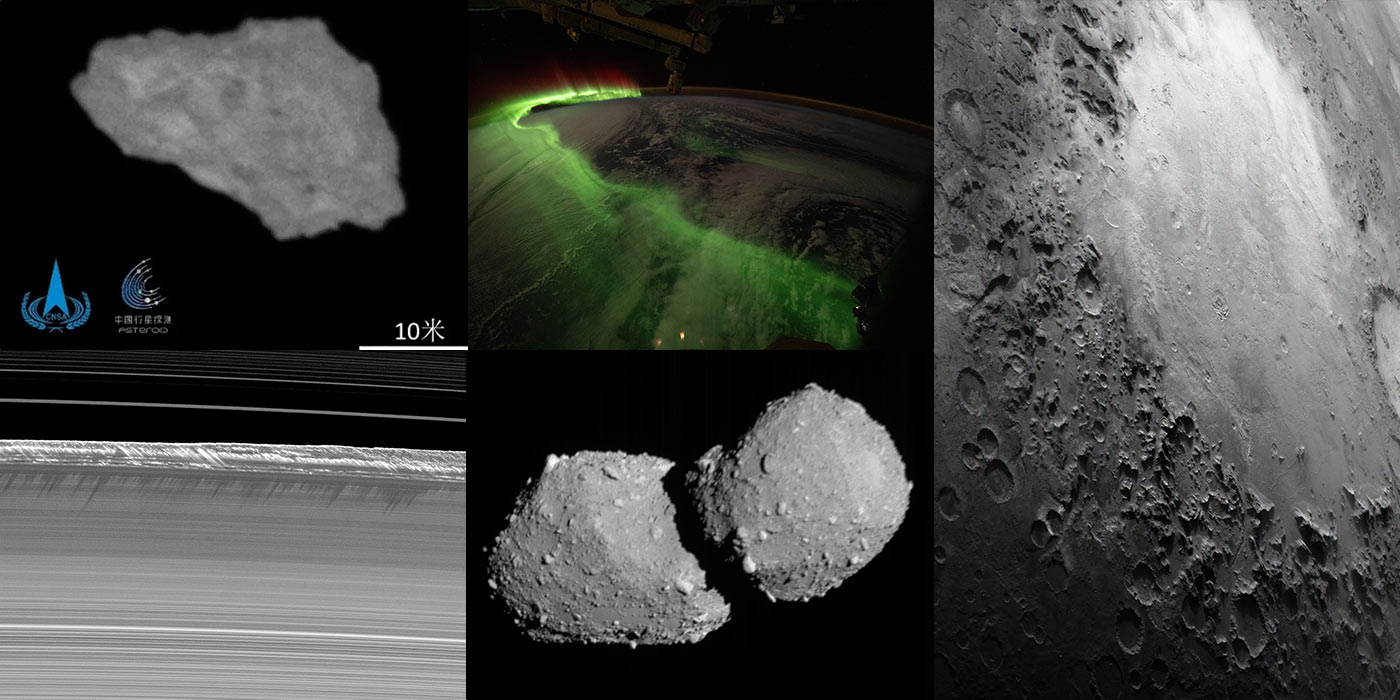
Enjoy fifty years of planetary exploration, from a classic Viking view of Mars’ immense Argyre Basin to new asteroid encounters by the Tianwen-2 and Hayabusa2 missions. The images also capture the beauty and dynamism of our cosmic neighborhood, including a brilliant aurora seen from orbit and towering structures rising from Saturn’s rings, shaped by the hidden influence of embedded moonlets. #PPOD
Planetary Picture of the Day - Week of June 29, 2026
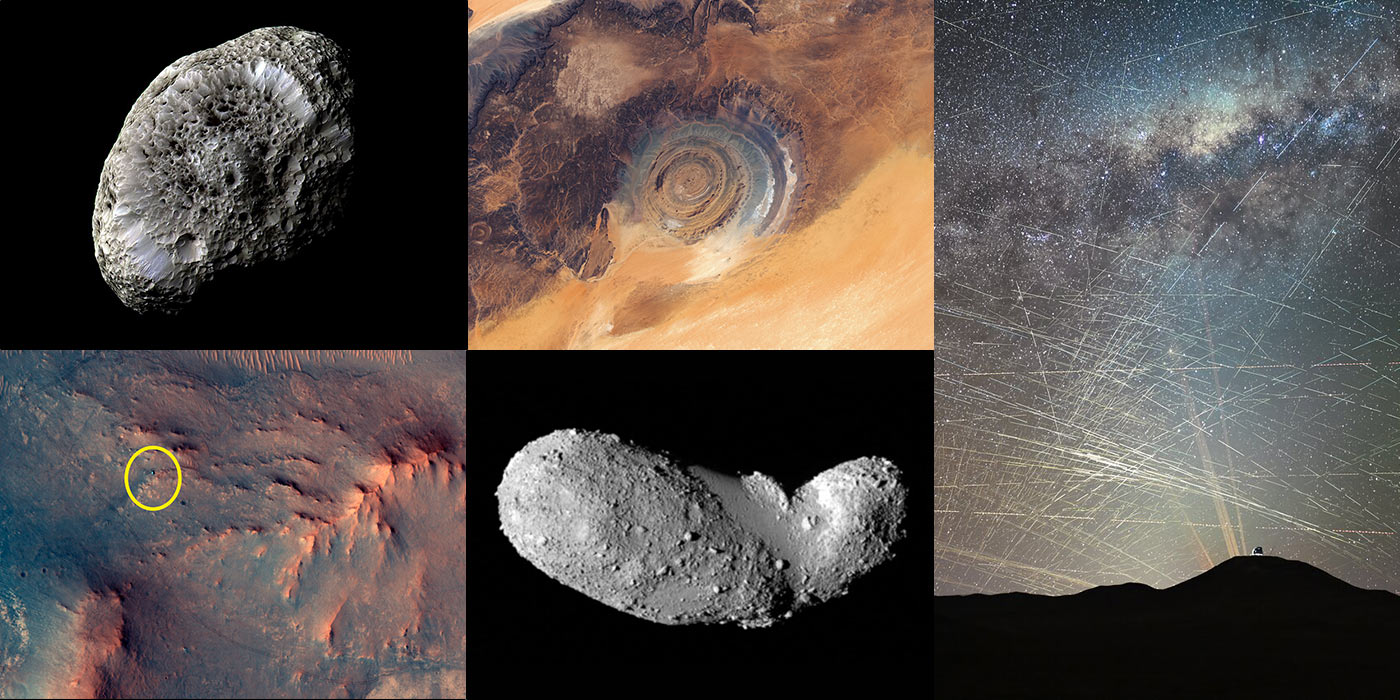
From a marathon milestone on Mars to a sky filled with satellite trails above Chile’s deserts, this week’s collection highlights humanity’s growing exploration of both Earth and space. The images also showcase some of the solar system’s most unusual worlds, including the rubble-pile asteroid Itokawa, the sponge-like moon Hyperion, and the striking Richat Structure—a geologic wonder so distinctive it can be spotted from orbit. #PPOD
Planetary Picture of the Day - Week of June 22, 2026
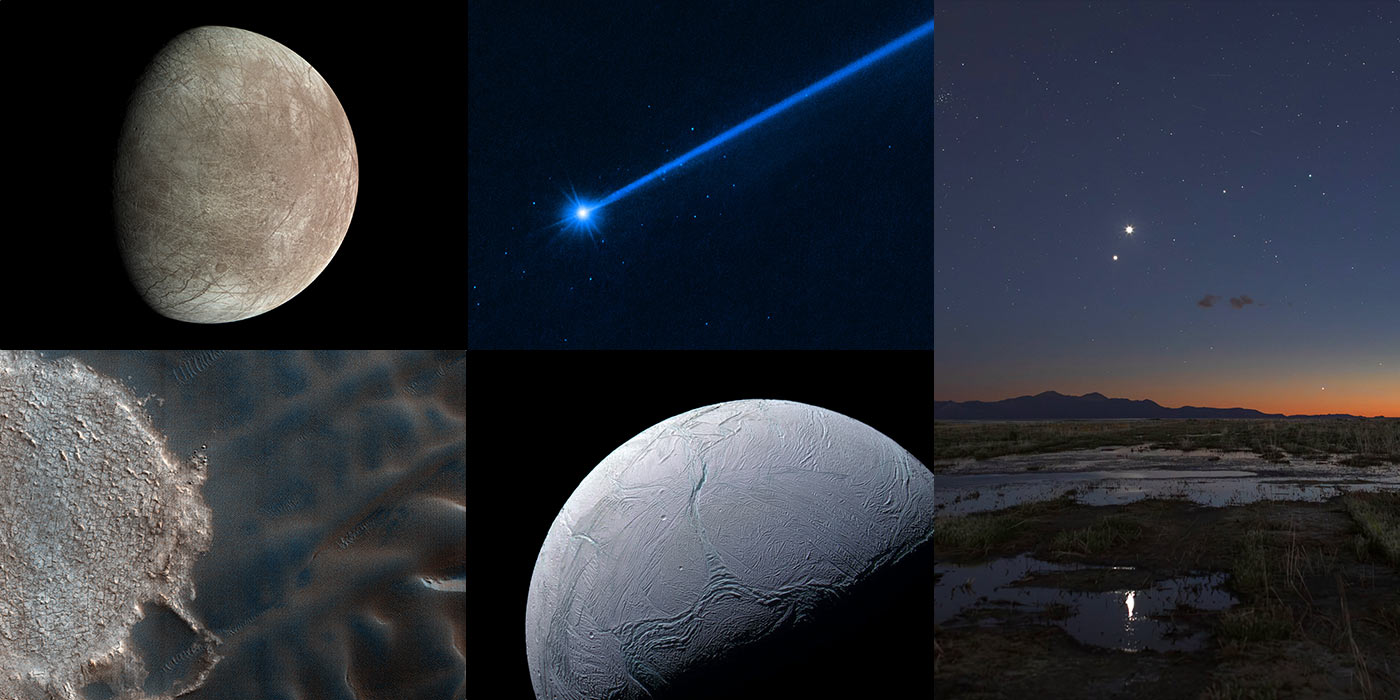
From asteroid fragments drifting through space to icy moons orbiting distant planets, this collection highlights the dynamic and ever-changing nature of our solar system. The images capture everything from a beautiful planetary conjunction in Earth’s skies to active wind-shaped landscapes on Mars, revealing how impacts, gravity, and weather continue to shape worlds both near and far. #PPOD
Planetary Picture of the Day - Week of June 15, 2026
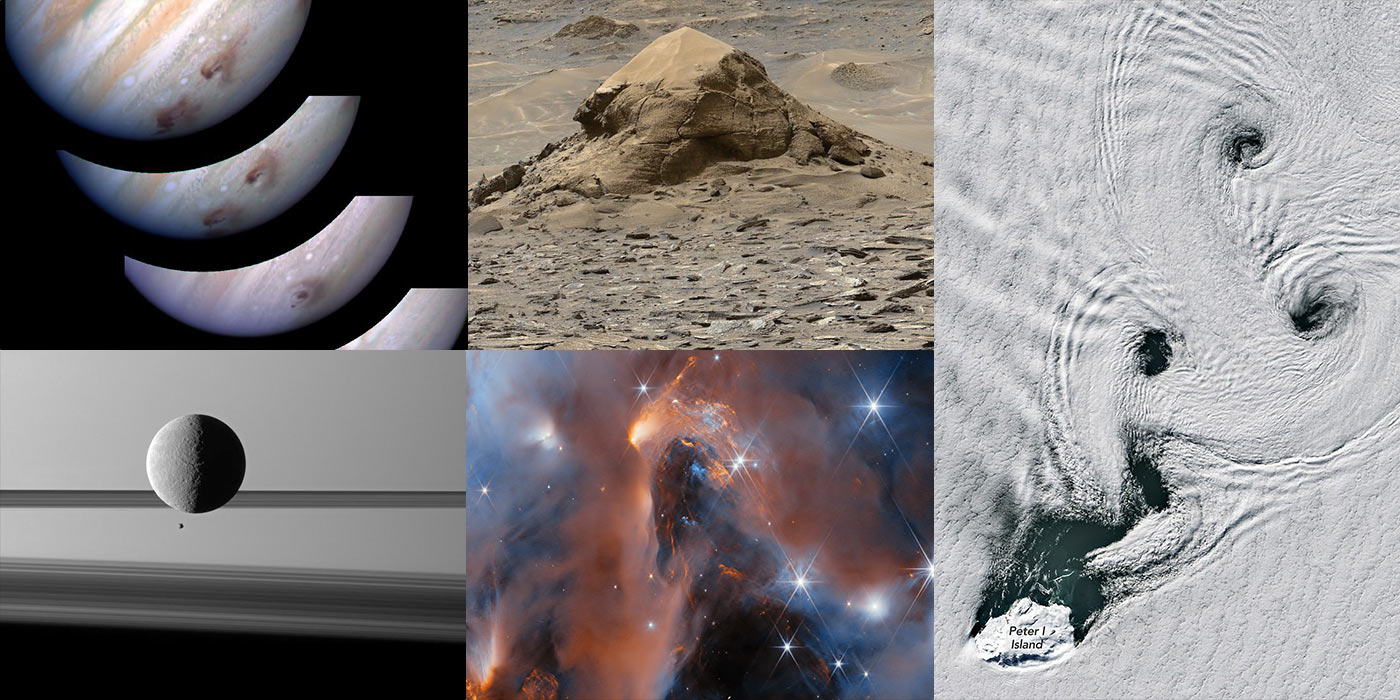
This collection showcases a solar system in motion, from Saturn’s moons playing tricks on perspective and a comet’s dramatic collision with Jupiter to winds swirling across Earth’s southern oceans and ancient landscapes on Mars. Together, these images reveal the forces that shape worlds over time—erosion, impacts, atmospheric currents, and planetary evolution—while capturing moments of beauty, violence, and wonder across the cosmos. #PPOD
Planetary Picture of the Day - Week of June 8, 2026
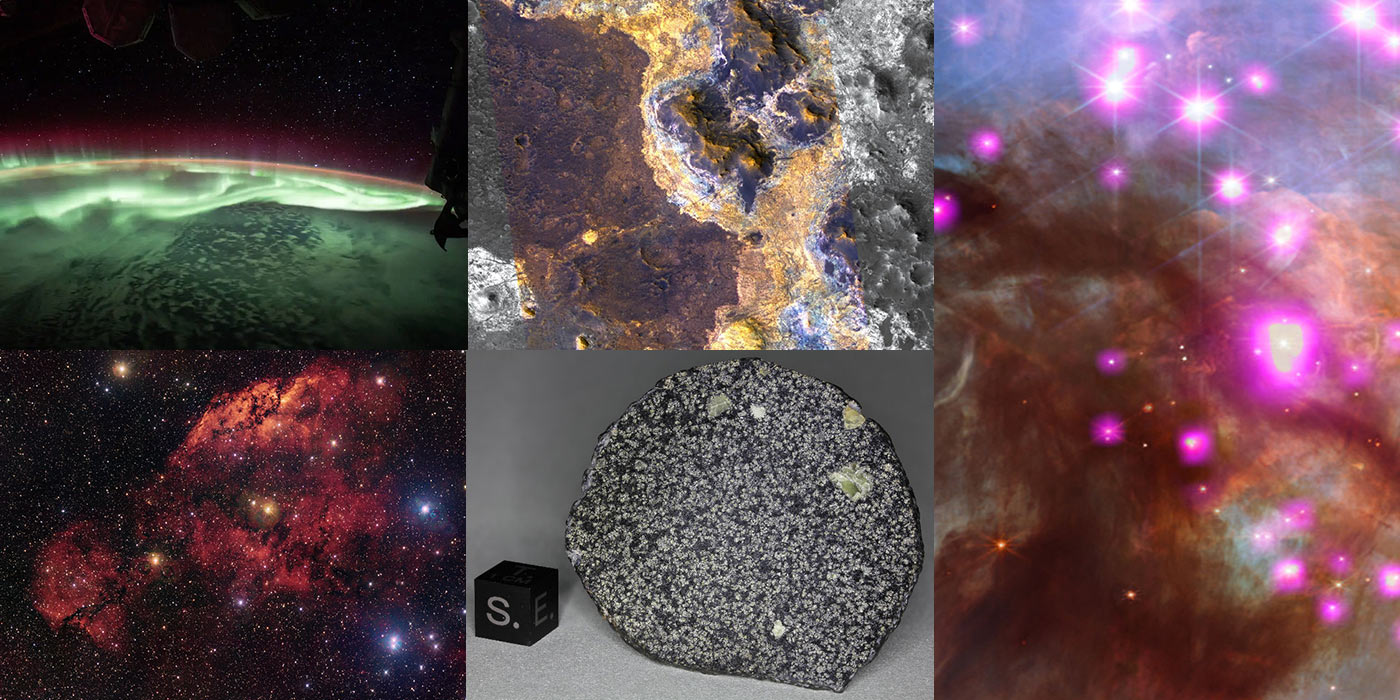
Ancient Martian landscapes, glowing auroras, and stellar nurseries come together in this week’s PPOD collection, highlighting worlds and phenomena shaped by billions of years of cosmic history. From a rare meteorite born in the earliest days of the solar system to colorful nebulae where new stars are forming today, these images offer a remarkable look at both our origins and the ongoing evolution of the universe. #PPODResearch
Related Projects
SkyMapper: Expanding Access to Real-time Astronomy Through a Global Astronomical Network
SkyMapper and the SETI Institute are connecting educators, students and the public to live astronomical observations through a distributed astronomical network. #SkyMapper #SETI #Citizen Science #Astronomy
Virtual Planetary Laboratory
How can we best assess whether an exoplanet supports life? #VPL
Discovery and Futures Lab
What happens if life beyond Earth is discovered? The Discovery and Futures Lab at the SETI Institute fosters novel and anticipatory research at the intersection of science, society, our planet, and the search for life beyond Earth. #Discovery and Futures LabSupport the
SETI Institute
Scientists are getting closer in their search for life beyond earth. But with limited federal funding for the search for extraterrestrial intelligence, supporters are the reason cutting-edge scientists can keep their eyes on the sky.