)

Author: Keith Cowing, Dale Andersen
Friday, Jan 23, 2026
At a Glance — Dale Andersen’s Antarctic Field Season (12–18 January 2026)Mission: Antarctic astrobiology field research at Lake Untersee, Antarctica, led by Senior Research Scientist Dale Andersen, coordinated through the SETI Institute’s Carl Sagan Center. When: January–February 2026 field season, with key updates from 12–18 January 2026. Where: Lake Untersee, a remote polar lake environment used as an Earth analog for icy ocean worlds. Team: International field team of scientists and graduate students. Highlights This Week:
Why It Matters: The fieldwork deepens understanding of extremophile ecosystems in extreme environments on Earth — environments that help scientists model and prepare for the search for life on Mars, icy moons, and other worlds. |
|
Updates
|
Originally written by Keith Cowing, published on Astrobiology.com here. Previous reports back to 1996 are available at https://astrobiology.com/dale-andersens-field-reports.
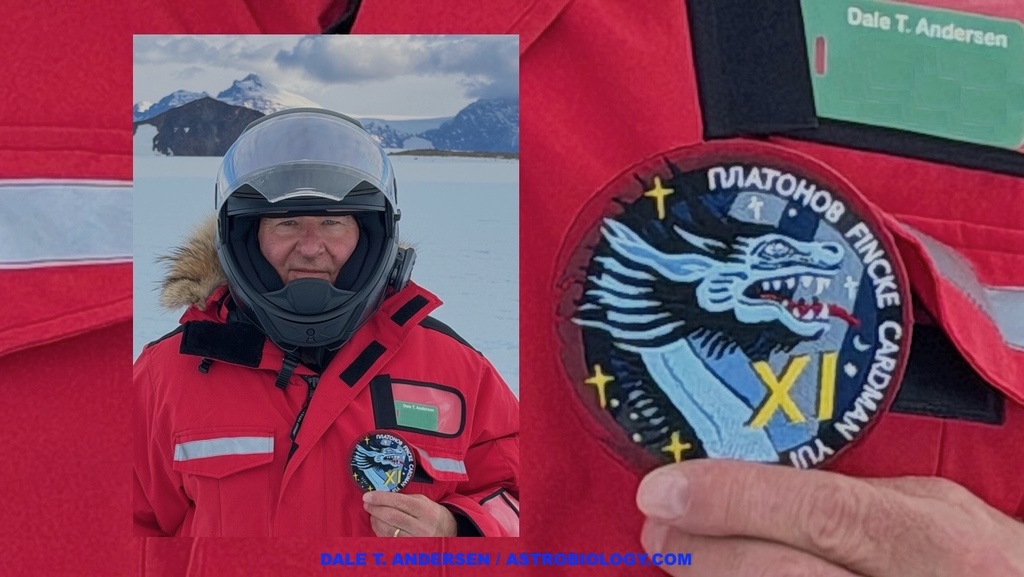
Dale Andersen at Lake Untersee, Antarctica holding up the ISS Crew 11 patch on 11 Jan 2026 – Dale T. Andersen
Keith’s note: Dale Andersen and his astrobiology research team departed the Ultima ice airstrip where they arrived the other day – and drove their snowmobiles south to their research base location at Lake Untersee.
I posted some slightly blurry pics yesterday but now that they have their Starlink up and operational, there’s more imagery and a video to show you.
Oh yes – Dale Andersen is holding a International Space Station Crew 11 patch. His friend and fellow biologist, astronaut Zena Cardman, have worked together and had planned an antarctica/space conversation – but the crew’s early return cancelled that.
But first: why do they go to this remote location year after year? According to Dale: “Lake Untersee is a difficult place to live and work. But we are seeking new knowledge. Knowledge that will inform us about Earth’s past history and help us understand its future. Our research also helps guide the search for evidence of life on other distant worlds such as Mars or the outer moons of Jupiter or Saturn … or beyond.”
Here are some of the pics sent from Lake Untersee Base Camp via Starlink.
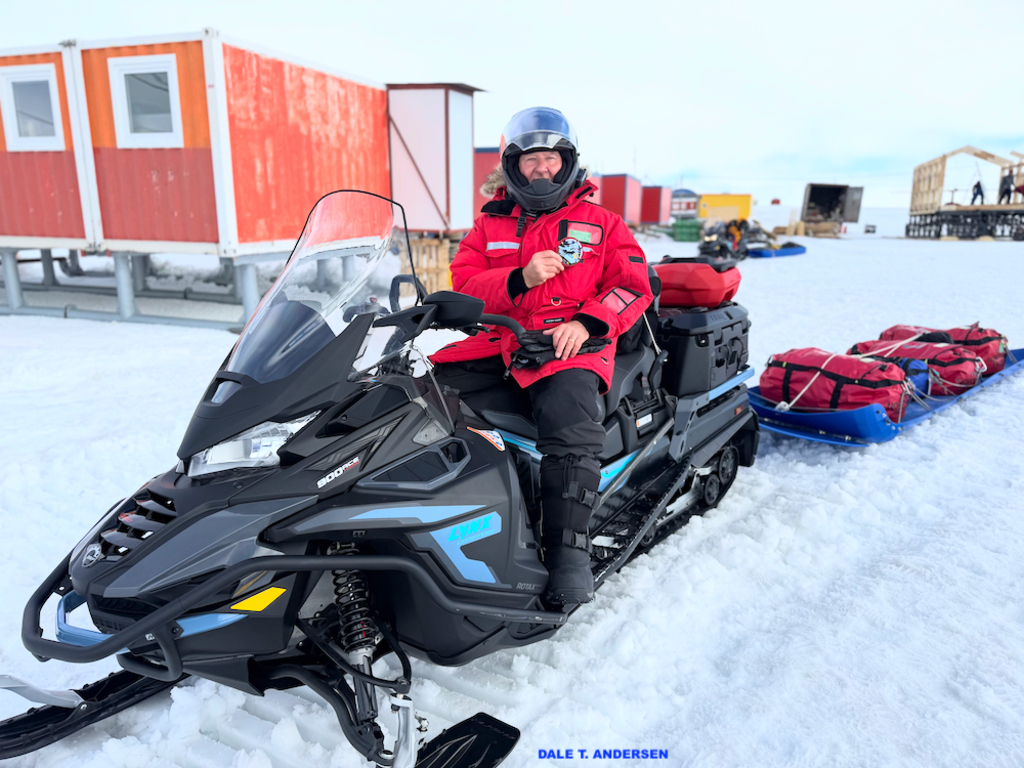
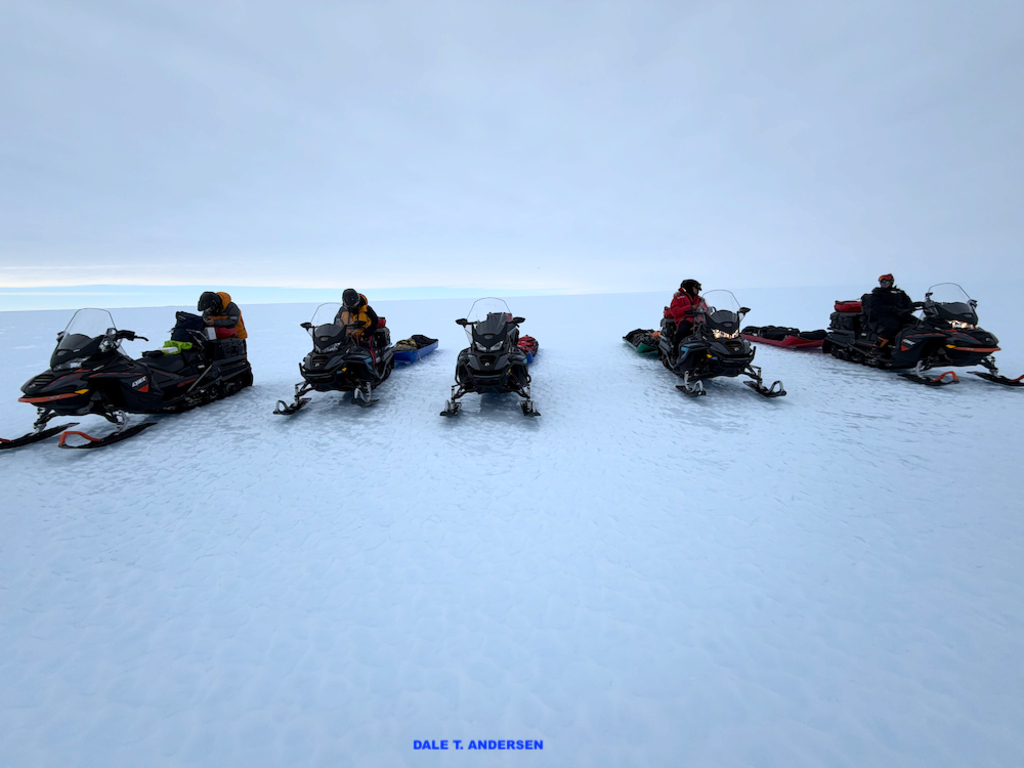
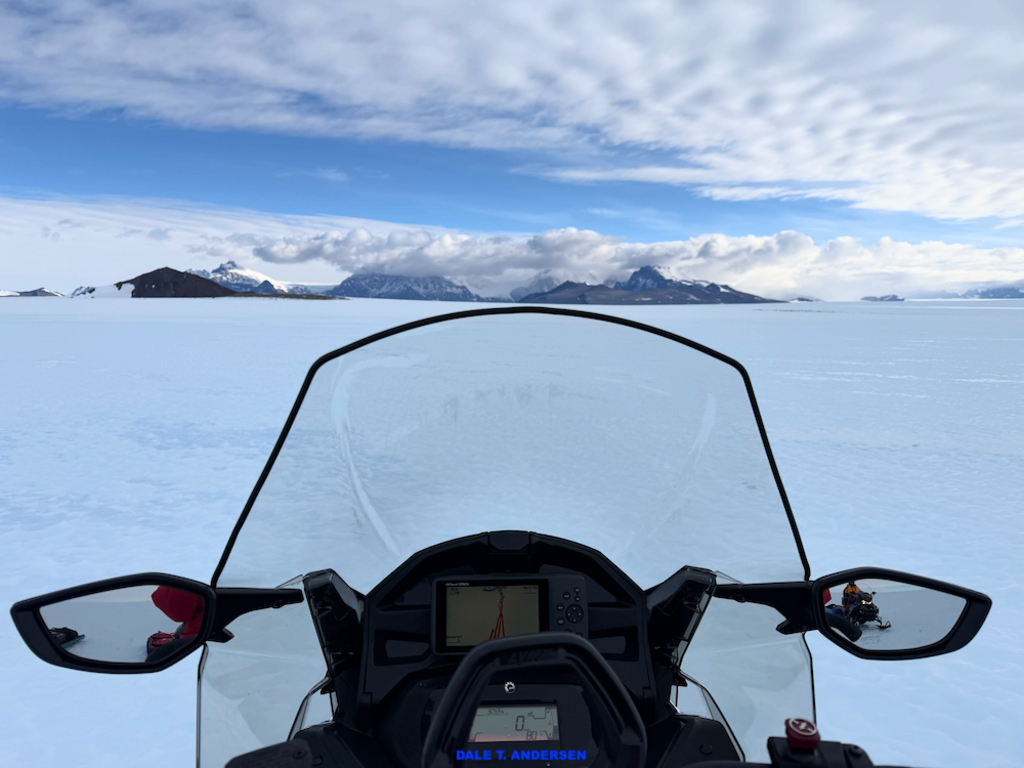
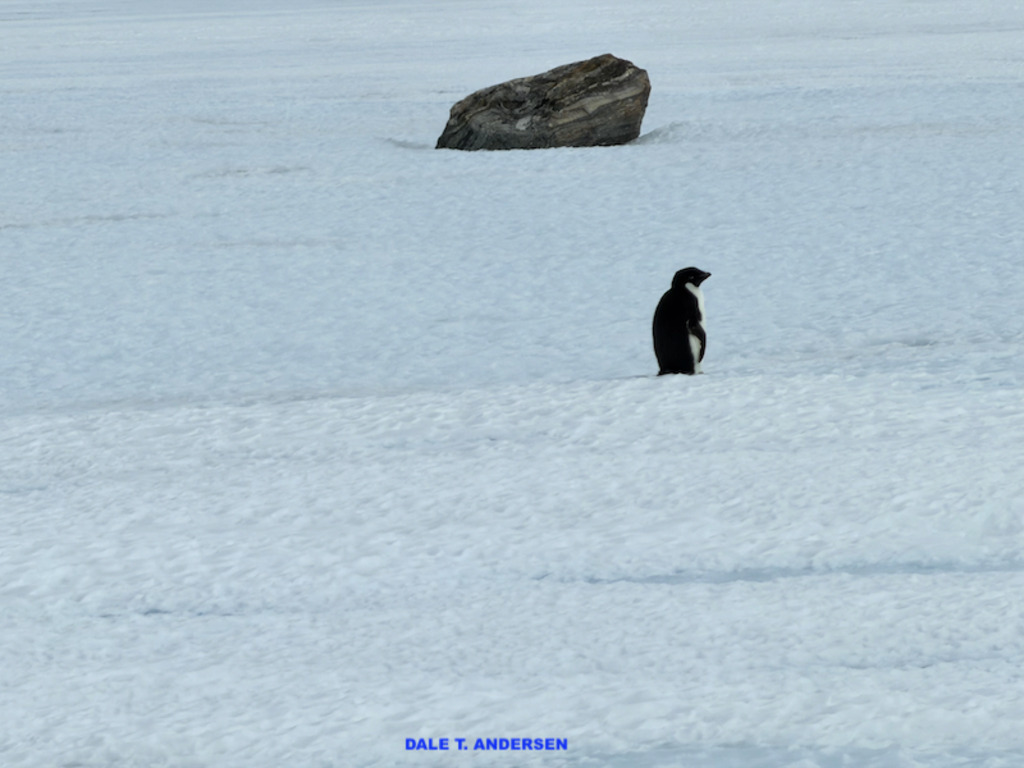
Keith’s note: Astrobiologist Dale Andersen is heading back in Antarctica at Lake Untersee in January-February 2026 for another field season of research.
- Previous reports
- Astrobiologist Dale Andersen’s Antarctic Field Report: Preview: 2026 Lake Untersee Field Seas
Dale and I have been proving research updates – from Antarctica – since 1996. We think we actually had the first webserver (located in my old condo) updated from Antarctica. More details here: Dale Andersen’s 1996 Antarctic Field Research Photo Albums
Originally written by Keith Cowing, published on Astrobiology.com here. Previous reports back to 1996 are available at https://astrobiology.com/dale-andersens-field-reports.
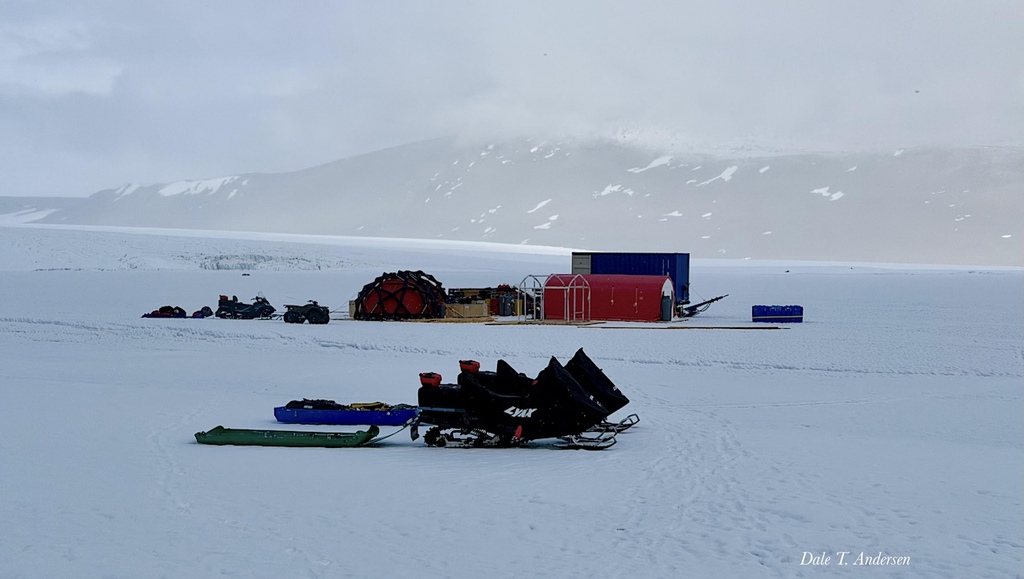
Lake Untersee Base Camp as of 14 January 2026 — Dale T. Andersen
Hi Keith,
Since our arrival we have been working hard to get shelter in place. That is always our first priority: establish safe, warm protection from the elements, then we can begin our program of science in earnest.
We have about half the camp built, with several personal tents up and most importantly, our communal kitchen tent now in place. It is a 20 ft long, 10 ft wide WeatherPort that gives us room to prepare meals and gather in a warm space during the day. It is robust and rated for winds up to 110 mph.
I hope we do not have to test that, but we have seen winds that strong (and stronger) in the past—enough to tear through camp over the course of a few days. Still, we plan for it, we adapt, and we keep moving forward. Work in extreme environments can be demanding, but preparation and experience matter, and the scientific rewards can be substantial.
The image enclosed shows the camp as we were putting up tents – a few more to go today and tomorrow – and timely since we may have winds/blizzard conditions starting next Sunday – or not. Predicting the weather for Untersee can be a little tricky.
And as we settle in here under the ice and wind, I am thinking of ISS Crew-11 as well—wishing all of you a safe, smooth ride home today, with calm seas, gentle winds at splashdown and and easy recovery for the whole crew.
Cheers from the shores of Lake Untersee
-Dale
Originally written by Keith Cowing, published on Astrobiology.com here. Previous reports back to 1996 are available at https://astrobiology.com/dale-andersens-field-reports.
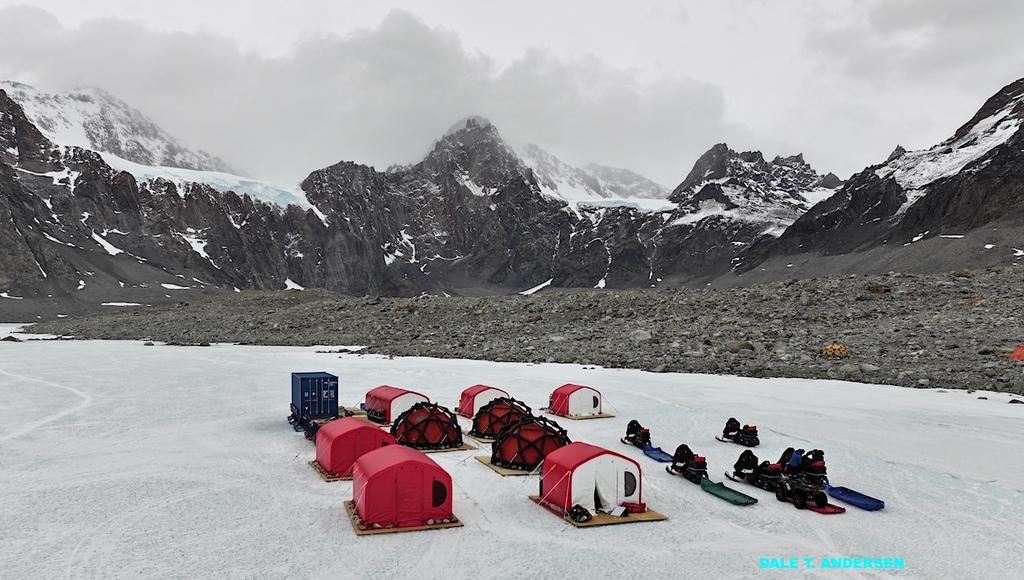
Base Camp at Lake Untersee, Antarctica January 2026 – Dale T. Andersen. (Larger image)
Keith:
We just completed the camp last night, and today a storm will move in with 50 mph winds (more?) and perhaps some snow. Should provide a quick test of our handiwork!
The layout is organized to maximize protection for the various tents. We positioned the sea-container to block the major winds out of the SE, so the central camp sits in its lee.
Just downwind of that, the red and red/white Weatherports form the backbone of operations—each is rated to 110 mph and they are now serving as the kitchen tent, a small garage/workshop, the lab and dive tents (all red), plus two personal tents (the same size as the smaller garage/workshop).
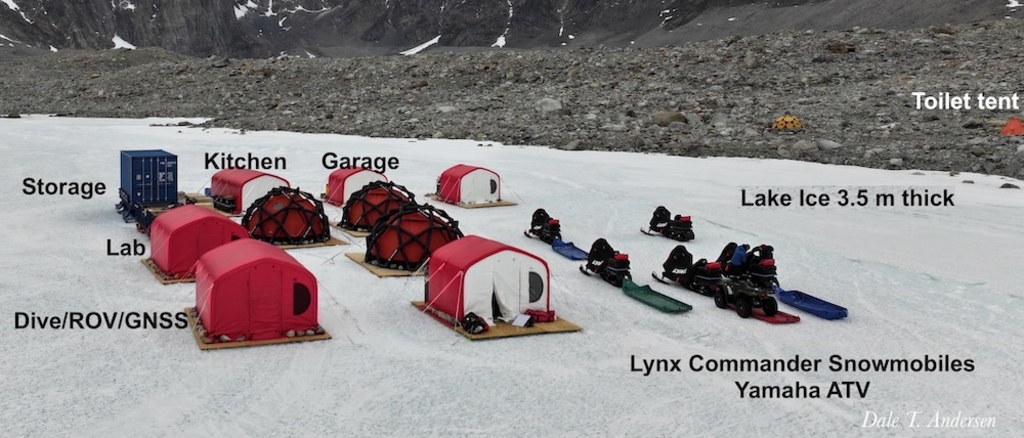
Layout of Lake Untersee Base Camp – Dale T. Andersen (larger image)
In the central area, the three Heimplanet inflatable tents are tucked in and protected from wind on almost every side. Keith’s note: there is an interesting Star Trek connection between the Heimplanet tents at Lake Untersee and “Star Trek Strange New Worlds” from 2024: That Time Star Trek Tents Were Actually Used In Antarctica. The tents used in Strange New Worlds Season 2 episode 8 were made by Hemiplanet – and they have graciously assisted Dale and his crew and sought out their expeditionary expertise. Check out their blog post “Exploring the Frozen Frontier — Dale Andersen’s Antarctic Expedition with the Heimplanet Mavericks and Cave Tent“
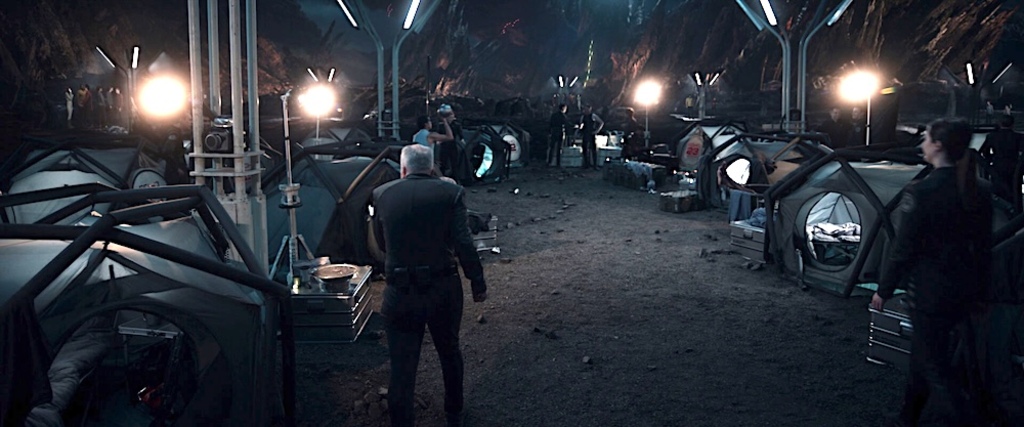
Scene with Hemiplanet tents from Star trek Strange New Worlds episode 208 — CBS/Paramount
We also have the 5 BRP Lynx Commander snowmobiles and Yamaha ATV sheltered from SE gusts and parked nose-in toward the south—into the hardest winds we may see—with covers on. The sleds behind the snowmobiles are also tied into the ice with ice-screws. The ATV sits in my sled to hold it down during high winds.
The tents and the platforms they sit on are all anchored into the thick lake ice with guy lines. On key load points we add anchor springs to help dampen the hardest gusts that pound us from time to time. Better to dissipate that energy through a spring than to concentrate it at the sew points and risk fabric failure or tearing.
On the shore, we set a single North Face dome tent (personal) and a pyramid tent for the toilet facility.
Dale
———-
Weather report for 19-25 January 2026 at Lake Untersee via Gemini AI:
“For the upcoming week at Lake Untersee, Antarctica, expect peak summer conditions characterized by relatively mild temperatures for the region, high UV exposure, and potentially high-velocity winds.
Weekly Forecast: January 19 – January 25, 2026
| Date | Day Condition | High / Low | Wind | Precipitation |
|---|---|---|---|---|
| Mon, Jan 19 | Mostly Cloudy / Snow | 11°F / 9°F | E 25 mph | 35% Snow |
| Tue, Jan 20 | Snow Showers | 14°F / 9°F | E 25 mph | 35% Snow |
| Wed, Jan 21 | Light Snow | 17°F / 12°F | SE 25 mph | 25% Snow |
| Thu, Jan 22 | Sunny / Partly Cloudy | 17°F / 8°F | SE 18 mph | 10% Snow |
| Fri, Jan 23 | Light Snow | 17°F / 11°F | SE 19 mph | 20% Snow |
| Sat, Jan 24 | Snow Showers | 16°F / 11°F | SE 21 mph | 20% Snow |
| Sun, Jan 25 | Cloudy / Snow Showers | 15°F / 10°F | SE 21 mph | 25% Snow |
Key Weather Factors
- Temperature: Temperatures are trending slightly below the regional January average of 34°F. Highs will hover between 11°F and 17°F, while lows may dip to 8°F.
- Wind & Visibility: Persistent southeasterly winds are common, averaging 18–25 mph. Be prepared for rapid changes in visibility during snow showers.
- Daylight: Expect near 24-hour daylight (the “Midnight Sun”), which is typical for this latitude in January.
- Precipitation: While the region is technically a polar desert, frequent but light snow showers are expected through much of the week.
Operational Notice
For field teams at Lake Untersee, be advised that “blizzard conditions” were recently forecast to potentially begin around Sunday, January 25. Ensure all shelters and tents are secure, as the area can experience sudden, extreme wind events up to 110 mph. For real-time updates and field status, you can monitor Dale Andersen’s Astrobiology Antarctic Status Reports.”







News
Related News
Jul 10, 2026
SETI Institute Achievements: Q1 2026 Activity Report
#Activity Reports #Carl Sagan Center #Outreach #Education #AIR #Community #Research
Jun 4, 2026
SETI Institute In the News: May Roundup 2026
#SETI Institute in the News #SETI Institute #Community #Solar System #Matija Ćuk #Neptune #SETI #Bill Diamond #UAPs #Drake Awards #Lori Marino #Matthew Tiscareno #Outreach #Exoplanets #Carl Sagan Center
Jun 1, 2026
SETI Institute Awards $1 Million in STRIDE Grants to Advance Astrobiology, Exoplanet Science, and Public Engagement
#Press Releases #STRIDE #Research #Carl Sagan Center #Spectroscopy #Solar System #SETI #Climate and Bioscience #Astronomy #Astrobiology #Exoplanets #Data Science #Education #Outreach #Hat Creek Radio Observatory #Unistellar #SkyMapper
May 13, 2026
SETI Institute to Honor Dr. Matthew Tiscareno with 2026 Carl Sagan Center Director’s Award
The Drake Awards event will also recognize SETI Forward and SETI Institute REU student award recipients. #Press Releases #Drake Awards #Frank Drake #SETI #Awards #Planetary Astronomy #Astrobiology #SETI Forward #Education #Carl Sagan Center #Matthew Tiscareno #Nathalie Cabrol #REU
May 4, 2026
SETI Institute Announces Nominees for the Speculative Life BioArt Residency
Six international artists shortlisted for a new residency at the intersection of art, astrobiology, and biotechnology #AIR #SETI Institute #Speculative Life #Astrobiology #Danielle Siembieda #Nathalie Cabrol
Apr 27, 2026
Rethinking Organics on Mars
By Nathalie A. Cabrol, Director of the Carl Sagan Center for Research, SETI Institute #Mars #Astrobiology #Solar System #Curiosity Rover #NASA Missions and Observatories #Nathalie Cabrol
Jul 10, 2026
#Activity Reports
#Carl Sagan Center
#Outreach
#Education
#AIR
#Community
#Research
Jun 4, 2026
#SETI Institute in the News
#SETI Institute
#Community
#Solar System
#Matija Ćuk
#Neptune
#SETI
#Bill Diamond
#UAPs
#Drake Awards
#Lori Marino
#Matthew Tiscareno
#Outreach
#Exoplanets
#Carl Sagan Center
SETI Institute In the News: May Roundup 2026
Jun 1, 2026
#Press Releases
#STRIDE
#Research
#Carl Sagan Center
#Spectroscopy
#Solar System
#SETI
#Climate and Bioscience
#Astronomy
#Astrobiology
#Exoplanets
#Data Science
#Education
#Outreach
#Hat Creek Radio Observatory
#Unistellar
#SkyMapper
SETI Institute Awards $1 Million in STRIDE Grants to Advance Astrobiology, Exoplanet Science, and Public Engagement
May 13, 2026
SETI Institute to Honor Dr. Matthew Tiscareno with 2026 Carl Sagan Center Director’s Award
The Drake Awards event will also recognize SETI Forward and SETI Institute REU student award recipients.
#Press Releases
#Drake Awards
#Frank Drake
#SETI
#Awards
#Planetary Astronomy
#Astrobiology
#SETI Forward
#Education
#Carl Sagan Center
#Matthew Tiscareno
#Nathalie Cabrol
#REU
May 4, 2026
SETI Institute Announces Nominees for the Speculative Life BioArt Residency
Six international artists shortlisted for a new residency at the intersection of art, astrobiology, and biotechnology
#AIR
#SETI Institute
#Speculative Life
#Astrobiology
#Danielle Siembieda
#Nathalie Cabrol
Apr 27, 2026
Rethinking Organics on Mars
By Nathalie A. Cabrol, Director of the Carl Sagan Center for Research, SETI Institute
#Mars
#Astrobiology
#Solar System
#Curiosity Rover
#NASA Missions and Observatories
#Nathalie Cabrol
Research
Related Projects

SkyMapper • SETI • Citizen Science • Astronomy
SkyMapper: Expanding Access to Real-time Astronomy Through a Global Astronomical Network
SkyMapper and the SETI Institute are connecting educators, students and the public to live astronomical observations through a distributed astronomical network. #SkyMapper #SETI #Citizen Science #Astronomy
VPL
Virtual Planetary Laboratory
How can we best assess whether an exoplanet supports life? #VPL
Discovery and Futures Lab
Discovery and Futures Lab
What happens if life beyond Earth is discovered? The Discovery and Futures Lab at the SETI Institute fosters novel and anticipatory research at the intersection of science, society, our planet, and the search for life beyond Earth. #Discovery and Futures Lab
May 17, 2026
SkyMapper: Expanding Access to Real-time Astronomy Through a Global Astronomical Network
SkyMapper and the SETI Institute are connecting educators, students and the public to live astronomical observations through a distributed astronomical network.
#SkyMapper
#SETI
#Citizen Science
#Astronomy
May 5, 2026
Virtual Planetary Laboratory
How can we best assess whether an exoplanet supports life?
#VPL
Apr 16, 2026
Discovery and Futures Lab
What happens if life beyond Earth is discovered? The Discovery and Futures Lab at the SETI Institute fosters novel and anticipatory research at the intersection of science, society, our planet, and the search for life beyond Earth.
#Discovery and Futures Lab
Support Us
Support the
SETI Institute
Scientists are getting closer in their search for life beyond earth. But with limited federal funding for the search for extraterrestrial intelligence, supporters are the reason cutting-edge scientists can keep their eyes on the sky.
