)

Author: Keith Cowing, Dale Andersen
Wednesday, Jan 14, 2026

At a Glance — Dale Andersen’s Antarctic Field Season (7–11 January 2026)
Mission Context
7 January 2026 — Arrival at Novolazarevskaya Station
9 January 2026 — Building the Storage Facility at Novo
11 January 2026 — Overland Traverse Toward Lake Untersee
Why It Matters
|
|
Updates
|
Originally written by Keith Cowing, published on Astrobiology.com here. Previous reports back to 1996 are available at https://astrobiology.com/dale-andersens-field-reports.
Listen to this update read by AI:
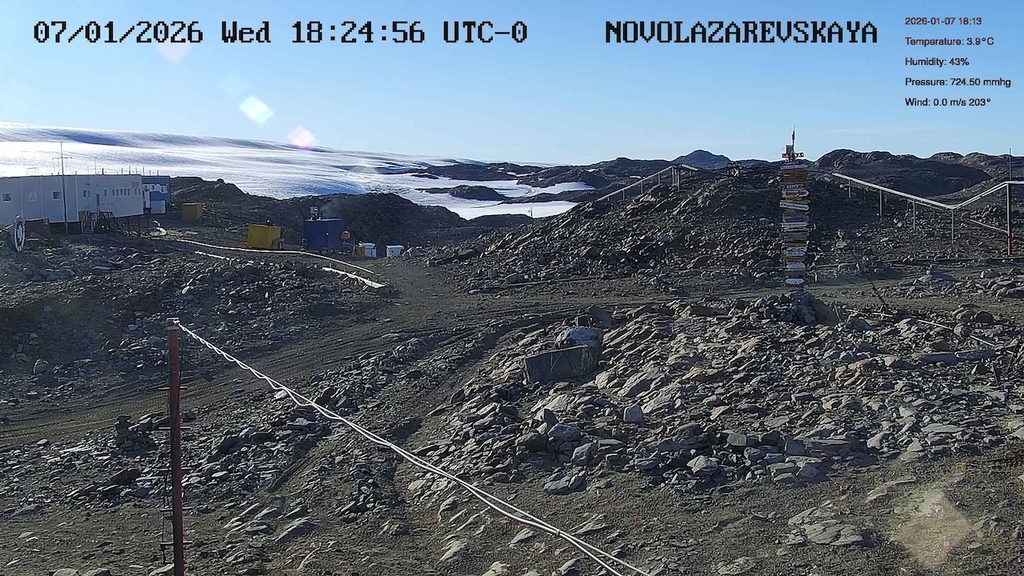
Regularly updated webcam image from Novolazarevskaya Station, Antarctica https://novocam.aari.ru/
Keith’s note: I got this update by text from Dale early this morning:
Hi Keith, We arrived at the Ultima Airstrip 6pm UTC Tuesday evening to a bright, sunny windless day with air temps just over freezing. Our flight down was nice and the aircraft should return to CPT (Cape Town) later this morning or afternoon. Sorry I think my last couple of notes did not make it to you, it will take a couple of days to get our comms sorted out as we get organized. If all goes well we hope to start the traverse to Untersee perhaps over the weekend. As you can imagine our priority now is to get the snowmobiles up and running and to get our cargo sorted and organized, So, a busy couple of days. I hope the weather continues to be nice!
— Dale —
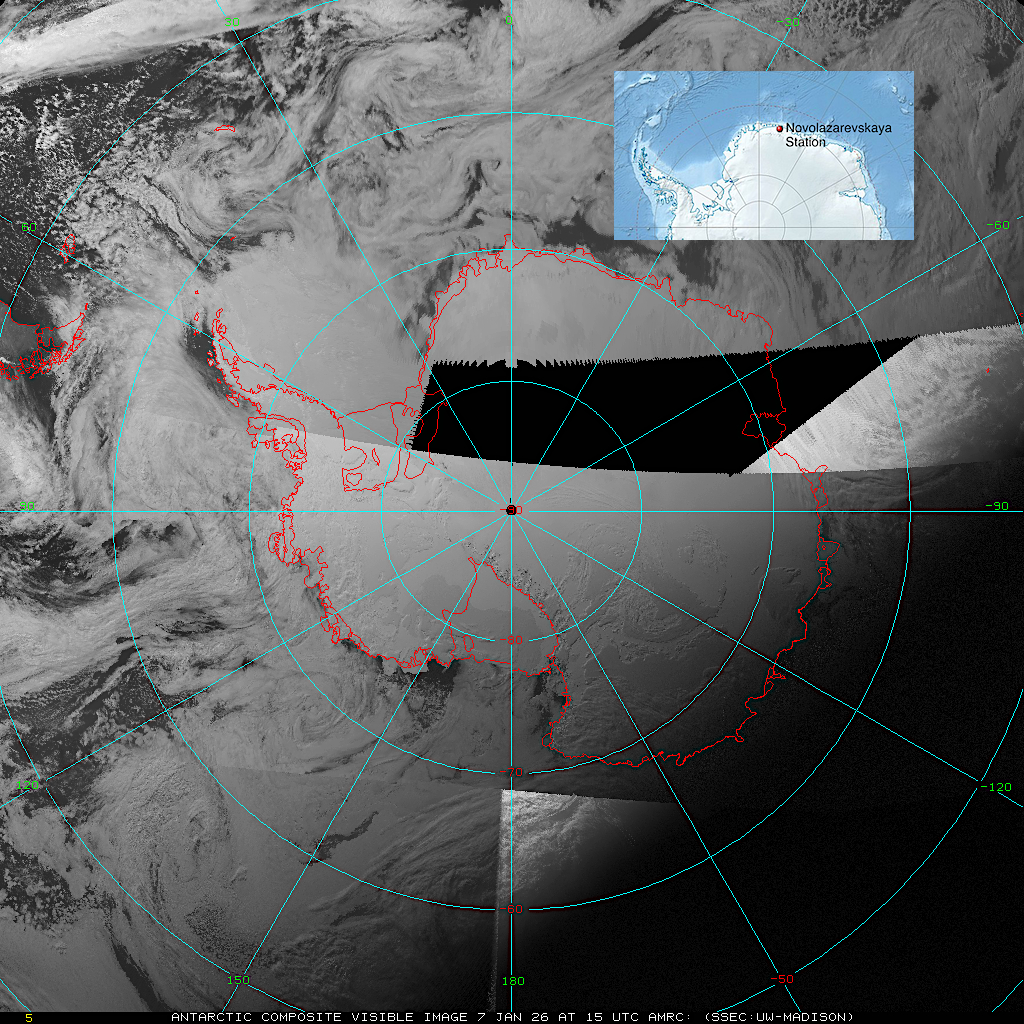
Visible satellite imagery of Antarctica 7 January 2026 15:00 UTC Source
Keith’s note: I asked Grok to generate a weather forecast for the next week:
The following summaries are based on forecasts from nearby Novolazarevskaya Station, as Lake Untersee is a remote inland lake with similar coastal Antarctic summer conditions. Weather remains stable with low precipitation chances, high UV exposure, and variable winds. Forecasts are approximate and can change rapidly in Antarctica.
January 7, 2026: Mostly sunny skies throughout the day with clear conditions at night. High around 0°C (32°F), low near -8°C (18°F). Light and variable winds, no precipitation expected.
January 8, 2026: Abundant sunshine with clear skies persisting into the night. Temperatures reaching a high of 2°C (36°F) and a low of -5°C (23°F). Winds remain light and variable, with zero chance of precipitation.
January 9, 2026: Sunny in the morning transitioning to partly cloudy skies later. High of 1°C (34°F), low around -6°C (21°F). Southeast winds at 5-10 km/h, dry conditions prevailing.
January 10, 2026: Predominantly clear skies all day. Expect a high near 0°C (32°F) and a low of -7°C (19°F). East winds blowing at 5-15 km/h, no rain or snow anticipated.
January 11, 2026: Mostly sunny with occasional clouds. High temperature of 1°C (34°F), dropping to -6°C (21°F) at night. Southeast winds around 10 km/h, remaining dry.
January 12, 2026: Clear and calm conditions dominating. High about 0°C (32°F), low near -8°C (18°F). Light variable winds, with no precipitation in sight.
January 13, 2026: Partly cloudy skies with some sun. Temperatures with a high of -1°C (30°F) and a low of -9°C (16°F). East winds at 5-10 km/h, continued dry weather.
Keith’s note: Astrobiologist Dale Andersen is heading back in Antarctica at Lake Untersee in January-February 2026 for another field season of research. Dale’s work is coordinated through the SETI Institute. We’ll be posting his updates here. You can read about his prior exploits from this field season and past field seasons back to the 1990s.
Related Links
- Previous reports 2026-1996
- Astrobiologist Dale Andersen’s Antarctic Field Report: Preview: 2026 Lake Untersee Field Seas
- Keith: Dale and I have been proving research updates – from Antarctica – since 1996. We think we actually had the first webserver (located in my old condo) updated from Antarctica. More details here: Dale Andersen’s 1996 Antarctic Field Research Photo Albums
Originally written by Keith Cowing, published on Astrobiology.com here. Previous reports back to 1996 are available at https://astrobiology.com/dale-andersens-field-reports.
Listen to this update read by AI:
Our new storage facility at the Ultima Airbase ice runway is the smaller structure on the right — Dale Andersen
Hi Keith, we had another busy day moving and sorting gear. We hope to wrap that up tomorrow, and if everything comes together, we will head out on the traverse to Lake Untersee Sunday morning.
The weather has been pleasant—maybe a little too warm during the day—but sunny, with little wind for most of it, which makes the loading and sorting a lot more manageable.
One real improvement this season is that we now have a dedicated place to stage everything at the Ultima airbase: a new WeatherPort hut (about 30 × 30 × 13 ft). For the first time we will be able to keep all of our gear in one spot, including the snowmobiles and the ATV, instead of chasing equipment across multiple caches.
Just as important, it gives us a sheltered workspace when we need to lay things out, troubleshoot, or do maintenance without fighting the wind and drifting snow.
The storage facility next to ours (middle one in the top image) is twice as long (60 ft). Both structures are Weatherport structures by AKS Industries
Hopefully one more day of hard work and we are off to the mountains and to Untersee Oasis!
Cheers,
— Dale —
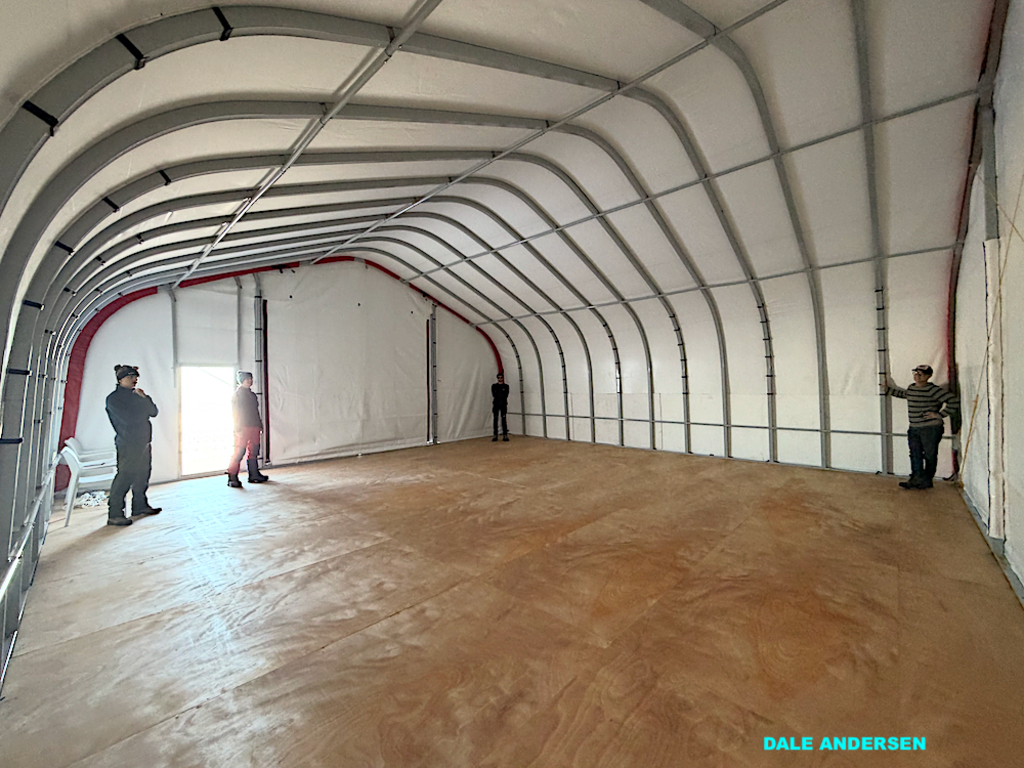
Interior view — Dale Andersen
As you can see it is pretty voluminous inside! We can also open the main door which allows us to drive in the snowmobiles or have larger items brought inside. A big shout out to the crew at the Ultima airbase for putting this up over the holidays for us!
Keith’s note: Astrobiologist Dale Andersen is heading back in Antarctica at Lake Untersee in January-February 2026 for another field season of research.
- Previous reports
- Astrobiologist Dale Andersen’s Antarctic Field Report: Preview: 2026 Lake Untersee Field Seas
Dale and I have been proving research updates – from Antarctica – since 1996. We think we actually had the first webserver (located in my old condo) updated from Antarctica. More details here: Dale Andersen’s 1996 Antarctic Field Research Photo Albums
Originally written by Keith Cowing, published on Astrobiology.com here. Previous reports back to 1996 are available at https://astrobiology.com/dale-andersens-field-reports.
Listen to this update read by AI:

Traverse team prepares for departure from Ultima Air strip to Lake Untersee — Dale Andersen.
Update: Dale and his team are now at Lake Untersee at S 71.260082° E 13.506017° at an elevation of 2,645 ft. Picture below.
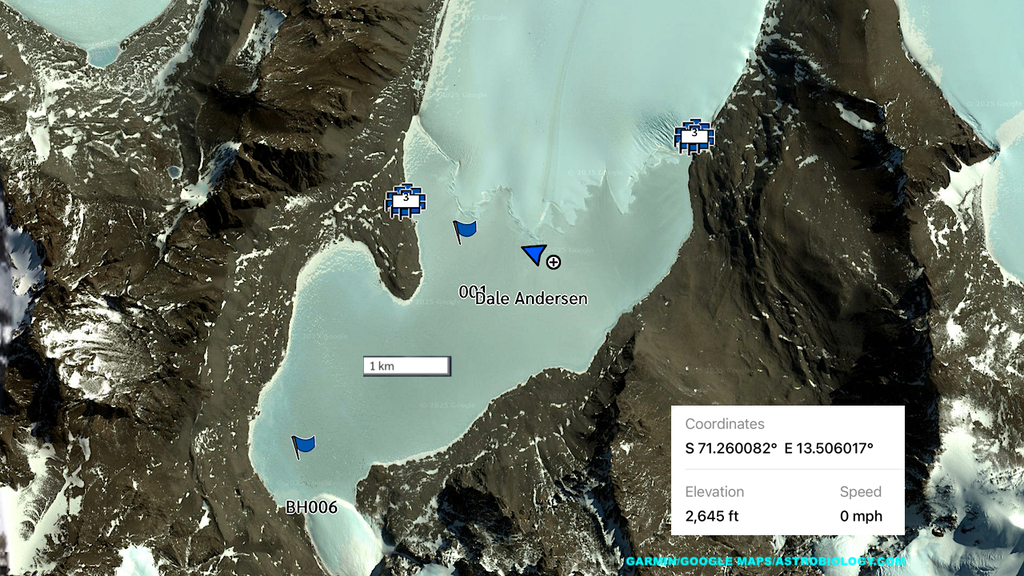
Dale Andersen and his team are now at Lake Untersee at S 71.260082° E 13.506017° at an elevation of 2,645 ft. – Image derived from Garmin and Google Maps.

Dale and his team are heading toward the shore of Lake Untersee to start the process of setting up their base camp — Dale Andersen.
Keith’s earlier note: This morning Dale Andersen and his team departed their arrival point at Ultima Air base and headed south to Lake Untersee. They departed around 6:30 am ET and expected to arrive at the shore of Lake Untersee at their traditional base camp location around 12:00 – 12:30 pm ET.
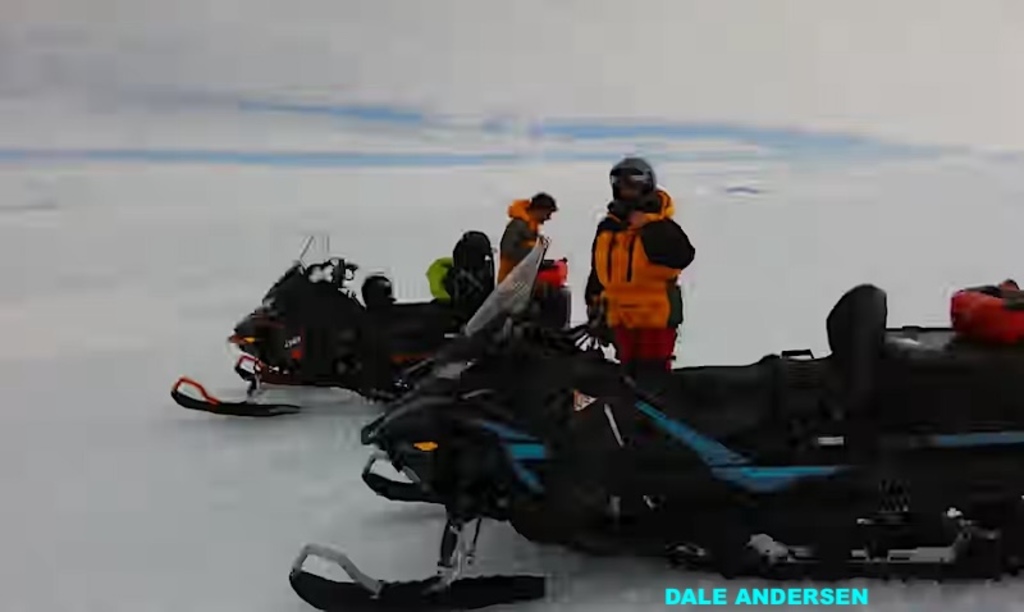
The traverse was done by snowmobiles pulling sledges packed with gear and supplies. — Dale Andersen
Dale has been doing research in the region around Lake Untersee for many years. As such they have worked out a standard path around terrain that they follow more or less – with weather altering the course slightly from one trip to another.
You can see the multiple tracks over the past few years on the Garmin tracker below – and the terrain they traverse on the Garmin map following that.

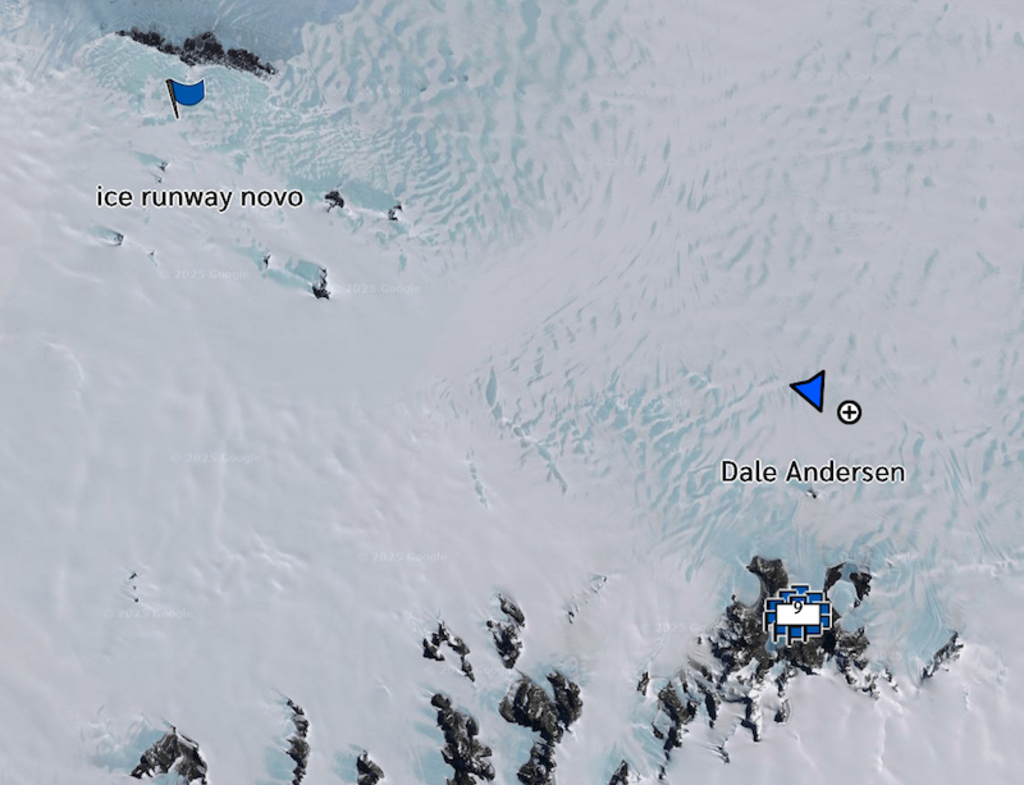
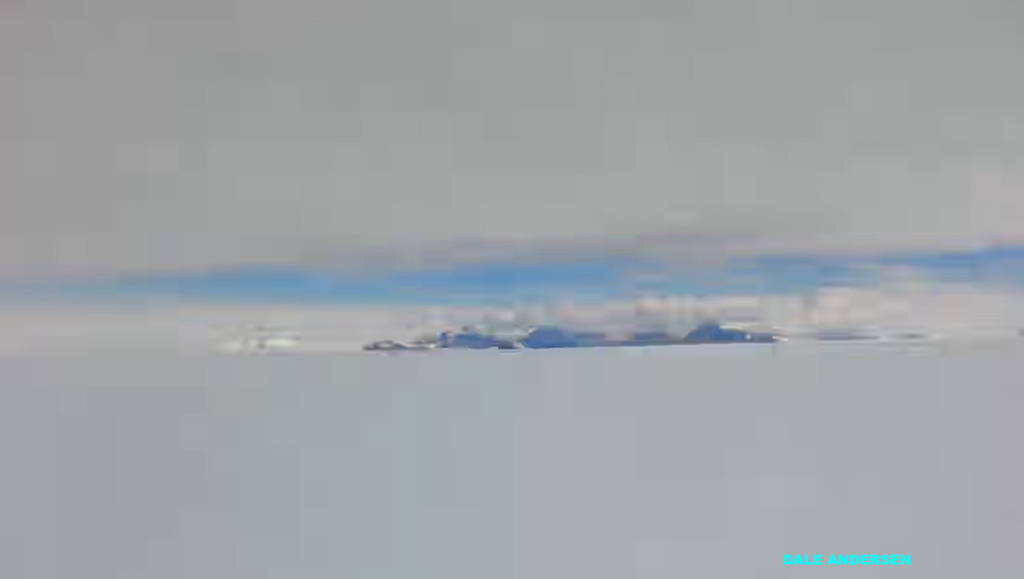
The image below was sent from 71.05436° S, 13.51273° E showing the rocky formations surrounding the Untersee region at 10:42 am ET during final approach. At 11;27 am ET Dale sent a text saying “Do you see our track? Getting close.”– Dale Andersen
Keith’s note: Astrobiologist Dale Andersen is heading back in Antarctica at Lake Untersee in January-February 2026 for another field season of research. Dale and I have been proving research updates – from Antarctica – since 1996. We think we actually had the first webserver (located in my old condo) updated from Antarctica.
More details here: Dale Andersen’s 1996 Antarctic Field Research Photo Albums







News
Related News
Jul 10, 2026
SETI Institute Achievements: Q1 2026 Activity Report
#Activity Reports #Carl Sagan Center #Outreach #Education #AIR #Community #Research
Jun 4, 2026
SETI Institute In the News: May Roundup 2026
#SETI Institute in the News #SETI Institute #Community #Solar System #Matija Ćuk #Neptune #SETI #Bill Diamond #UAPs #Drake Awards #Lori Marino #Matthew Tiscareno #Outreach #Exoplanets #Carl Sagan Center
Jun 1, 2026
SETI Institute Awards $1 Million in STRIDE Grants to Advance Astrobiology, Exoplanet Science, and Public Engagement
#Press Releases #STRIDE #Research #Carl Sagan Center #Spectroscopy #Solar System #SETI #Climate and Bioscience #Astronomy #Astrobiology #Exoplanets #Data Science #Education #Outreach #Hat Creek Radio Observatory #Unistellar #SkyMapper
May 13, 2026
SETI Institute to Honor Dr. Matthew Tiscareno with 2026 Carl Sagan Center Director’s Award
The Drake Awards event will also recognize SETI Forward and SETI Institute REU student award recipients. #Press Releases #Drake Awards #Frank Drake #SETI #Awards #Planetary Astronomy #Astrobiology #SETI Forward #Education #Carl Sagan Center #Matthew Tiscareno #Nathalie Cabrol #REU
May 4, 2026
SETI Institute Announces Nominees for the Speculative Life BioArt Residency
Six international artists shortlisted for a new residency at the intersection of art, astrobiology, and biotechnology #AIR #SETI Institute #Speculative Life #Astrobiology #Danielle Siembieda #Nathalie Cabrol
Apr 27, 2026
Rethinking Organics on Mars
By Nathalie A. Cabrol, Director of the Carl Sagan Center for Research, SETI Institute #Mars #Astrobiology #Solar System #Curiosity Rover #NASA Missions and Observatories #Nathalie Cabrol
Jul 10, 2026
#Activity Reports
#Carl Sagan Center
#Outreach
#Education
#AIR
#Community
#Research
Jun 4, 2026
#SETI Institute in the News
#SETI Institute
#Community
#Solar System
#Matija Ćuk
#Neptune
#SETI
#Bill Diamond
#UAPs
#Drake Awards
#Lori Marino
#Matthew Tiscareno
#Outreach
#Exoplanets
#Carl Sagan Center
SETI Institute In the News: May Roundup 2026
Jun 1, 2026
#Press Releases
#STRIDE
#Research
#Carl Sagan Center
#Spectroscopy
#Solar System
#SETI
#Climate and Bioscience
#Astronomy
#Astrobiology
#Exoplanets
#Data Science
#Education
#Outreach
#Hat Creek Radio Observatory
#Unistellar
#SkyMapper
SETI Institute Awards $1 Million in STRIDE Grants to Advance Astrobiology, Exoplanet Science, and Public Engagement
May 13, 2026
SETI Institute to Honor Dr. Matthew Tiscareno with 2026 Carl Sagan Center Director’s Award
The Drake Awards event will also recognize SETI Forward and SETI Institute REU student award recipients.
#Press Releases
#Drake Awards
#Frank Drake
#SETI
#Awards
#Planetary Astronomy
#Astrobiology
#SETI Forward
#Education
#Carl Sagan Center
#Matthew Tiscareno
#Nathalie Cabrol
#REU
May 4, 2026
SETI Institute Announces Nominees for the Speculative Life BioArt Residency
Six international artists shortlisted for a new residency at the intersection of art, astrobiology, and biotechnology
#AIR
#SETI Institute
#Speculative Life
#Astrobiology
#Danielle Siembieda
#Nathalie Cabrol
Apr 27, 2026
Rethinking Organics on Mars
By Nathalie A. Cabrol, Director of the Carl Sagan Center for Research, SETI Institute
#Mars
#Astrobiology
#Solar System
#Curiosity Rover
#NASA Missions and Observatories
#Nathalie Cabrol
Research
Related Projects

SkyMapper • SETI • Citizen Science • Astronomy
SkyMapper: Expanding Access to Real-time Astronomy Through a Global Astronomical Network
SkyMapper and the SETI Institute are connecting educators, students and the public to live astronomical observations through a distributed astronomical network. #SkyMapper #SETI #Citizen Science #Astronomy
VPL
Virtual Planetary Laboratory
How can we best assess whether an exoplanet supports life? #VPL
Discovery and Futures Lab
Discovery and Futures Lab
What happens if life beyond Earth is discovered? The Discovery and Futures Lab at the SETI Institute fosters novel and anticipatory research at the intersection of science, society, our planet, and the search for life beyond Earth. #Discovery and Futures Lab
May 17, 2026
SkyMapper: Expanding Access to Real-time Astronomy Through a Global Astronomical Network
SkyMapper and the SETI Institute are connecting educators, students and the public to live astronomical observations through a distributed astronomical network.
#SkyMapper
#SETI
#Citizen Science
#Astronomy
May 5, 2026
Virtual Planetary Laboratory
How can we best assess whether an exoplanet supports life?
#VPL
Apr 16, 2026
Discovery and Futures Lab
What happens if life beyond Earth is discovered? The Discovery and Futures Lab at the SETI Institute fosters novel and anticipatory research at the intersection of science, society, our planet, and the search for life beyond Earth.
#Discovery and Futures Lab
Support Us
Support the
SETI Institute
Scientists are getting closer in their search for life beyond earth. But with limited federal funding for the search for extraterrestrial intelligence, supporters are the reason cutting-edge scientists can keep their eyes on the sky.
