)

Author: Keith Cowing, Dale Andersen
Thursday, Feb 05, 2026
Dale Andersen’s Antarctic Status Report (1 Feb 2026)What: Ongoing astrobiology field research at Lake Untersee, Antarctica, led by Senior Research Scientist Dale Andersen. This status report focuses on recent field activities and weather conditions as the team progresses through the 2026 season. Where & When: Lake Untersee base camp — February 1, 2026 (late austral summer). Key Field Activities:
Environmental Conditions:
Why It Matters:
|
|
Updates
|
Originally written by Keith Cowing, published on Astrobiology.com here. Previous reports back to 1996 are available at https://astrobiology.com/dale-andersens-field-reports.
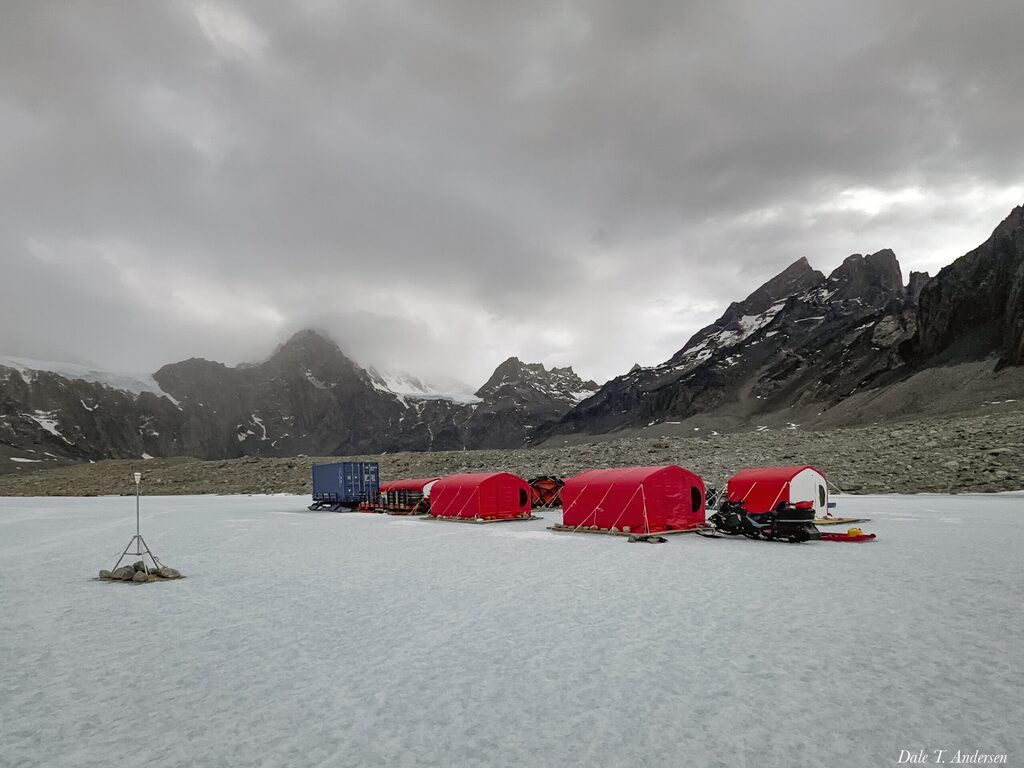
Lake Untersee Base Camp on 1 February 2026 — Dale Andersen
Dale: Hi Keith, We’ve had a productive few days since I last checked in. Yesterday and today we worked on the eastern slopes adjacent to the Anuchin Glacier – Denis and his student Efe have been collecting samples of ice in a few areas and I mapped it in with the Trimble GNSS receivers I have on hand.
We drilled a couple of holes in the lake – one to start a dive hole, the other to deploy a dissolved oxygen sensor that will track changes during freeze-up beneath the ice. But today marks another shift in the weather pattern.
The image is of the camp a just a few moments ago. Looks like tomorrow and Thursday will be snowy/blowy days. All good as long as the winds do not get crazy!
Cheers, from Untersee, snow just starting to fall, winds starting to pick up..; Power going off in a minute and off to bed, more tomorrow!
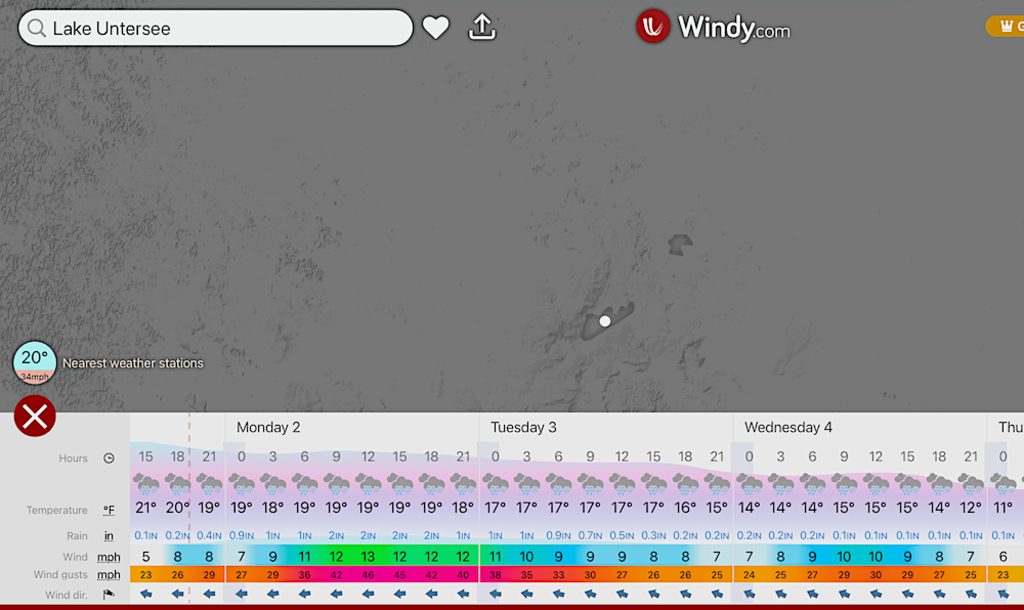
Weather forecast from Gemini
For the period of 1–8 February 2026, Lake Untersee is experiencing a transition from mid-summer peak warmth toward the cooler late-summer season. Based on reports from Dale Andersen’s Astrobiology Field Season, the forecast is as follows:
Daily Outlook
- 1–3 February: Expect snow showers and overcast skies. Daytime highs will hover around 17°F to 20°F (-8°C to -6°C), with moderate easterly winds of 13–21 mph.
- 4–6 February: Conditions will shift to mostly cloudy with decreasing chances of snow. Temperatures will begin to drop, with highs reaching 10°F to 16°F (-12°C to -9°C) and lows dipping into the single digits.
- 7–8 February: Skies are expected to clear, becoming partly sunny to clear. However, temperatures will be significantly colder, with daytime highs around 7°F to 8°F (-14°C) and nighttime lows reaching -3°F (-19°C).
Operational Conditions
- Extreme Wind Risks: While average winds are moderate, the region is highly susceptible to sudden blizzard conditions with gusts that can exceed 67 mph (30 m/s). Teams on-site should ensure all shelters are securely anchored.
- Daylight & UV: Expect nearly 24-hour daylight, though actual sunshine may be limited by cloud cover early in the week. Use high-SPF protection as UV exposure remains constant during outdoor work.
- Visibility: Rapid changes in visibility are common during the predicted snow showers early in the week.
Keith’s note: Astrobiologist Dale Andersen is heading back in Antarctica at Lake Untersee in January-February 2026 for another field season of research.
- Previous reports
- Astrobiologist Dale Andersen’s Antarctic Field Report: Preview: 2026 Lake Untersee Field Seas
Dale and I have been proving research updates – from Antarctica – since 1996. We think we actually had the first webserver (located in my old condo) updated from Antarctica. More details here: Dale Andersen’s 1996 Antarctic Field Research Photo Albums







News
Related News
Jul 21, 2026
Celebrating 25 Years of Exoplanet Astrobiology: Welcoming the Virtual Planetary Laboratory to its New Home at the SETI Institute
#VPL #Astrobiology #SETI Institute #Victoria Meadows #Andrew Lincowski #Eric Wolf #Nicholas Wogan #Kimberly Bott #Hannah Dawson
Jul 10, 2026
SETI Institute Achievements: Q1 2026 Activity Report
#Activity Reports #Carl Sagan Center #Outreach #Education #AIR #Community #Research
Jun 4, 2026
SETI Institute In the News: May Roundup 2026
#SETI Institute in the News #SETI Institute #Community #Solar System #Matija Ćuk #Neptune #SETI #Bill Diamond #UAPs #Drake Awards #Lori Marino #Matthew Tiscareno #Outreach #Exoplanets #Carl Sagan Center
Jun 1, 2026
SETI Institute Awards $1 Million in STRIDE Grants to Advance Astrobiology, Exoplanet Science, and Public Engagement
#Press Releases #STRIDE #Research #Carl Sagan Center #Spectroscopy #Solar System #SETI #Climate and Bioscience #Astronomy #Astrobiology #Exoplanets #Data Science #Education #Outreach #Hat Creek Radio Observatory #Unistellar #SkyMapper
May 13, 2026
SETI Institute to Honor Dr. Matthew Tiscareno with 2026 Carl Sagan Center Director’s Award
The Drake Awards event will also recognize SETI Forward and SETI Institute REU student award recipients. #Press Releases #Drake Awards #Frank Drake #SETI #Awards #Planetary Astronomy #Astrobiology #SETI Forward #Education #Carl Sagan Center #Matthew Tiscareno #Nathalie Cabrol #REU
May 4, 2026
SETI Institute Announces Nominees for the Speculative Life BioArt Residency
Six international artists shortlisted for a new residency at the intersection of art, astrobiology, and biotechnology #AIR #SETI Institute #Speculative Life #Astrobiology #Danielle Siembieda #Nathalie Cabrol
Jul 21, 2026
#VPL
#Astrobiology
#SETI Institute
#Victoria Meadows
#Andrew Lincowski
#Eric Wolf
#Nicholas Wogan
#Kimberly Bott
#Hannah Dawson
Jul 10, 2026
#Activity Reports
#Carl Sagan Center
#Outreach
#Education
#AIR
#Community
#Research
SETI Institute Achievements: Q1 2026 Activity Report
Jun 4, 2026
#SETI Institute in the News
#SETI Institute
#Community
#Solar System
#Matija Ćuk
#Neptune
#SETI
#Bill Diamond
#UAPs
#Drake Awards
#Lori Marino
#Matthew Tiscareno
#Outreach
#Exoplanets
#Carl Sagan Center
SETI Institute In the News: May Roundup 2026
Jun 1, 2026
#Press Releases
#STRIDE
#Research
#Carl Sagan Center
#Spectroscopy
#Solar System
#SETI
#Climate and Bioscience
#Astronomy
#Astrobiology
#Exoplanets
#Data Science
#Education
#Outreach
#Hat Creek Radio Observatory
#Unistellar
#SkyMapper
SETI Institute Awards $1 Million in STRIDE Grants to Advance Astrobiology, Exoplanet Science, and Public Engagement
May 13, 2026
SETI Institute to Honor Dr. Matthew Tiscareno with 2026 Carl Sagan Center Director’s Award
The Drake Awards event will also recognize SETI Forward and SETI Institute REU student award recipients.
#Press Releases
#Drake Awards
#Frank Drake
#SETI
#Awards
#Planetary Astronomy
#Astrobiology
#SETI Forward
#Education
#Carl Sagan Center
#Matthew Tiscareno
#Nathalie Cabrol
#REU
May 4, 2026
SETI Institute Announces Nominees for the Speculative Life BioArt Residency
Six international artists shortlisted for a new residency at the intersection of art, astrobiology, and biotechnology
#AIR
#SETI Institute
#Speculative Life
#Astrobiology
#Danielle Siembieda
#Nathalie Cabrol
Research
Related Projects

SkyMapper • SETI • Citizen Science • Astronomy
SkyMapper: Expanding Access to Real-time Astronomy Through a Global Astronomical Network
SkyMapper and the SETI Institute are connecting educators, students and the public to live astronomical observations through a distributed astronomical network. #SkyMapper #SETI #Citizen Science #Astronomy
VPL
Virtual Planetary Laboratory
How can we best assess whether an exoplanet supports life? #VPL
Discovery and Futures Lab
Discovery and Futures Lab
What happens if life beyond Earth is discovered? The Discovery and Futures Lab at the SETI Institute fosters novel and anticipatory research at the intersection of science, society, our planet, and the search for life beyond Earth. #Discovery and Futures Lab
May 17, 2026
SkyMapper: Expanding Access to Real-time Astronomy Through a Global Astronomical Network
SkyMapper and the SETI Institute are connecting educators, students and the public to live astronomical observations through a distributed astronomical network.
#SkyMapper
#SETI
#Citizen Science
#Astronomy
May 5, 2026
Virtual Planetary Laboratory
How can we best assess whether an exoplanet supports life?
#VPL
Apr 16, 2026
Discovery and Futures Lab
What happens if life beyond Earth is discovered? The Discovery and Futures Lab at the SETI Institute fosters novel and anticipatory research at the intersection of science, society, our planet, and the search for life beyond Earth.
#Discovery and Futures Lab
Support Us
Support the
SETI Institute
Scientists are getting closer in their search for life beyond earth. But with limited federal funding for the search for extraterrestrial intelligence, supporters are the reason cutting-edge scientists can keep their eyes on the sky.
