)

Author: Keith Cowing, Dale Andersen
Friday, Jan 09, 2026

Base Camp Infrastructure on the ice at Lake Untersee, Antarctica — Dale Andersen.
At a Glance: Dale Andersen’s 2026 Antarctic Field SeasonExpedition Overview
Lead-Up & Travel
Scientific Focus
|
|
Updates
|
Originally written by Keith Cowing, published on Astrobiology.com here. Previous reports back to 1996 are available at https://astrobiology.com/dale-andersens-field-reports.
Listen to this update read by AI:
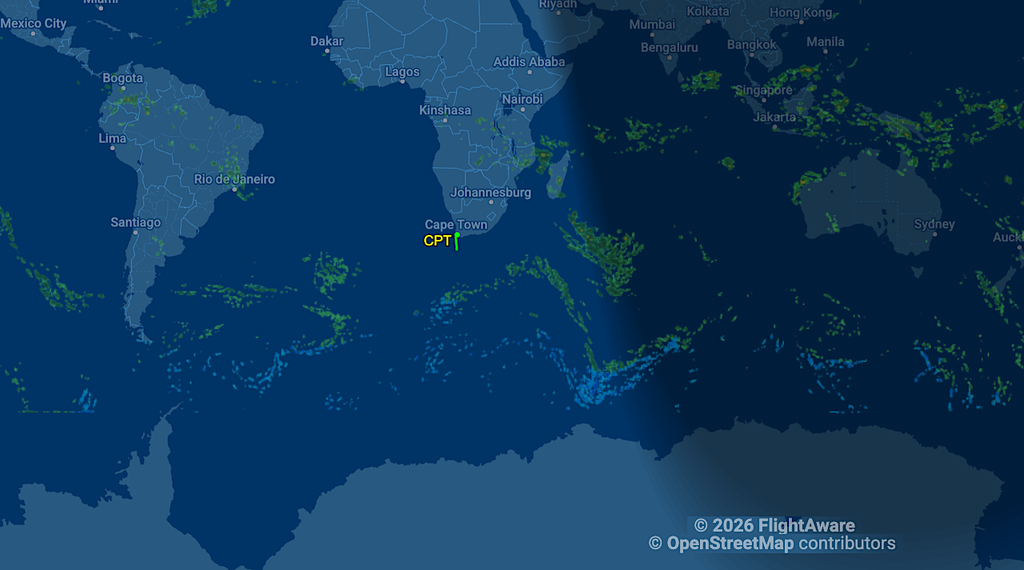
Flight data from ACY9010 – Cape Town, South Africa to Novolazarevskaya Station. You can TRACK at Flight Aware. – The realtime tracking always stops halfway way over the ocean due to how coverage is obtained – not to worry.
Keith’s note: Astrobiologist Dale Andersen is heading back in Antarctica at Lake Untersee in January-February 2026 for another field season of research. Update: Dale and team have landed. Picture below.
After a 5-6 hr flight from Cape Town, South Africa, Dale and his team will land at the Novolazarevskaya Station ice-runway in Antarctica. They will unpack, gather their stored gear, and prepare for the overland traverse to their research camp at Lake Untersee in a few days.
Dale’s work is coordinated through the SETI Institute. We’ll be posting his updates here. You can read about his prior exploits from this field season and past field seasons back to the 1990s.
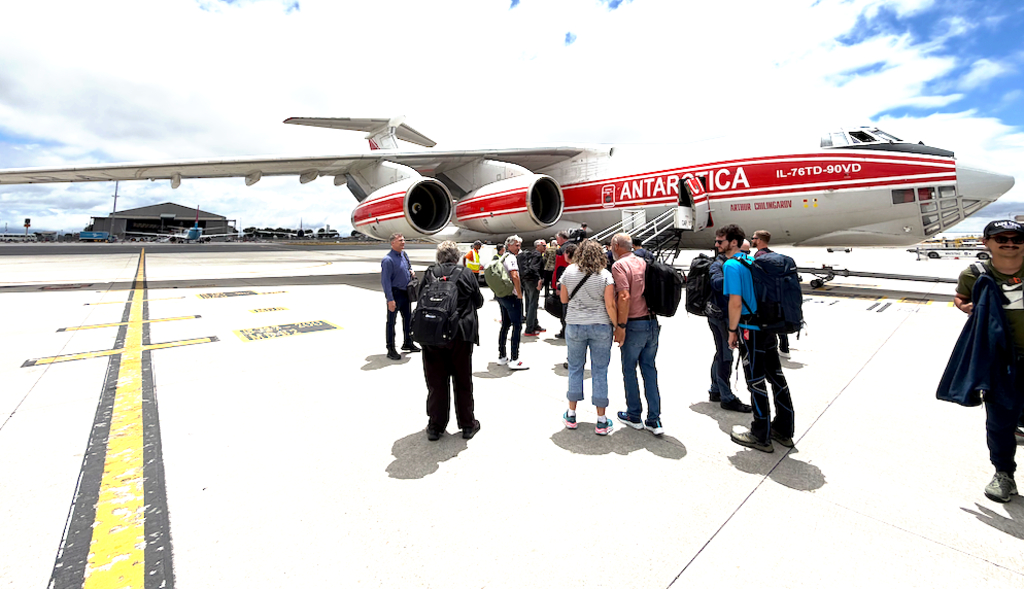
IL-76TD Jet – Dale Andersen.
Dale’s flight to Antarctica was aboard this IL-76TD jet seen just prior to departure from Cape Town today, 6 January 2026. “The Ilyushin Il-76 is a multi-purpose, fixed-wing, four-engine turbofan strategic airlifter designed by the Soviet Union’s Ilyushin design bureau as a commercial freighter in 1967. The Il-76 has seen extensive service as a commercial freighter for ramp-delivered cargo, especially for outsized or heavy items that cannot be carried by other means. It has also been used as an emergency response transport for civilian evacuations as well as for humanitarian aid and disaster relief around the world. Thanks to its ability to operate from unpaved runways, it has been useful in undeveloped areas. Specialized models have also been produced for aerial firefighting and zero-G training.” (Wikipedia)
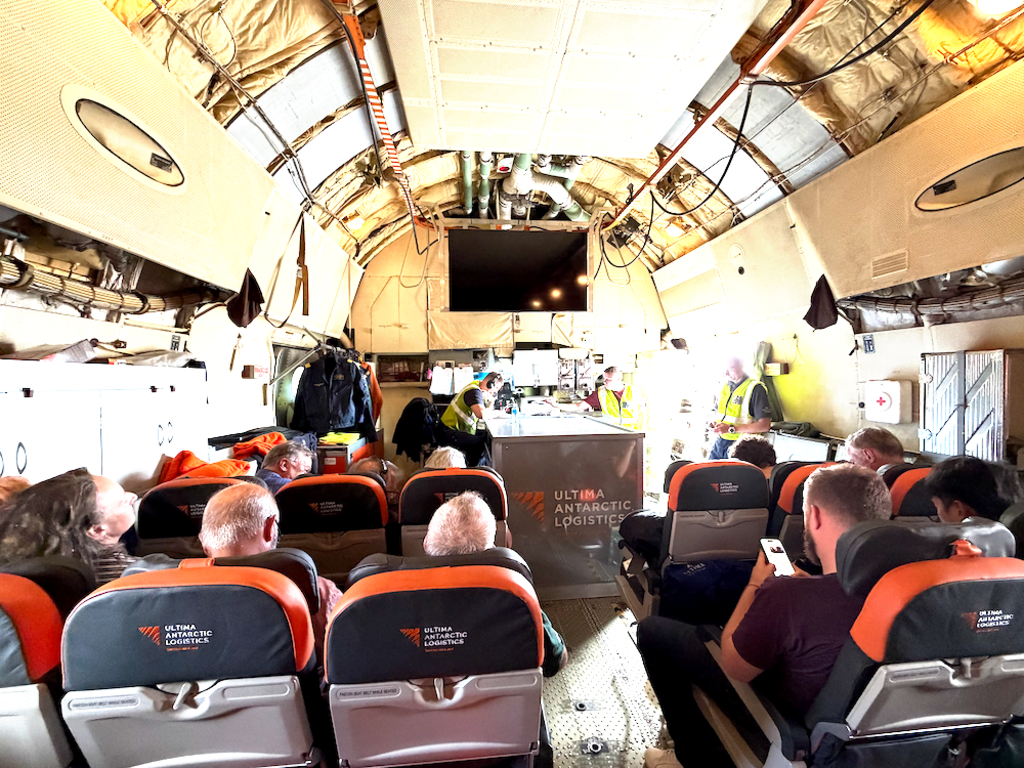
The view inside the IL-76TD – Dale Andersen.
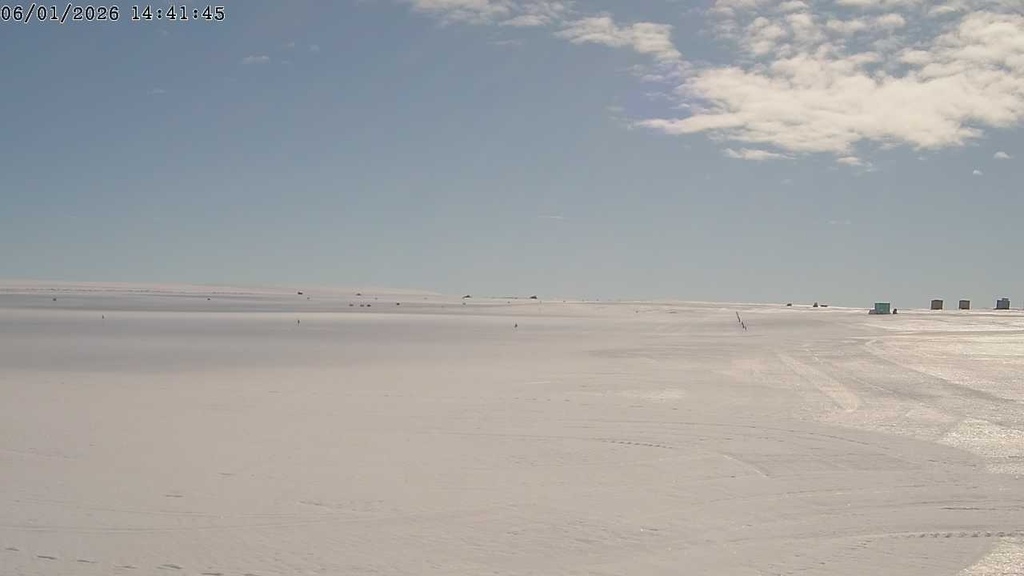
Weather at Novo Station as Dale departed South Africa. Here is the current condition webcam at Current weather condition at Ultima Airbase – Ultima Antarctic Logistics
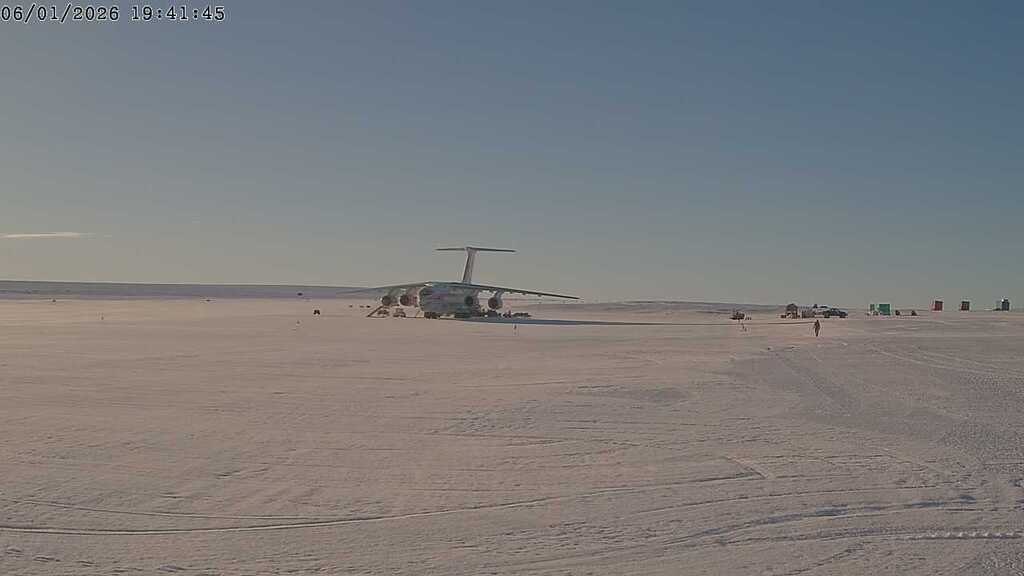
IL-76 on the runway at Novo station – Ultima Antarctic Logistics
Keith’s note: Astrobiologist Dale Andersen is heading back in Antarctica at Lake Untersee in January-February 2026 for another field season of research. Dale’s work is coordinated through the SETI Institute. We’ll be posting his updates here. You can read about his prior exploits from this field season and past field seasons back to the 1990s.
Related Links
- Previous reports 2026-1996
- Astrobiologist Dale Andersen’s Antarctic Field Report: Preview: 2026 Lake Untersee Field Seas
- Keith: Dale and I have been proving research updates – from Antarctica – since 1996. We think we actually had the first webserver (located in my old condo) updated from Antarctica. More details here: Dale Andersen’s 1996 Antarctic Field Research Photo Albums
Originally written by Keith Cowing, published on Astrobiology.com here. Previous reports back to 1996 are available at https://astrobiology.com/dale-andersens-field-reports.
Listen to this update read by AI:
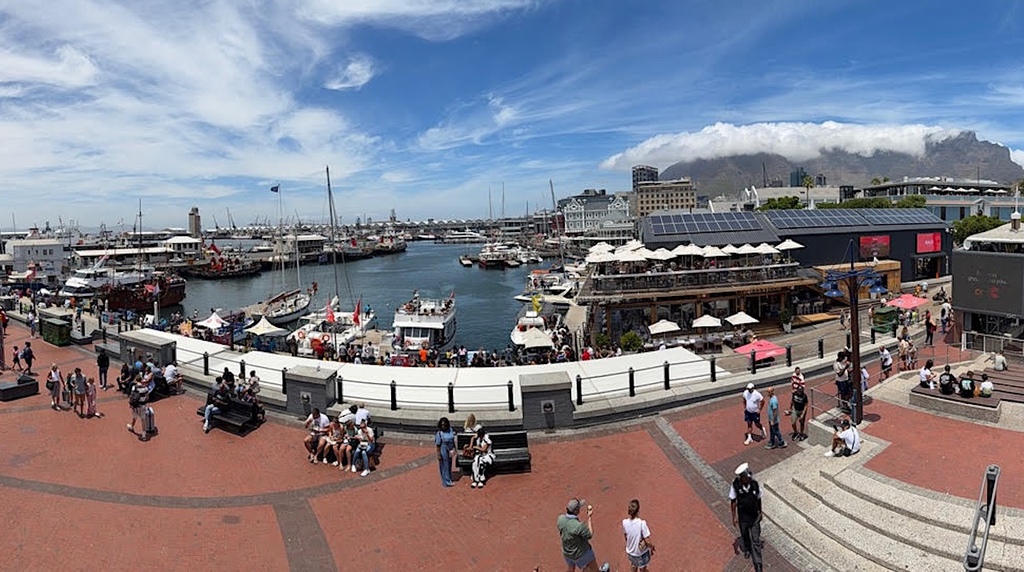
Cape Town – Dale Andersen.
Keith
The team and all of our gear and cargo made it to Cape Town, which feels especially welcoming right now—warm, bright, and easy to settle into. Over Table Mountain, a steady cap cloud drifts to the edge and spills down like a soft waterfall, then thins and vanishes as it warms while descending. And the Waterfront is its usual lively mix of locals and visitors, all moving at that unhurried pace that makes it a perfect place to spend a day or two before we head south.
The flight to the ice takes about five and a half hours to six hours—straightforward by Antarctic standards—and the forecast looks decent: little wind and temperatures hovering around freezing.
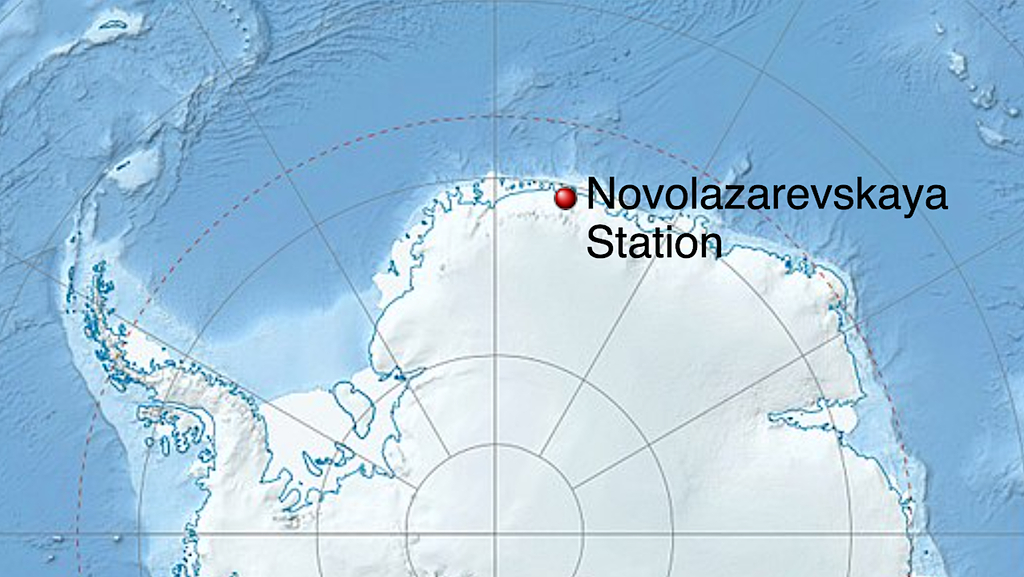
Novolazarevskaya Station, Antarctica — Wikipedia
After we land at Ultima Antarctic Logistics’ airbase at the ice runway, we will spend a couple of days preparing for the traverse inland. That means sorting polar clothing and staging gear, packing and loading the cargo sleds, going over the snowmobiles end-to-end, and making sure communications, check-in schedules, and emergency procedures are locked in—before we leave the logistics hub that serves as our primary lifeline for check-ins, weather updates, and support if we need it.
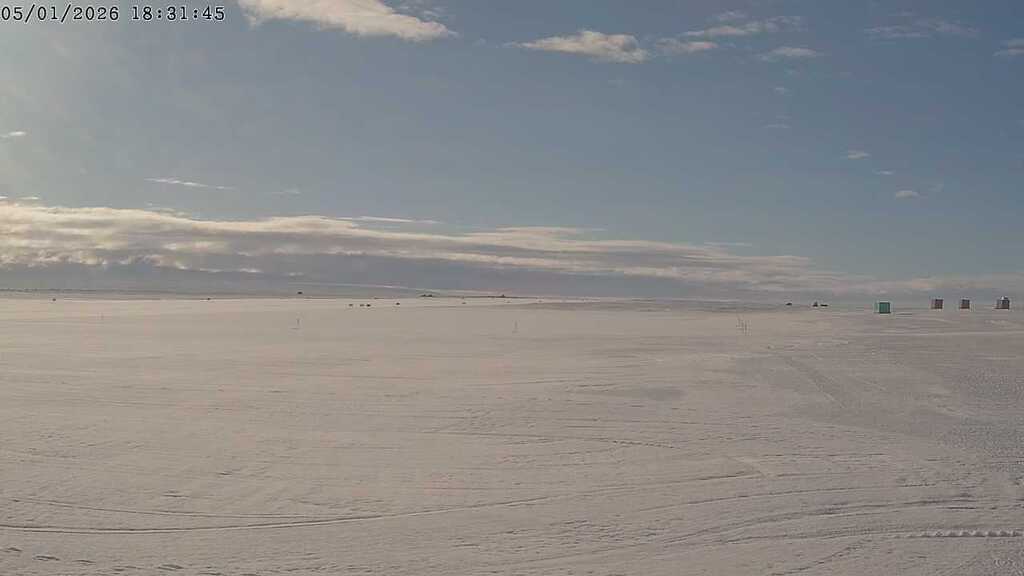
Here is a webcam view of the Ultima Airbase landing strip at Novo earlier today. FYI, the webcam self-updates may not always work.
Once everything is staged and we’ve put a few test miles on the snowmobiles, weather pending, we will start the traverse toward Lake Untersee (71.342° S, 13.473° E), an isolated oasis tucked into the mountains of Queen Maud Land. We will be working hard to get into the field and begin our program of research as soon as our camp is established and we have settled into our new home.
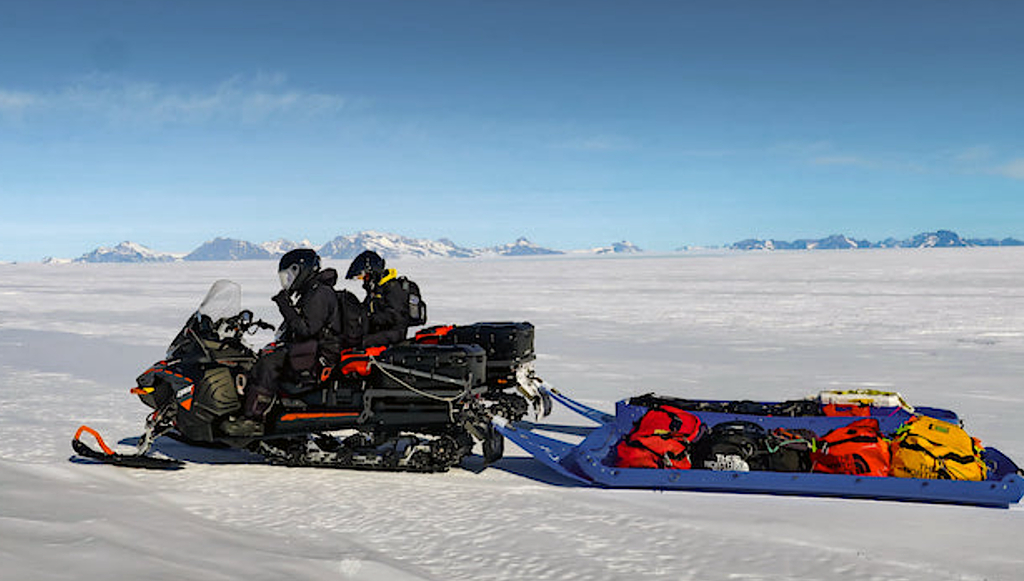
Making The Traverse From Novolazarevskaya Station to Lake Untersee in 2022 — Dale Andersen
When we reach the lake, we will spend the first couple of days building the camp—tents up, everything squared away and prepared for high winds or bad weather.
Getting the Starlink up and running is high on the priority list, both for routine safety check-ins with Ultima (at least twice daily) and for weather updates, messages, and a robust link back to the rest of the world.
Stay tuned—once we are on the ice, I will send more updates!
-Dale-
Related links.
- Previous reports
- Astrobiologist Dale Andersen’s Antarctic Field Report: Preview: 2026 Lake Untersee Field Seas
- Keith: Dale and I have been proving research updates – from Antarctica – since 1996. We think we actually had the first webserver (located in my old condo) updated from Antarctica. More details here: Dale Andersen’s 1996 Antarctic Field Research Photo Albums
Originally written by Keith Cowing, published on Astrobiology.com here. Previous reports back to 1996 are available at https://astrobiology.com/dale-andersens-field-reports.
Listen to this update read by AI:
Base Camp Infrastructure on the ice at Lake Untersee, Antarctica — Dale Andersen
Keith’s note: Astrobiologist Dale Andersen will be back in Antarctica at Lake Untersee from early January through the end of February 2026 for another field season of research, leading an international field team of graduate students and scientists from the United States, Canada, and Austria. His work is coordinated through the Carl Sagan Center within the SETI Institute, and we will be posting their updates here.
Dale and I first met in 1987 at the old NASA Headquarters Life Science Division, and we have been doing this kind of research reporting together ever since. You can read his previous field research reports, going back to 1996, here.
We are both Fellow Members of The Explorers Club, which earlier this year honored Dale with the prestigious Explorers Club Finn Ronne Memorial Award. As The Explorers Club put it: “Andersen’s work continues to inspire exploration, advancing public understanding of planetary science and the resilience of life.”
Join us as we follow Dale back to Lake Untersee in Antarctica and explore, virtually, the hidden world beneath its thick ice. There, a microbial ecosystem dominated by cyanobacteria offers a window into Earth’s earliest biosphere. Research in this extreme environment helps us think more about what life we might find on Mars and other icy worlds. These remote expeditionary activities in a harsh environment are directly relevant to the off-world exploration that Artemis crews will conduct on the Moon – and beyond.
To set the stage, watch this short film Dale made, “Whispers Beneath the Ice: Discovering the Hidden Life of Lake Untersee.” It offers a first look at this stark, beautiful place – and a hint of the discoveries that may lie ahead. Watch in 4K with the sound up.
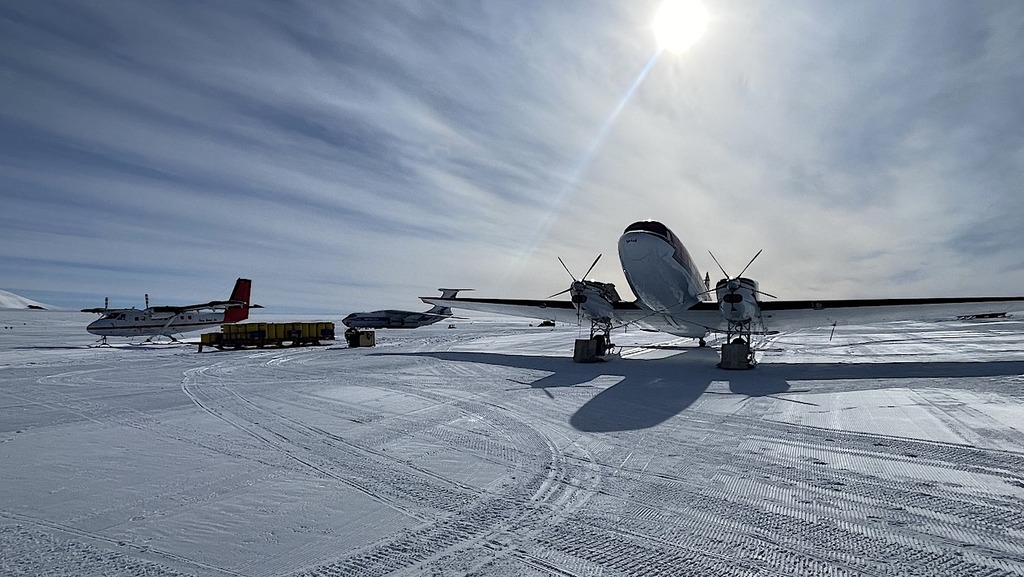
Planes on the Novo runway Left to right: Twin Otter; IL-76TD, Basler BT-67 (remanufactured and modified Douglas C-47 Skytrain / Douglas DC-3)
Field Season 2026
As in past years, Dale and his team will route through Cape Town, South Africa, before heading south. The plan is to arrive in Cape Town in the first few days of January 2026, depart for Antarctica around 6 January, and return from the ice at the end of February.
They will begin their expedition at the Novo Airbase (approximately 70.823° S, 11.641° E), operated by Ultima Antarctic Logistics out of Cape Town. Their closest neighbors on the ice are the nearby research stations at Schirmacher Oasis: Maitri, managed by India’s National Centre for Polar and Ocean Research, and Novolazarevskaya, (‘Novo Station’) operated by the Russian Antarctic Expedition.
You can see what conditions are like on the ice runway at Novo via this webcam operated by Ultima Antarctic Logistics. On many days you will see low clouds, flat light, and windy conditions – not a lot of contrast or detail. The camera view looks west. Most flights arrive from an approach from the west, landing into prevailing winds from the east. As conditions change, you may see the big IL-76 on the apron. Sometimes the wings of Ken Borek Basler transports (rebuilt/modified DC-3s) and Twin Otters appear in the frame as well.
If you check the location of the Novo Airbase on FlightRadar24, you can see the runway QAO/AT17. Depending on when you look, you may catch aircraft arriving or departing, along with other flights in the region – some research, some sightseeing. You can also see what is happening on the Novo Station runway via this webcam which updates every 10 minutes.
Once Dale and his team have loaded their small convoy of snowmobiles and tractors with gear, they turn south toward their destination: Lake Untersee.
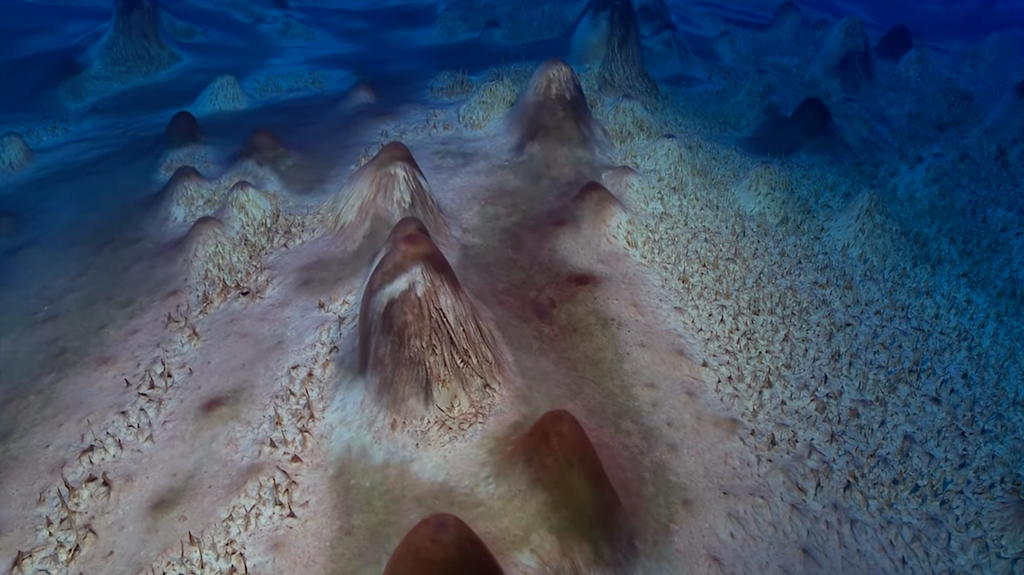
Microbial mats on the bottom of Lake Untersee under a perennial ice cover. — Dale Andersen
Lake Untersee – by Dale Andersen
Lake Untersee (71.342° S, 13.473° E): It’s a place few people have seen or even imagined, and distant from familiar, everyday surroundings. The weather can be as harsh as the terrain at times, with winds and blinding snow reaching 110 mph.
For four months the darkness is company only to the sounds of cracking ice and the ever-present howling of the winds. The surrounding mountains rise up majestically to soaring, pinnacled peaks, blocking the passage of the continental ice that surrounds them. The gentle slope of the Anuchin Glacier flows in from the north, halting at its edge. Lake Untersee, within the mountains of Queen Maud Land, is a world that resembles Earth’s earliest biosphere – one dominated by microbial life forming the same fabrics and structures that we see preserved in sediments dating back 3.45 billion years.
Beneath the thick perennial ice cover are cyanobacterial mats growing undisturbed as they did billions of years ago – it’s like a postcard from the past; one that can help us understand how those early ecosystems thrived on a planet with an atmosphere nearly devoid of oxygen.
Yet these cyanobacteria unlocked new secrets for life—they learned to harness sunlight, splitting water to release electrons and hydrogen, which they combined with carbon dioxide from the air to weave complex organic molecules. The oxygen, a mere metabolic leftover, drifted into the environment, unnoticed at first. In releasing oxygen, they ignited a quiet revolution that, over eons, transformed our planet into a world capable of sustaining complex, multicellular life.
Lake Untersee is a difficult place to live and work. But we are seeking new knowledge. Knowledge that will inform us about Earth’s past history and help us understand its future. Our research also helps guide the search for evidence of life on other distant worlds such as Mars or the outer moons of Jupiter or Saturn…or beyond.







News
Related News
Jul 10, 2026
SETI Institute Achievements: Q1 2026 Activity Report
#Activity Reports #Carl Sagan Center #Outreach #Education #AIR #Community #Research
Jun 4, 2026
SETI Institute In the News: May Roundup 2026
#SETI Institute in the News #SETI Institute #Community #Solar System #Matija Ćuk #Neptune #SETI #Bill Diamond #UAPs #Drake Awards #Lori Marino #Matthew Tiscareno #Outreach #Exoplanets #Carl Sagan Center
Jun 1, 2026
SETI Institute Awards $1 Million in STRIDE Grants to Advance Astrobiology, Exoplanet Science, and Public Engagement
#Press Releases #STRIDE #Research #Carl Sagan Center #Spectroscopy #Solar System #SETI #Climate and Bioscience #Astronomy #Astrobiology #Exoplanets #Data Science #Education #Outreach #Hat Creek Radio Observatory #Unistellar #SkyMapper
May 13, 2026
SETI Institute to Honor Dr. Matthew Tiscareno with 2026 Carl Sagan Center Director’s Award
The Drake Awards event will also recognize SETI Forward and SETI Institute REU student award recipients. #Press Releases #Drake Awards #Frank Drake #SETI #Awards #Planetary Astronomy #Astrobiology #SETI Forward #Education #Carl Sagan Center #Matthew Tiscareno #Nathalie Cabrol #REU
May 4, 2026
SETI Institute Announces Nominees for the Speculative Life BioArt Residency
Six international artists shortlisted for a new residency at the intersection of art, astrobiology, and biotechnology #AIR #SETI Institute #Speculative Life #Astrobiology #Danielle Siembieda #Nathalie Cabrol
Apr 27, 2026
Rethinking Organics on Mars
By Nathalie A. Cabrol, Director of the Carl Sagan Center for Research, SETI Institute #Mars #Astrobiology #Solar System #Curiosity Rover #NASA Missions and Observatories #Nathalie Cabrol
Jul 10, 2026
#Activity Reports
#Carl Sagan Center
#Outreach
#Education
#AIR
#Community
#Research
Jun 4, 2026
#SETI Institute in the News
#SETI Institute
#Community
#Solar System
#Matija Ćuk
#Neptune
#SETI
#Bill Diamond
#UAPs
#Drake Awards
#Lori Marino
#Matthew Tiscareno
#Outreach
#Exoplanets
#Carl Sagan Center
SETI Institute In the News: May Roundup 2026
Jun 1, 2026
#Press Releases
#STRIDE
#Research
#Carl Sagan Center
#Spectroscopy
#Solar System
#SETI
#Climate and Bioscience
#Astronomy
#Astrobiology
#Exoplanets
#Data Science
#Education
#Outreach
#Hat Creek Radio Observatory
#Unistellar
#SkyMapper
SETI Institute Awards $1 Million in STRIDE Grants to Advance Astrobiology, Exoplanet Science, and Public Engagement
May 13, 2026
SETI Institute to Honor Dr. Matthew Tiscareno with 2026 Carl Sagan Center Director’s Award
The Drake Awards event will also recognize SETI Forward and SETI Institute REU student award recipients.
#Press Releases
#Drake Awards
#Frank Drake
#SETI
#Awards
#Planetary Astronomy
#Astrobiology
#SETI Forward
#Education
#Carl Sagan Center
#Matthew Tiscareno
#Nathalie Cabrol
#REU
May 4, 2026
SETI Institute Announces Nominees for the Speculative Life BioArt Residency
Six international artists shortlisted for a new residency at the intersection of art, astrobiology, and biotechnology
#AIR
#SETI Institute
#Speculative Life
#Astrobiology
#Danielle Siembieda
#Nathalie Cabrol
Apr 27, 2026
Rethinking Organics on Mars
By Nathalie A. Cabrol, Director of the Carl Sagan Center for Research, SETI Institute
#Mars
#Astrobiology
#Solar System
#Curiosity Rover
#NASA Missions and Observatories
#Nathalie Cabrol
Research
Related Projects

SkyMapper • SETI • Citizen Science • Astronomy
SkyMapper: Expanding Access to Real-time Astronomy Through a Global Astronomical Network
SkyMapper and the SETI Institute are connecting educators, students and the public to live astronomical observations through a distributed astronomical network. #SkyMapper #SETI #Citizen Science #Astronomy
VPL
Virtual Planetary Laboratory
How can we best assess whether an exoplanet supports life? #VPL
Discovery and Futures Lab
Discovery and Futures Lab
What happens if life beyond Earth is discovered? The Discovery and Futures Lab at the SETI Institute fosters novel and anticipatory research at the intersection of science, society, our planet, and the search for life beyond Earth. #Discovery and Futures Lab
May 17, 2026
SkyMapper: Expanding Access to Real-time Astronomy Through a Global Astronomical Network
SkyMapper and the SETI Institute are connecting educators, students and the public to live astronomical observations through a distributed astronomical network.
#SkyMapper
#SETI
#Citizen Science
#Astronomy
May 5, 2026
Virtual Planetary Laboratory
How can we best assess whether an exoplanet supports life?
#VPL
Apr 16, 2026
Discovery and Futures Lab
What happens if life beyond Earth is discovered? The Discovery and Futures Lab at the SETI Institute fosters novel and anticipatory research at the intersection of science, society, our planet, and the search for life beyond Earth.
#Discovery and Futures Lab
Support Us
Support the
SETI Institute
Scientists are getting closer in their search for life beyond earth. But with limited federal funding for the search for extraterrestrial intelligence, supporters are the reason cutting-edge scientists can keep their eyes on the sky.
