)

Monday, Apr 04, 2022

SETI Institute Post-Doctoral Researchers, Dr Savin Varghese and Dr Chenoa Tremblay, in front of one of the 82-foot diameter dishes that makes up the Very Large Array.
April 4, 2022, Mountain View, CA – COSMIC SETI (the Commensal Open-Source Multimode Interferometer Cluster Search for Extraterrestrial Intelligence) took a big step towards using the National Science Foundation’s Karl G. Jansky Very Large Array (VLA) for 24/7 SETI observations. Fiber optic amplifiers and splitters are now installed for all 27 VLA antennas, giving COSMIC access to a complete and independent copy of the data streams from the entire VLA. In addition, the COSMIC system has used these links to successfully acquire VLA data, and the primary focus now is on developing the high-performance GPU (Graphical Processing Unit) code for analyzing data for the possible presence of technosignatures.
COSMIC is a collaboration between the SETI Institute and the National Radio Astronomy Observatory (NRAO), which operates the VLA, to bring a state-of-the-art search for extraterrestrial intelligence to the VLA for the first time. As the VLA conducts observations, COSMIC will enable SETI Institute scientists to access that data to analyze for evidence of technosignatures, signs of technology not caused by natural phenomena.
“Having all the VLA digital signals available to the COSMIC system is a major milestone, involving close collaboration with the NRAO VLA engineering team to ensure that the addition of the COSMIC hardware doesn’t in any way adversely affect existing VLA infrastructure,” said Jack Hickish, Digital Instrumentation Lead for COSMIC at the SETI Institute. “It is fantastic to have overcome the challenges of prototyping, testing, procurement, and installation – all conducted during both a global pandemic and semiconductor shortage – and we are excited to be able to move on to the next task of processing the many Tb/s of data to which we now have access.”


End results of the EDFA/Cosmic fiber work
There are several advantages to conducting SETI research with the VLA:
- The size of the VLA: Each of the VLA's 27 antennas is 25 meters in diameter, spread over 22 miles
- The VLA has a combined collecting area equivalent to a single-dish antenna of 130 meters across
- Each VLA antenna has 8 cryogenically cooled receivers covering the radio spectrum continuously from 1 to 50 GHz
- Some receivers can operate below 1 GHz down to 54 MHz, a band used on Earth for television broadcasting
Once up and running, it is estimated that COSMIC SETI will observe about 40 million galactic star systems in two years. It will be the most comprehensive SETI observing program undertaken in the Northern Hemisphere, with high sensitivity and a huge target list.
“I am excited by the ability of COSMIC to conduct the most comprehensive technosignature search ever in the Northern Hemisphere,” said Cherry Ng, SETI Institute COSMIC Project Scientist. “We will be able to monitor millions of stars with a sensitivity high enough to detect an Arecibo-like transmitter out to a distance of 25 parsecs (81 light-years), covering an observing frequency range from 230 MHz to 50 GHz, which includes many parts of the spectrum that have not yet been explored for ETI signals.”
The system should be fully operational by early 2023 and will conduct its first major observational campaign in parallel with the ongoing VLA Sky Survey (VLASS).
“We look forward to partnering with the SETI Institute on this exciting initiative and are pleased to see this important milestone in the technical work that will make this new science possible,” said NRAO Director Tony Beasley.
About the SETI Institute
Founded in 1984, the SETI Institute is a non-profit, multi-disciplinary research and education organization whose mission is to lead humanity’s quest to understand the origins and prevalence of life and intelligence in the Universe and to share that knowledge with the world. Our research encompasses the physical and biological sciences and leverages expertise in data analytics, machine learning and advanced signal detection technologies. The SETI Institute is a distinguished research partner for industry, academia and government agencies, including NASA and NSF.
Contact information
Rebecca McDonald
Director of Communications
SETI Institute
E-mail: [email protected]







News
Related News
Jul 21, 2026
Celebrating 25 Years of Exoplanet Astrobiology: Welcoming the Virtual Planetary Laboratory to its New Home at the SETI Institute
#VPL #Astrobiology #SETI Institute #Victoria Meadows #Andrew Lincowski #Eric Wolf #Nicholas Wogan #Kimberly Bott #Hannah Dawson
Jul 15, 2026
Alien World Chemistry Found Inside Meteorite That Struck New Jersey home
#Press Releases #Meteorites #Peter Jenniskens #JAMSTEC
Jun 5, 2026
Beyond Disclosure Day: The Real-World Protocols
#Press Releases #SETI #Astronomy #Bill Diamond #SETI Institute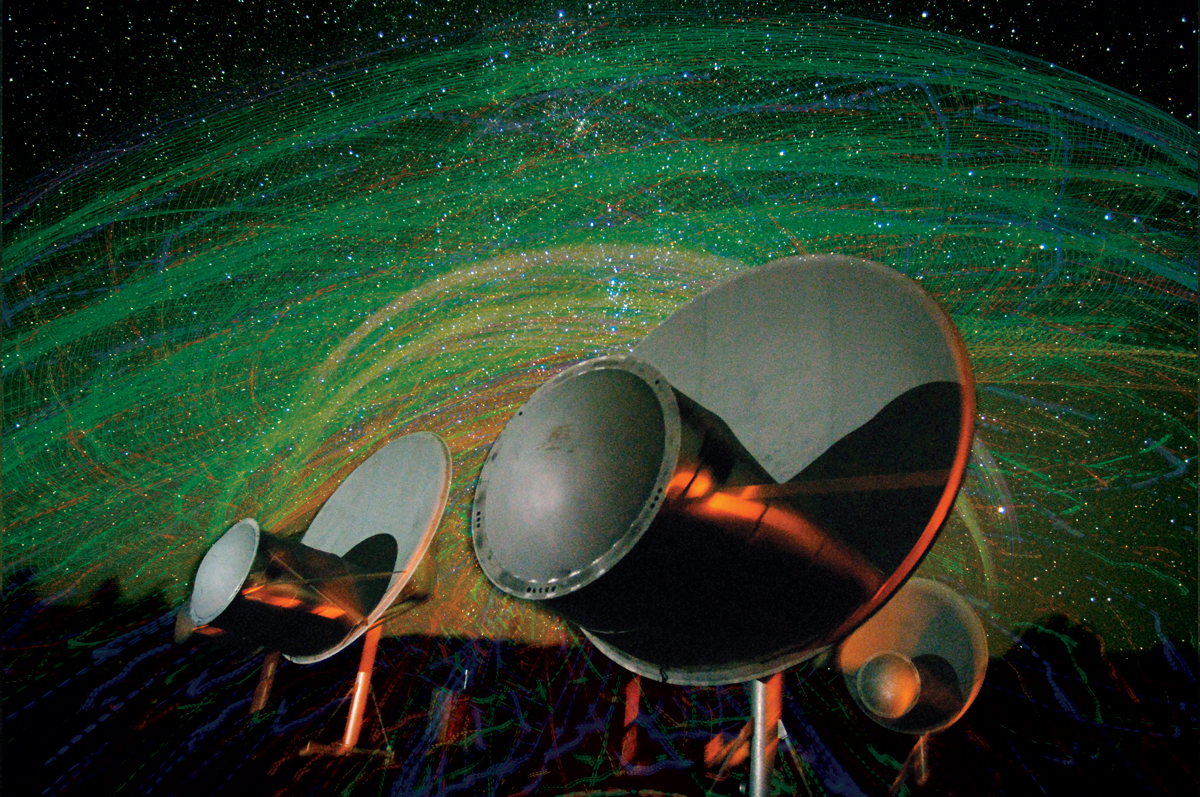
Jun 3, 2026
SETI Institute Looks for Signs of Technology in Interstellar Visitor 3I/ATLAS
Observations with the Allen Telescope Array set new limits on possible signals from extraterrestrial transmitters. #Press Releases #ATA #3I/ATLAS #Hat Creek Radio Observatory #Radio Astronomy #SETI
Jun 1, 2026
SETI Institute Awards $1 Million in STRIDE Grants to Advance Astrobiology, Exoplanet Science, and Public Engagement
#Press Releases #STRIDE #Research #Carl Sagan Center #Spectroscopy #Solar System #SETI #Climate and Bioscience #Astronomy #Astrobiology #Exoplanets #Data Science #Education #Outreach #Hat Creek Radio Observatory #Unistellar #SkyMapper
May 13, 2026
SETI Institute to Honor Dr. Matthew Tiscareno with 2026 Carl Sagan Center Director’s Award
The Drake Awards event will also recognize SETI Forward and SETI Institute REU student award recipients. #Press Releases #Drake Awards #Frank Drake #SETI #Awards #Planetary Astronomy #Astrobiology #SETI Forward #Education #Carl Sagan Center #Matthew Tiscareno #Nathalie Cabrol #REU
Jul 21, 2026
#VPL
#Astrobiology
#SETI Institute
#Victoria Meadows
#Andrew Lincowski
#Eric Wolf
#Nicholas Wogan
#Kimberly Bott
#Hannah Dawson
Jul 15, 2026
#Press Releases
#Meteorites
#Peter Jenniskens
#JAMSTEC
Alien World Chemistry Found Inside Meteorite That Struck New Jersey home
Jun 5, 2026
#Press Releases
#SETI
#Astronomy
#Bill Diamond
#SETI Institute
Beyond Disclosure Day: The Real-World Protocols
Jun 3, 2026
SETI Institute Looks for Signs of Technology in Interstellar Visitor 3I/ATLAS
Observations with the Allen Telescope Array set new limits on possible signals from extraterrestrial transmitters.
#Press Releases
#ATA
#3I/ATLAS
#Hat Creek Radio Observatory
#Radio Astronomy
#SETI
Jun 1, 2026
#Press Releases
#STRIDE
#Research
#Carl Sagan Center
#Spectroscopy
#Solar System
#SETI
#Climate and Bioscience
#Astronomy
#Astrobiology
#Exoplanets
#Data Science
#Education
#Outreach
#Hat Creek Radio Observatory
#Unistellar
#SkyMapper
SETI Institute Awards $1 Million in STRIDE Grants to Advance Astrobiology, Exoplanet Science, and Public Engagement
May 13, 2026
SETI Institute to Honor Dr. Matthew Tiscareno with 2026 Carl Sagan Center Director’s Award
The Drake Awards event will also recognize SETI Forward and SETI Institute REU student award recipients.
#Press Releases
#Drake Awards
#Frank Drake
#SETI
#Awards
#Planetary Astronomy
#Astrobiology
#SETI Forward
#Education
#Carl Sagan Center
#Matthew Tiscareno
#Nathalie Cabrol
#REU
Research
Related Projects

SkyMapper • SETI • Citizen Science • Astronomy
SkyMapper: Expanding Access to Real-time Astronomy Through a Global Astronomical Network
SkyMapper and the SETI Institute are connecting educators, students and the public to live astronomical observations through a distributed astronomical network. #SkyMapper #SETI #Citizen Science #Astronomy
VPL
Virtual Planetary Laboratory
How can we best assess whether an exoplanet supports life? #VPL
Discovery and Futures Lab
Discovery and Futures Lab
What happens if life beyond Earth is discovered? The Discovery and Futures Lab at the SETI Institute fosters novel and anticipatory research at the intersection of science, society, our planet, and the search for life beyond Earth. #Discovery and Futures Lab
May 17, 2026
SkyMapper: Expanding Access to Real-time Astronomy Through a Global Astronomical Network
SkyMapper and the SETI Institute are connecting educators, students and the public to live astronomical observations through a distributed astronomical network.
#SkyMapper
#SETI
#Citizen Science
#Astronomy
May 5, 2026
Virtual Planetary Laboratory
How can we best assess whether an exoplanet supports life?
#VPL
Apr 16, 2026
Discovery and Futures Lab
What happens if life beyond Earth is discovered? The Discovery and Futures Lab at the SETI Institute fosters novel and anticipatory research at the intersection of science, society, our planet, and the search for life beyond Earth.
#Discovery and Futures Lab
Support Us
Support the
SETI Institute
Scientists are getting closer in their search for life beyond earth. But with limited federal funding for the search for extraterrestrial intelligence, supporters are the reason cutting-edge scientists can keep their eyes on the sky.
