





Author: Franck Marchis
Wednesday, Apr 17, 2024

San Francisco, April 10 2024

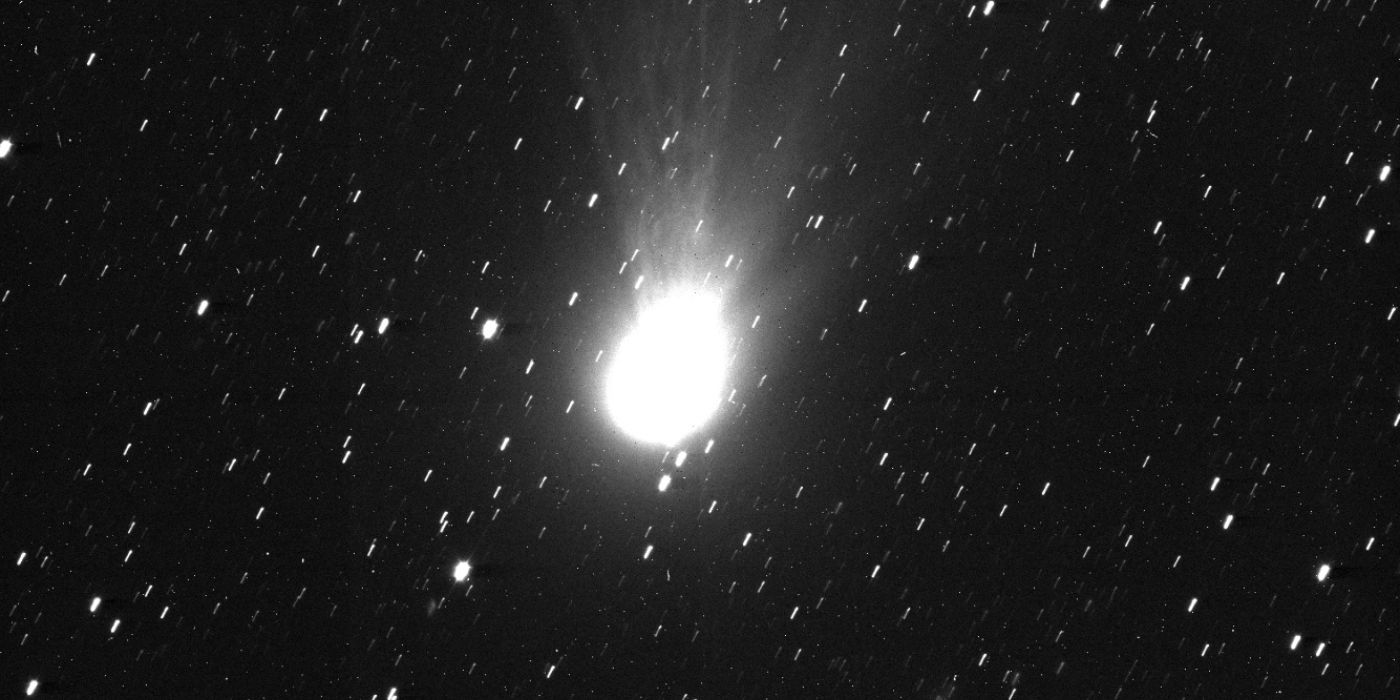
The American Association of Variable Star Observers (AAVSO) announced on Thursday, June 29, 2023, that a nova eruption is expected from a binary star system called T Coronae Borealis (T CrB) sometime between February and September of 2024. The star system is normally too faint to see without a telescope, but during the outburst it will be as bright as the North Star. Astronomers predict that after the peak brightness, the star will be visible for several days to a week with binoculars before fading again. Citizen astronomers can contribute to the study of this event by participating in the Unistellar Cosmic Cataclysm observing program, and be the first to see this rare explosion. 

What is a nova?

Novae occur in “cataclysmic variables,” which are simply binary star systems (two stars in orbit around each other) in which one of the stars in a white dwarf. A white dwarf is essentially a dead stellar core, and the T CrB binary system is made up of both a white dwarf and a red giant. These dead stars are incredibly dense — they are only slightly larger than Earth, but as massive as the Sun! Because their gravity is so strong, they can pull matter from the other star in the system. In the case of T CrB, the white dwarf accretes hydrogen from its red giant companion until the hydrogen reaches a critical limit and causes a runaway nuclear reaction on its surface, temporarily reigniting the white dwarf back to life. The nova eruption can eject a large amount of material from the white dwarf, which can be studied by astronomers to learn more about the properties of white dwarfs and binary star systems. 

Why Observe T CrB?

T CrB is a well-studied nova system 3,000 light years away in the constellation Corona Borealis, and astronomers have been predicting its eruption for many years. In fact, T CrB produces a recurring nova — one of only five known in our galaxy — that erupts approximately every 80 years, making this a once-in-a-lifetime event. The upcoming eruption is a rare opportunity for astronomers to study a nova in detail from its early stages. By observing the eruption, astronomers can learn more about the physical processes that cause novae, as well as the evolution of binary star systems.

A report detailing Citizen Astronomer Michael Primm’s observation of T CrB on April 3, 2024. Observe T CrB through the Cosmic Cataclysms program for a similar report!

Join the fun and be the first one to detect this nova using your Unistellar telescope

The SETI Institute is inviting citizen astronomers to participate in its observing program called Cosmic Cataclysms, in partnership with UNISTELLAR, to help monitor T CrB for signs of an eruption. Participants are asked to take regular observations of the star system. If observers use a Unistellar telescope, their data will be processed a few hours after being uploaded on our server and analyzed so that we can trigger a worldwide alert if the nova is detected. This data will be used by astronomers to track the development of the eruption and to learn more about this fascinating phenomenon. Visit our Cosmic Alerts webpage and scroll to the “Highest Priority” section for observing instructions.

In addition to being a valuable scientific contribution, participating in the Unistellar Cosmic Cataclysm program is a great way for citizen astronomers to learn more about novae and perhaps be the first person to witness this rare event. To learn more about our Cosmic Cataclysm program designed in collaboration with Unistellar, visit our Cosmic Cataclysms webpage. This page will also instruct you on how to make observations with your UNISTELLAR telescope. 

This article was originally published at science.unistellar.com . 

News

Related News

Featured Image
Jun 9, 2026
Disclosure Needs Data
#SkyMapper #Franck Marchis #SETI #citizen science
Featured Image
Jun 5, 2026
Beyond Disclosure Day: The Real-World Protocols
#Press Releases #SETI #Astronomy #Bill Diamond #SETI Institute
Featured Image
Jun 1, 2026
SETI Institute Awards $1 Million in STRIDE Grants to Advance Astrobiology, Exoplanet Science, and Public Engagement
#Press Releases #STRIDE #Research #Carl Sagan Center #Spectroscopy #Solar System #SETI #Climate and Bioscience #Astronomy #Astrobiology #Exoplanets #Data Science #Education #Outreach #Hat Creek Radio Observatory #Unistellar #SkyMapper
Featured Image
May 1, 2026
Asteroid Named in Honor of SETI Researcher and Communicator Seth Shostak
#Comets, Meteors, and Asteroids #Seth Shostak #SETI #Astronomy #Big Picture Science #Outreach #Andrew Fraknoi
Featured Image
Apr 30, 2026
Narrowing the Search: The 45 Best Targets for Alien Life
#Blog #Astronomy #JWST #NASA Missions and Observatories #Trappist-1 #LaserSETI #ATA #Franck Marchis
Featured Image
Apr 23, 2026
SkyMapper Goes Live: Building a Real-Time, Global Network for Astronomy
SkyMapper functions as an observational infrastructure, a system that links instruments, users, and data streams. Its goal is ambitious: to continuously observe and map the entire sky. #Blog #SkyMapper #LaserSETI #SETI #Astronomy #Exoplanet Detection #Comets, Meteors, and Asteroids #Planetary Defense #Technosignatures #Franck Marchis #Lauren Sgro
Research

Related Projects

Featured Image
SkyMapper • SETI • Citizen Science • Astronomy
SkyMapper: Expanding Access to Real-time Astronomy Through a Global Astronomical Network
SkyMapper and the SETI Institute are connecting educators, students and the public to live astronomical observations through a distributed astronomical network. #SkyMapper #SETI #Citizen Science #Astronomy
Featured Image
VPL
Virtual Planetary Laboratory
How can we best assess whether an exoplanet supports life? #VPL
Featured Image
Discovery and Futures Lab
What happens if life beyond Earth is discovered? The Discovery and Futures Lab at the SETI Institute fosters novel and anticipatory research at the intersection of science, society, our planet, and the search for life beyond Earth.  #Discovery and Futures Lab
Support Us

Support the
SETI Institute

Scientists are getting closer in their search for life beyond earth. But with limited federal funding for the search for extraterrestrial intelligence, supporters are the reason cutting-edge scientists can keep their eyes on the sky.