)

Tuesday, Jun 18, 2024

The SETI Institute has a rich and deep history of delivering quality educator professional development. The Astronomy Activation Ambassadors (AAA) program has capitalized on access to NASA astronomy research facilities to provide NASA content, teaching skills training, and STEM immersion to more than 250 educators across the country over 12 years.
AAA Program History
During 1991-95, the SETI Institute managed the Flight Opportunities for Science Teacher EnRichment (FOSTER) teacher professional development program focused on flights onboard NASA’s Kuiper Airborne Observatory (KAO). That successful program led Edna DeVore, then the SETI Institute’s Director of Education, and the late Michael Bennett, then Executive Director of the Astronomical Society of the Pacific, to produce the Education and Public Outreach (EPO) plan for NASA’s Stratospheric Observatory for Infrared Astronomy (SOFIA) in 1996 as part of USRA’s winning proposal to create and manage the observatory. That SOFIA EPO plan, included in the University Space Research Association (USRA) winning proposal to develop and manage the observatory, featured a teacher professional development (PD) program focused on infrared astronomy. That program, designated the SOFIA Airborne Astronomy Ambassadors (AAA), included a STEM immersion experience with SOFIA staff and the observatory, plus subsequent education and outreach commitments.

Groups of AAA teachers working with scientists and technical staff during SOFIA science flights. (NASA / SETI Institute)
NASA brought the era of mission-embedded EPO programs to a close in 2015 and issued a Cooperative Agreement Notice (CAN) that launched the Science Mission Directorate’s Science Activation collective in 2016. The SETI Institute's Pamela Harman, Coral Clark, and Dana Backman secured funding to implement a NASA Airborne Astronomy Ambassadors program designed similarly to the successful AAA component of SOFIA EPO. (The term “Ambassador” in the program title is a remnant of the program’s original format with a substantial public outreach component.) The proposed program focused on infrared astronomy and access to NASA subject matter experts (SMEs) and SOFIA facilities. Initially, only high school teachers were eligible to participate. Middle school and community college instructors have been included since 2021.
NASA’s award to the SETI Institute required a plan focused on standards-based student STEM learning and engagement promoted by teacher PD. The first teachers who participated in the newly designed AAA program were selected in 2016 and subjected by WestEd evaluators to a Randomized Controlled Trial (RCT) during the 2017-28 academic year. The RCT tested the impacts of the AAA program, including teacher STEM immersion experiences, on student STEM learning and engagement. The results of the controlled trial strongly confirmed AAA program efficacy in that students whose teachers had been through AAA professional development performed significantly better on content learning post-assessment and had more positive attitudes regarding STEM than did students in the control group.
As a result of NASA’s decision to end SOFIA operations, AAA STEM experiences on board SOFIA concluded in September 2022. In October 2022, a field test for new STEM experiences was conducted on Maunakea and at science PD sites on the Big Island of Hawai`i. The AAA program name changed to Astronomy Activation Ambassadors to reflect the new ground-based astronomy orientation.

AAA teachers and Institute staff facilitators during the 2022 pilot STEM immersion experiences at Maunakea observatory facilities. (From left: NASA Infrared Telescope Facility, James Clerk Maxwell Telescope, Gemini-North) (NASA / SETI Institute)
“Seeing the observatories and telescopes in person made me realize how much teamwork is involved, said Georgia high school teacher Mary Teren. “The scientists, engineers, and many others must work together to achieve a common goal, the pursuit of knowledge and understanding of our Universe.”
AAA staff and WestEd evaluations of the October 2022 Hawai`i STEM immersion pilot test strongly confirmed that refocusing the AAA program teacher STEM immersion to ground-based observatories and astronomy facilities can continue to offer professional development experiences that are well-aligned with SciAct goals
AAA EMS/MWA Curriculum
A central component of the NASA AAA program is a SETI Institute staff-developed curriculum module supported by in-person curriculum training workshops and curricular materials. The curriculum, originally focused on infrared astronomy, is now designated EMS/MWA. MWA stands for Multi-wavelength Astronomy, a more accurate description of the content in its latest form. The AAA EMS/MWA curriculum contains ten classroom hours of lessons that compare and contrast visible light with invisible light, hands-on exercises regarding light filters, models of color vision, detection and transmission of IR light, use of images and spectra at many wavelengths to understand celestial objects, and case studies of professional astronomy research projects. The curriculum is Next Generation Science Standards (NGSS) aligned, containing physics and astronomy content (Disciplinary Core Ideas/DCIs) while interleaving the other two NGSS dimensions of Science and Engineering Practices (SEPs) and Crosscutting Concepts (CCCs). The curriculum complements and reinforces PD astronomy content webinars and teacher STEM immersion experiences. All program components aim to improve STEM teaching and enhance student learning and engagement.

(From left) (1) AAA teachers in a curriculum training workshop practicing the hands-on activities their students will perform; (2) layout of infrared light detection and transmission circuits used in curriculum lessons; (3) cover of 4 edition Science Case studies student reader connecting real-world astronomy research and teacher STEM immersion experiences to support curriculum presentation.
“The AAA experience has completely changed how I teach the EM spectrum, and my students are directly and positively impacted by the hands-on learning in the AAA curriculum,” said middle school teacher Teresa Cobble, a 2022 AAA from Georgia.
The curriculum module, once a program participant benefit only, has been made publicly available on the SETI Institute website at:
NASA SMD education resources referencing the AAA curriculum:
https://science.nasa.gov/learn/resources
https://www.nasa.gov/stem-content/join-the-nasa-connects-community/
Program Impact: The estimated reach of the NASA AAA program from 2016 through 2023 is:


States of AAA educators selected in 2011-22.
Happy Reunion
With a welcome and purely voluntary effort, SETI Institute and AAA staff member Coral Clark, along with former SOFIA news officer Nick Veronico, organized a reunion of AAA participants and former SOFIA staff members in June 2024. The event took place at the Pima Air and Space Museum in Tucson, where the SOFIA aircraft now berths. More than 200 people, including family and friends, attended in the blazing Arizona summer sun.

From left: (1) AAA educators and staff during the reunion at the Pima Air & Space Museum (Credit: Ramon Purcell) (2) View aft from educator seats, past the AAA console toward the Mission Directors’ work station and the science instrument flange at rear. (3) Attendees of the June 1 SOFIA team reunion visiting the mission deck.
Looking Forward
The AAA program has transitioned to a three-strand Astronomy Academy PD program with varying levels of extent and intensity available to as many as 200 teachers per year. Participants will draw upon NASA Science Activation resources to enhance their teaching and share their excitement for astronomy. AAA program staff are excited and energized by the increase in the number of educators engaged in NASA science and with NASA SMEs.
The three teacher PD strands that comprise the Astronomy Academy are:
- Virtual Academy webinars regarding NASA science content and resources
- Curriculum workshops enabling classroom use of the EMS/MWA curriculum
- STEM immersion experiences, including guided visits to working observatories.
In the past, teachers were trained to teach the EMS/MWA curriculum module through 1-day in-person hands-on workshops, reaching about 25 teachers per year. The curriculum’s reach can now be expanded by offering a shorter virtual version of the training workshop alongside the in-person version and by including many more teachers beyond those participating in STEM immersion experiences at observatories.







News
Related News
Jul 10, 2026
SETI Institute Achievements: Q1 2026 Activity Report
#Activity Reports #Carl Sagan Center #Outreach #Education #AIR #Community #Research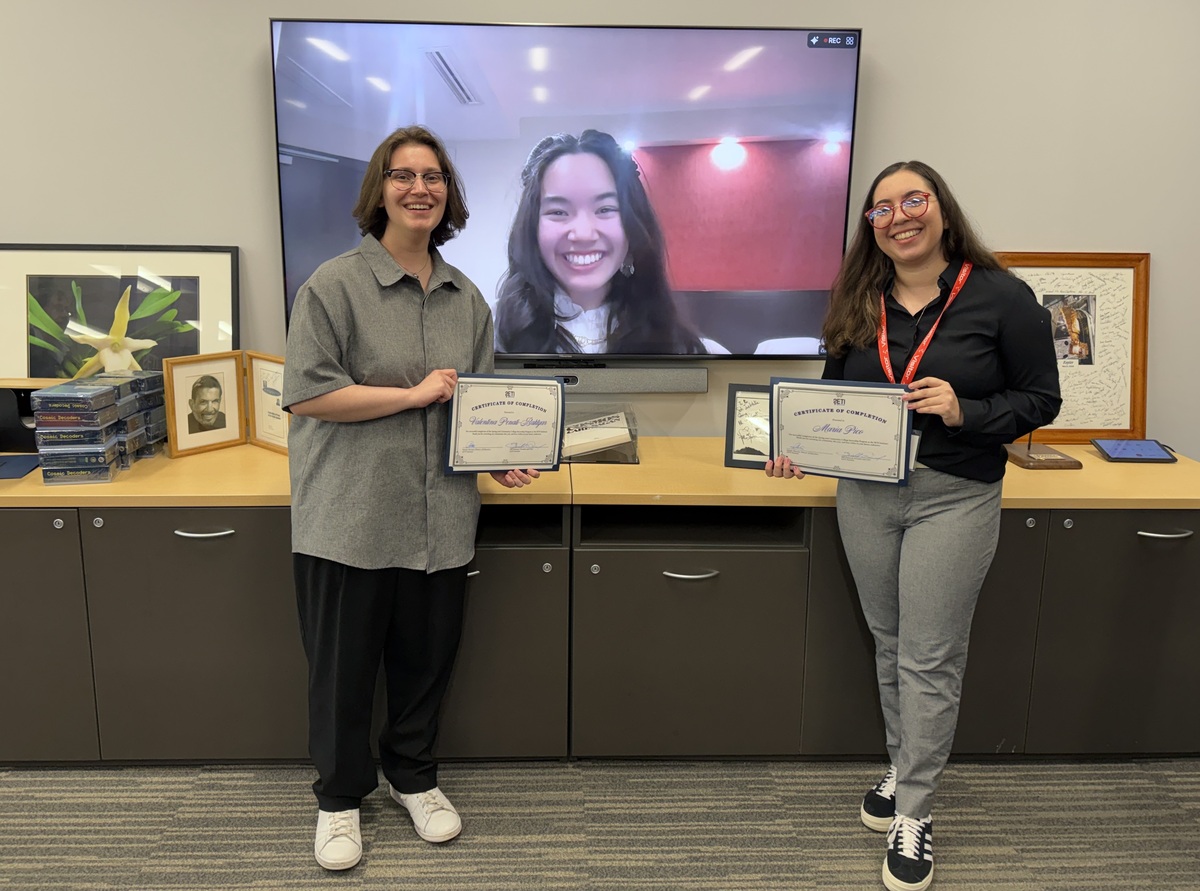
Jun 17, 2026
Community College Internship Program Celebrates Fourth Year of Student Research Achievement
#Community College Internship #Education #Lauren Sgro #Unistellar #Uma Gorti #Douglas Caldwell #Pamela Harman #Simon Steel
Jun 1, 2026
SETI Institute Awards $1 Million in STRIDE Grants to Advance Astrobiology, Exoplanet Science, and Public Engagement
#Press Releases #STRIDE #Research #Carl Sagan Center #Spectroscopy #Solar System #SETI #Climate and Bioscience #Astronomy #Astrobiology #Exoplanets #Data Science #Education #Outreach #Hat Creek Radio Observatory #Unistellar #SkyMapper
May 13, 2026
SETI Institute to Honor Dr. Matthew Tiscareno with 2026 Carl Sagan Center Director’s Award
The Drake Awards event will also recognize SETI Forward and SETI Institute REU student award recipients. #Press Releases #Drake Awards #Frank Drake #SETI #Awards #Planetary Astronomy #Astrobiology #SETI Forward #Education #Carl Sagan Center #Matthew Tiscareno #Nathalie Cabrol #REU
May 5, 2026
Atlanta Science Festival Exploration Expo and the Arecibo Message
#Community #SETI Institute #Outreach #Education #Lauren Sgro
Apr 15, 2026
2025 SETI Institute Activity Report
#Activity Reports #Carl Sagan Center #Outreach #Education #AIR #Community
Jul 10, 2026
#Activity Reports
#Carl Sagan Center
#Outreach
#Education
#AIR
#Community
#Research
Jun 17, 2026
#Community College Internship
#Education
#Lauren Sgro
#Unistellar
#Uma Gorti
#Douglas Caldwell
#Pamela Harman
#Simon Steel
Community College Internship Program Celebrates Fourth Year of Student Research Achievement
Jun 1, 2026
#Press Releases
#STRIDE
#Research
#Carl Sagan Center
#Spectroscopy
#Solar System
#SETI
#Climate and Bioscience
#Astronomy
#Astrobiology
#Exoplanets
#Data Science
#Education
#Outreach
#Hat Creek Radio Observatory
#Unistellar
#SkyMapper
SETI Institute Awards $1 Million in STRIDE Grants to Advance Astrobiology, Exoplanet Science, and Public Engagement
May 13, 2026
SETI Institute to Honor Dr. Matthew Tiscareno with 2026 Carl Sagan Center Director’s Award
The Drake Awards event will also recognize SETI Forward and SETI Institute REU student award recipients.
#Press Releases
#Drake Awards
#Frank Drake
#SETI
#Awards
#Planetary Astronomy
#Astrobiology
#SETI Forward
#Education
#Carl Sagan Center
#Matthew Tiscareno
#Nathalie Cabrol
#REU
May 5, 2026
#Community
#SETI Institute
#Outreach
#Education
#Lauren Sgro
Atlanta Science Festival Exploration Expo and the Arecibo Message
Apr 15, 2026
#Activity Reports
#Carl Sagan Center
#Outreach
#Education
#AIR
#Community
2025 SETI Institute Activity Report
Research
Related Projects

SkyMapper • SETI • Citizen Science • Astronomy
SkyMapper: Expanding Access to Real-time Astronomy Through a Global Astronomical Network
SkyMapper and the SETI Institute are connecting educators, students and the public to live astronomical observations through a distributed astronomical network. #SkyMapper #SETI #Citizen Science #Astronomy
VPL
Virtual Planetary Laboratory
How can we best assess whether an exoplanet supports life? #VPL
Discovery and Futures Lab
Discovery and Futures Lab
What happens if life beyond Earth is discovered? The Discovery and Futures Lab at the SETI Institute fosters novel and anticipatory research at the intersection of science, society, our planet, and the search for life beyond Earth. #Discovery and Futures Lab
May 17, 2026
SkyMapper: Expanding Access to Real-time Astronomy Through a Global Astronomical Network
SkyMapper and the SETI Institute are connecting educators, students and the public to live astronomical observations through a distributed astronomical network.
#SkyMapper
#SETI
#Citizen Science
#Astronomy
May 5, 2026
Virtual Planetary Laboratory
How can we best assess whether an exoplanet supports life?
#VPL
Apr 16, 2026
Discovery and Futures Lab
What happens if life beyond Earth is discovered? The Discovery and Futures Lab at the SETI Institute fosters novel and anticipatory research at the intersection of science, society, our planet, and the search for life beyond Earth.
#Discovery and Futures Lab
Support Us
Support the
SETI Institute
Scientists are getting closer in their search for life beyond earth. But with limited federal funding for the search for extraterrestrial intelligence, supporters are the reason cutting-edge scientists can keep their eyes on the sky.
