)

Tuesday, Jun 11, 2024

The SETI Institute is excited to announce a new, first-of-its-kind grants program aimed at advancing technosignature science and technology. This program seeks to support innovative research that addresses key observational, theoretical, or technical questions in the field of technosignature science.
Eligibility:
The program invites applications from Principal Investigators (PIs) in two distinct categories:
-
Non-Tenured Faculty or Researchers:
-
Eligible PIs are non-tenured faculty or researchers who are eligible to serve as Principal Investigators at universities or non-profit organizations. This includes colleges, universities, and non-profit, non-academic organizations such as independent museums, observatories, research labs, professional societies, and similar organizations associated with educational or research activities.
-
Award amounts can be up to $100,000 USD, inclusive of overhead.
-
-
Post-Prelim Graduate Students:
-
Eligible PIs are graduate students in Master’s or Doctoral degree programs who have completed preliminary exams and for whom the only remaining degree requirement is their thesis or equivalent.
-
Proposals must be supported by a faculty member or researcher at a degree-granting institution who will act as the research advisor and administrative principal investigator.
-
Award amounts can be up to $25,000 USD, inclusive of overhead.
-
There are no nationality restrictions.
Research Focus:
Funded investigations must focus on technosignature science, encompassing a broad range of topics that could include, but are not limited to:
-
Observational programs or the development of observational techniques and strategies for detecting technosignatures
-
Theoretical models that predict or explain technosignature phenomena
-
Technical innovations that enhance the capability to detect and analyze technosignatures
-
Research at the intersection of social sciences and technosignature research, exploring the societal implications and human factors related to the search for technosignatures
Period of Performance:
The period of performance for funded projects should be between 6 and 24 months.
Application and Evaluation:
Applications will be evaluated based on the significance of the proposed research, the feasibility of the project, the qualifications of the PI, and the potential for advancing the field of technosignature science.
Permitted Costs:
There are no restrictions on direct-costed budget elements provided that their value and necessity to the proposed research program is well articulated.
Application Procedure:
Applications in both categories should compile the following elements in a single .pdf format file with the naming convention: PI_<lastname_firstname>_Technosignature_Grants_2024.pdf:
-
A three-page single-spaced description of the research proposal (US Letter, 11pt, including figures but not including bibliography), which should include discussion of research methodology, timeline and how the proposed work would advance the state-of-the-art in the technosignature field
-
Current CVs for the Principal Investigator and Co-Investigator(s)
-
A budget, with indirect overheads capped at 15% of the direct project cost
-
For post-prelim graduate student PIs, a letter of support from a faculty member or researcher who will act as the research advisor and administrative principal investigator
Applications should be emailed as an attachment to [email protected] by the application deadline.
Application Deadline:
Applications for 2024 are CLOSED as of 5PM Pacific Time on 31 July 2024. Successful applicants will be notified by 3 September 2024.
Available Funding:
The size and number of accepted proposals will depend on the number and quality of submitted proposals.
Additional Information:
Questions may be addressed to SETI Institute Grants and Contracts Administration at [email protected].
FAQs
- When is the application deadline?
July 31, 2024, 5pm PDT - Can applicants be part of more than one proposal/application, e.g. can they be PI on one and a co-I or supervisor on another?
There are no restrictions on participation in multiple proposals in whatever capacity. - The call refers to “Non-Tenured Faculty or Researchers: Eligible PIs are non-tenured faculty or researchers” Just want to be certain… does this mean: a) non-tenured faculty or non-tenured researchers or b) non-tenured faculty or researchers who might or might not be tenured?
Non-tenured faculty or non-tenured researchers. - Are there opportunities for early career scholars (postdocs/assistant professors)?
Any non-tenured individual in any title that is eligible to serve as a Principal Investigator at their institution is eligible in category 1. - Can SETI Inst Science Advisory Board members be part of an application without restrictions, or only under certain conditions, or not at all?
There are no restrictions. - Does “no nationality restrictions” mean that researchers based at any institution in the world, including outside the US, are eligible? Or does it just mean that researchers of any nationality who are working within the US are eligible?
There are no restrictions on the nationality of the PI or the institution. - Can Co-Is or collaborators be tenured faculty?
Yes. - Can Co-Is or collaborators have affiliations with for-profit institutions? (e.g. someone with a non-tenured professorial affiliation at a university, but who also has an affiliation with a company)
We welcome proposals from collaborations involving public-private partnerships and industry. - Can money be distributed to Co-Is or collaborators? If so, even if they are affiliated with other universities, in other countries?
Yes, sub-awards to entities other than the PIs home institution are acceptable.







News
Related News

Jun 29, 2026
Humanity's Plan for First Contact: Who Speaks for Earth?
#Blog #Lauren Sgro #Lucian Walkowicz #Chelsea Haramia #SETI #SETI Institute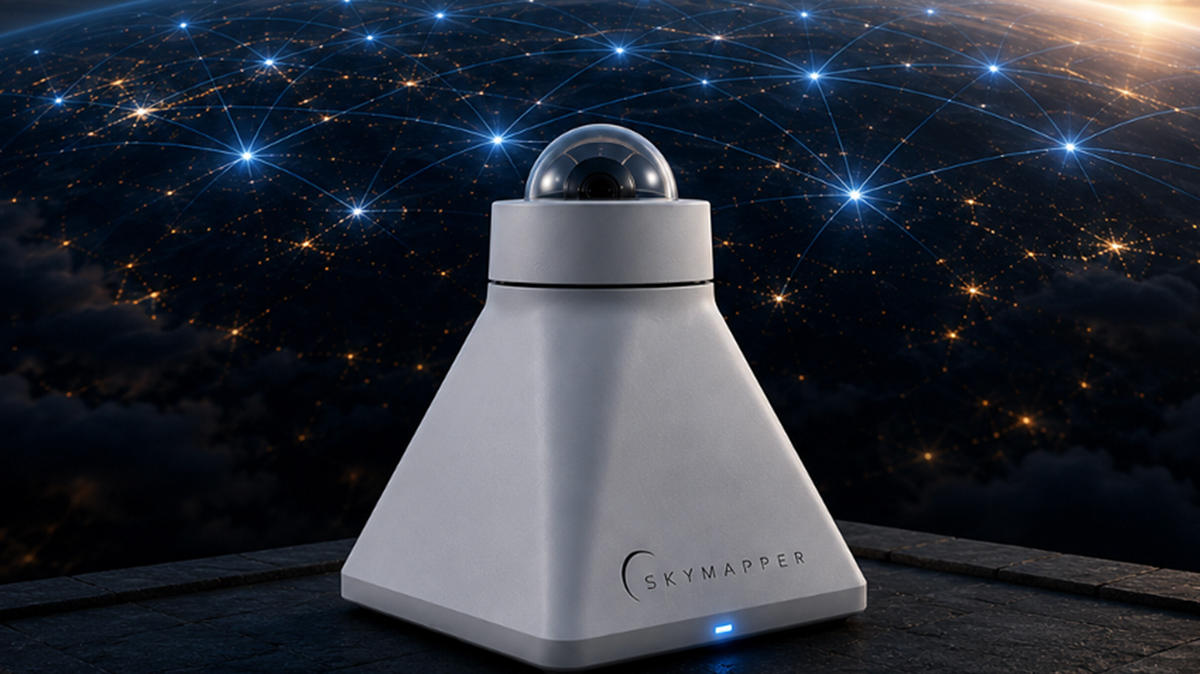
Jun 9, 2026
Disclosure Needs Data
#SkyMapper #Franck Marchis #SETI #citizen science
Jun 8, 2026
The Sounds of Intelligence: A Conversation with 2026 Drake Award Recipient Lori Marino
#Blog #Drake Awards #Lori Marino #SETI
Jun 5, 2026
Beyond Disclosure Day: The Real-World Protocols
#Press Releases #SETI #Astronomy #Bill Diamond #SETI Institute
Jun 4, 2026
SETI Institute In the News: May Roundup 2026
#SETI Institute in the News #SETI Institute #Community #Solar System #Matija Ćuk #Neptune #SETI #Bill Diamond #UAPs #Drake Awards #Lori Marino #Matthew Tiscareno #Outreach #Exoplanets #Carl Sagan Center
Jun 3, 2026
SETI Institute Looks for Signs of Technology in Interstellar Visitor 3I/ATLAS
Observations with the Allen Telescope Array set new limits on possible signals from extraterrestrial transmitters. #Press Releases #ATA #3I/ATLAS #Hat Creek Radio Observatory #Radio Astronomy #SETI
Jun 29, 2026
#Blog
#Lauren Sgro
#Lucian Walkowicz
#Chelsea Haramia
#SETI
#SETI Institute
Jun 9, 2026
#SkyMapper
#Franck Marchis
#SETI
#citizen science
Disclosure Needs Data
Jun 8, 2026
#Blog
#Drake Awards
#Lori Marino
#SETI
The Sounds of Intelligence: A Conversation with 2026 Drake Award Recipient Lori Marino
Jun 5, 2026
#Press Releases
#SETI
#Astronomy
#Bill Diamond
#SETI Institute
Beyond Disclosure Day: The Real-World Protocols
Jun 4, 2026
#SETI Institute in the News
#SETI Institute
#Community
#Solar System
#Matija Ćuk
#Neptune
#SETI
#Bill Diamond
#UAPs
#Drake Awards
#Lori Marino
#Matthew Tiscareno
#Outreach
#Exoplanets
#Carl Sagan Center
SETI Institute In the News: May Roundup 2026
Jun 3, 2026
SETI Institute Looks for Signs of Technology in Interstellar Visitor 3I/ATLAS
Observations with the Allen Telescope Array set new limits on possible signals from extraterrestrial transmitters.
#Press Releases
#ATA
#3I/ATLAS
#Hat Creek Radio Observatory
#Radio Astronomy
#SETI
Research
Related Projects

SkyMapper • SETI • Citizen Science • Astronomy
SkyMapper: Expanding Access to Real-time Astronomy Through a Global Astronomical Network
SkyMapper and the SETI Institute are connecting educators, students and the public to live astronomical observations through a distributed astronomical network. #SkyMapper #SETI #Citizen Science #Astronomy
VPL
Virtual Planetary Laboratory
How can we best assess whether an exoplanet supports life? #VPL
Discovery and Futures Lab
Discovery and Futures Lab
What happens if life beyond Earth is discovered? The Discovery and Futures Lab at the SETI Institute fosters novel and anticipatory research at the intersection of science, society, our planet, and the search for life beyond Earth. #Discovery and Futures Lab
May 17, 2026
SkyMapper: Expanding Access to Real-time Astronomy Through a Global Astronomical Network
SkyMapper and the SETI Institute are connecting educators, students and the public to live astronomical observations through a distributed astronomical network.
#SkyMapper
#SETI
#Citizen Science
#Astronomy
May 5, 2026
Virtual Planetary Laboratory
How can we best assess whether an exoplanet supports life?
#VPL
Apr 16, 2026
Discovery and Futures Lab
What happens if life beyond Earth is discovered? The Discovery and Futures Lab at the SETI Institute fosters novel and anticipatory research at the intersection of science, society, our planet, and the search for life beyond Earth.
#Discovery and Futures Lab
Support Us
Support the
SETI Institute
Scientists are getting closer in their search for life beyond earth. But with limited federal funding for the search for extraterrestrial intelligence, supporters are the reason cutting-edge scientists can keep their eyes on the sky.
