)

Author: Nathalie Cabrol
Wednesday, Oct 01, 2025

At a Glance: Wolf 1130C and the Phosphine Puzzle
|
Listen to this article read by AI:
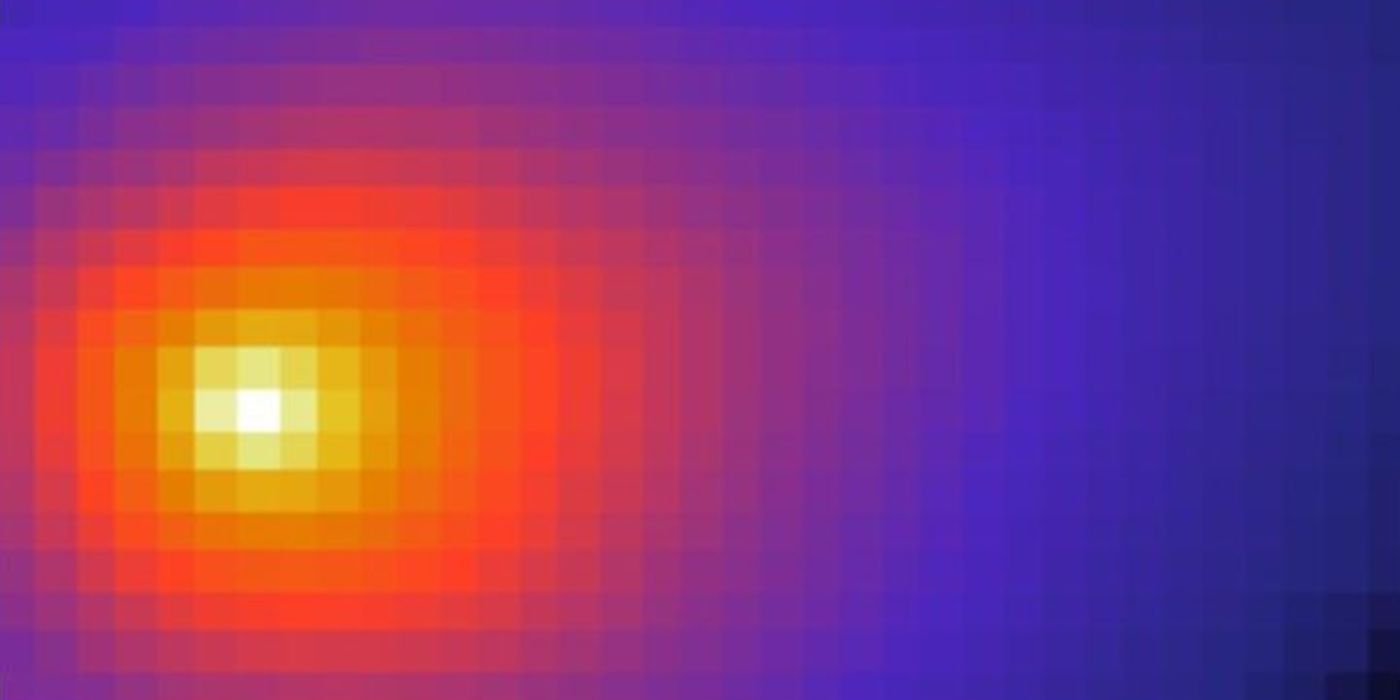
The James Webb Space Telescope has made one of the clearest observations to date of phosphine, a molecule that has been the subject of controversy. In recent spectroscopic observations of the brown dwarf Wolf 1130C https://www.science.org/doi/10.1126/science.adu0401, astronomers detected unmistakable phosphine absorption lines at 4.3 microns, to a concentration of 0.100 parts per million. Although that number sounds minuscule, it is high for planetary atmospheres, comparable to the levels observed on Jupiter and Saturn. In contrast, other brown dwarfs and giant exoplanets show phosphine depletion.
Phosphine is unique in being a molecule that is not stable under typical atmospheric conditions. On gas giants, it is transported to the surface from the hot interiors by vertical mixing faster than chemical reactions can destroy it. The surprise in this case is not that researchers found phosphine—since models predicted it in such atmospheres—but that Wolf 1130C contains so much while similar objects contain hardly any.
Why? 1130C has fewer heavy elements than the Sun. That means fewer oxygen- and carbon-rich molecules, such as CO₂, block phosphine’s spectral signature. With less of that “screen,” the lighter phosphine signal stands out more clearly. Low metallicity also changes how phosphorus compounds condense, allowing phosphine to survive throughout a larger portion of the atmosphere.
However, this is just a partial explanation and can't account for a larger paradox: Jupiter and Saturn are metal-poor, not metal-rich, yet they show plenty of phosphine. Similar brown dwarfs with similar compositions to Wolf 1130C don't. Scientists also considered the possibility that intermediate phosphorus oxides, such as P₄O₆, might be responsible for stripping phosphine from some atmospheres but not others; however, the underlying chemistry remains too unclear to explain the differences.
Another idea is that Wolf 1130C could have received a faint boost of elemental phosphorus from its white dwarf companion Wolf 1130B. Six-to eight-solar-mass stars can also produce phosphorus during the last stage of their evolution, spewing it into the environment. In theory, Wolf 1130C could have accreted some of that material. But the second star in the system, Wolf 1130A, has no such enhancement in its spectrum and is therefore less likely. Another explanation could be that Wolf 1130C exhibits a more general trend in the Milky Way's thick disk, where metal-poor stars occasionally show unusually high phosphorus levels.
What remains is less of a solved mystery than an open question. Wolf 1130C shows that phosphine could become visible in a brown dwarf atmosphere; however, the truth is that it aligns with Jupiter and Saturn, but not with other brown dwarfs. And that matters because researchers have suggested over the past decade that phosphine could serve as a potential biosignature. Most notably, a 2020 finding of phosphine in the atmosphere of Venus ignited fierce debate, with some scientists identifying the signature of the molecule, while others detected sulfur dioxide or noise. The Wolf 1130C discovery lends credence to the skeptical end of that argument. It reminds one that phosphine can manifest in unusual forms in non-biological systems.
The conclusion of the paper by A.J. Burgasser et al serves as a good reminder of the beauty of the scientific method, which is one of the reasons I appreciate this paper so much. They base their conclusion on facts, not speculation. The detection of phosphine reveals a profound insight about atmospheric chemistry. Still, they state unambiguously that we cannot treat it as a biosignature until we prove no non-biological processes can produce it. And, in acknowledging that, they also clearly identify the knowledge gaps, those questions we need to put efforts in to finally being able, one day, to detangle environment and life on extremely distant objects.
Dr. Nathalie A. Cabrol
Chief Scientist, Carl Sagan Center
SETI Institute







News
Related News
Jul 10, 2026
A Remarkably Ancient Visitor: 3I/ATLAS
#3I/ATLAS #Comets, Meteors, and Asteroids #JWST
Jun 29, 2026
Humanity's Plan for First Contact: Who Speaks for Earth?
#Blog #Lauren Sgro #Lucian Walkowicz #Chelsea Haramia #SETI #SETI Institute
Jun 9, 2026
Disclosure Needs Data
#SkyMapper #Franck Marchis #SETI #citizen science
Jun 8, 2026
The Sounds of Intelligence: A Conversation with 2026 Drake Award Recipient Lori Marino
#Blog #Drake Awards #Lori Marino #SETI
Jun 5, 2026
Beyond Disclosure Day: The Real-World Protocols
#Press Releases #SETI #Astronomy #Bill Diamond #SETI Institute
Jun 4, 2026
SETI Institute In the News: May Roundup 2026
#SETI Institute in the News #SETI Institute #Community #Solar System #Matija Ćuk #Neptune #SETI #Bill Diamond #UAPs #Drake Awards #Lori Marino #Matthew Tiscareno #Outreach #Exoplanets #Carl Sagan Center
Jul 10, 2026
#3I/ATLAS
#Comets, Meteors, and Asteroids
#JWST
Jun 29, 2026
#Blog
#Lauren Sgro
#Lucian Walkowicz
#Chelsea Haramia
#SETI
#SETI Institute
Humanity's Plan for First Contact: Who Speaks for Earth?
Jun 9, 2026
#SkyMapper
#Franck Marchis
#SETI
#citizen science
Disclosure Needs Data
Jun 8, 2026
#Blog
#Drake Awards
#Lori Marino
#SETI
The Sounds of Intelligence: A Conversation with 2026 Drake Award Recipient Lori Marino
Jun 5, 2026
#Press Releases
#SETI
#Astronomy
#Bill Diamond
#SETI Institute
Beyond Disclosure Day: The Real-World Protocols
Jun 4, 2026
#SETI Institute in the News
#SETI Institute
#Community
#Solar System
#Matija Ćuk
#Neptune
#SETI
#Bill Diamond
#UAPs
#Drake Awards
#Lori Marino
#Matthew Tiscareno
#Outreach
#Exoplanets
#Carl Sagan Center
SETI Institute In the News: May Roundup 2026
Research
Related Projects

SkyMapper • SETI • Citizen Science • Astronomy
SkyMapper: Expanding Access to Real-time Astronomy Through a Global Astronomical Network
SkyMapper and the SETI Institute are connecting educators, students and the public to live astronomical observations through a distributed astronomical network. #SkyMapper #SETI #Citizen Science #Astronomy
VPL
Virtual Planetary Laboratory
How can we best assess whether an exoplanet supports life? #VPL
Discovery and Futures Lab
Discovery and Futures Lab
What happens if life beyond Earth is discovered? The Discovery and Futures Lab at the SETI Institute fosters novel and anticipatory research at the intersection of science, society, our planet, and the search for life beyond Earth. #Discovery and Futures Lab
May 17, 2026
SkyMapper: Expanding Access to Real-time Astronomy Through a Global Astronomical Network
SkyMapper and the SETI Institute are connecting educators, students and the public to live astronomical observations through a distributed astronomical network.
#SkyMapper
#SETI
#Citizen Science
#Astronomy
May 5, 2026
Virtual Planetary Laboratory
How can we best assess whether an exoplanet supports life?
#VPL
Apr 16, 2026
Discovery and Futures Lab
What happens if life beyond Earth is discovered? The Discovery and Futures Lab at the SETI Institute fosters novel and anticipatory research at the intersection of science, society, our planet, and the search for life beyond Earth.
#Discovery and Futures Lab
Support Us
Support the
SETI Institute
Scientists are getting closer in their search for life beyond earth. But with limited federal funding for the search for extraterrestrial intelligence, supporters are the reason cutting-edge scientists can keep their eyes on the sky.
