)

Friday, Jan 31, 2025
With the new year underway, it’s time to celebrate a remarkable 2024 full of citizen science with the Unistellar Network! Thousands of professional and amateur astronomers came together once again to observe, document, and contribute valuable data to the scientific community. From catching supernovae in the act to tracking exoplanet transits and unraveling asteroid mysteries, our network has been busier than ever. In fact, Unistellar observers broke a record this past year by making over 10,000 citizen science observations in 2024 alone. Let’s take a journey through more of the year’s highlights!
Comets: A Year of Bright Surprises and Fading Legends
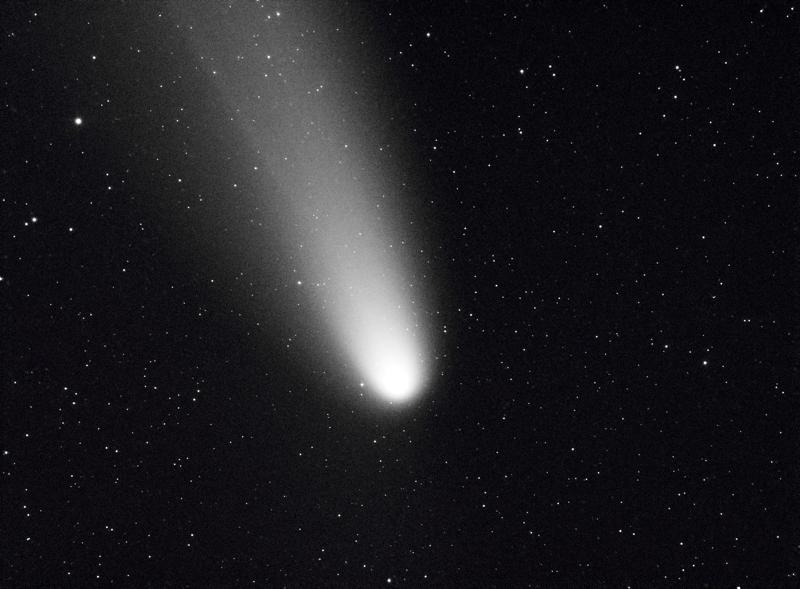
2024 was a spectacular year for comet observations, with 1,563 observations made by 246 observers around the world. Unistellar members continued to track the decline of Comet 103P/Hartley 2, documented multiple outbursts of 12P/Pons-Brooks, and, most excitingly, observed C/2023 A3 (Tsuchinshan-ATLAS)—the brightest comet of the decade!
Cosmic Cataclysms: An Explosive Universe
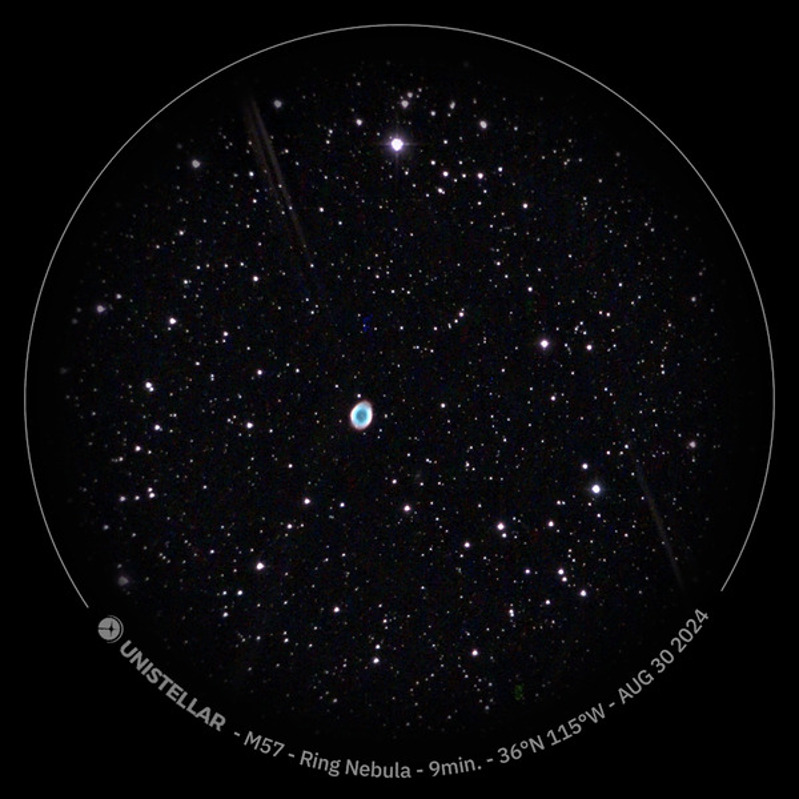
Our network played a pivotal role in capturing some of the most energetic events in the cosmos. Two hundred Citizen Astronomers recorded 5,656 observations across 90 different targets, including 47 supernova candidates, 24 gamma-ray bursts (GRBs), and 11 variable stars. This data amounted to a staggering 1.3 million images of transient events taken in 2024.
Exoplanets: Unlocking the Secrets of Distant Worlds
Exoplanet hunters in the Unistellar Network had a busy year, observing over 130 unique exoplanets. With 133 telescopes over 6 continents, the network captured exoplanets transiting in front of their stars and even contributed to confirming two new exoplanets—TIC 393818343 b and TIC 24129530 b! All of the participating Citizen Astronomers are listed as co-authors on these scientific papers, cementing their contributions to science.
Asteroid Occultations: Timing the Shadows of Space Rocks
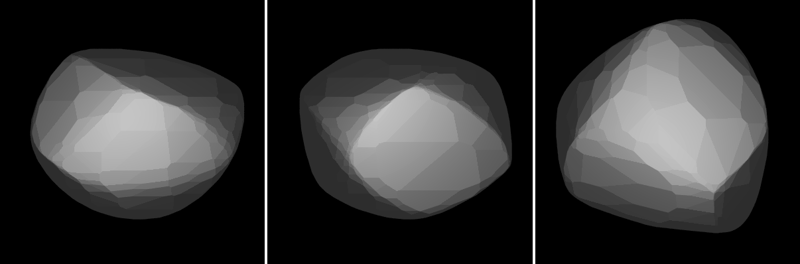
In 2024, Unistellar members recorded 408 occultation events, with 54 confirmed positive detections (meaning the asteroid’s shadow was successfully captured). Some of the year’s highlights include the longest recorded occultation event in Unistellar history when the asteroid 120 Lachesis blocked a star’s light for nearly 38 seconds!

Planetary Defense & Satellite Tracking: Keeping an Eye on the Sky
While planetary defense observations help track the orbits of near-Earth asteroids, man-made satellites are important to track as well. The Defense & Satellite division kept a close watch on these objects near or in Earth’s orbit, making 1,263 planetary defense observations and 797 satellite observations.
What’s Next for 2025?
With another year of discoveries behind us, the Unistellar Network is gearing up for an even more exciting 2025. What new exoplanets will we help confirm? Will another bright comet steal the show? How many more asteroid shadows will we capture? One thing’s for sure—our citizen astronomers will be there, eyes (and telescopes) turned skyward, ready to unlock the next cosmic mystery.
Here’s to another incredible year of scientific collaboration, curiosity, and exploration. See you in 2025!







News
Related News

Jun 17, 2026
Community College Internship Program Celebrates Fourth Year of Student Research Achievement
#Community College Internship #Education #Lauren Sgro #Unistellar #Uma Gorti #Douglas Caldwell #Pamela Harman #Simon Steel
Jun 5, 2026
Beyond Disclosure Day: The Real-World Protocols
#Press Releases #SETI #Astronomy #Bill Diamond #SETI Institute
Jun 1, 2026
SETI Institute Awards $1 Million in STRIDE Grants to Advance Astrobiology, Exoplanet Science, and Public Engagement
#Press Releases #STRIDE #Research #Carl Sagan Center #Spectroscopy #Solar System #SETI #Climate and Bioscience #Astronomy #Astrobiology #Exoplanets #Data Science #Education #Outreach #Hat Creek Radio Observatory #Unistellar #SkyMapper
May 1, 2026
Asteroid Named in Honor of SETI Researcher and Communicator Seth Shostak
#Comets, Meteors, and Asteroids #Seth Shostak #SETI #Astronomy #Big Picture Science #Outreach #Andrew Fraknoi
Apr 30, 2026
Narrowing the Search: The 45 Best Targets for Alien Life
#Blog #Astronomy #JWST #NASA Missions and Observatories #Trappist-1 #LaserSETI #ATA #Franck Marchis
Apr 23, 2026
SkyMapper Goes Live: Building a Real-Time, Global Network for Astronomy
SkyMapper functions as an observational infrastructure, a system that links instruments, users, and data streams. Its goal is ambitious: to continuously observe and map the entire sky. #Blog #SkyMapper #LaserSETI #SETI #Astronomy #Exoplanet Detection #Comets, Meteors, and Asteroids #Planetary Defense #Technosignatures #Franck Marchis #Lauren Sgro
Jun 17, 2026
#Community College Internship
#Education
#Lauren Sgro
#Unistellar
#Uma Gorti
#Douglas Caldwell
#Pamela Harman
#Simon Steel
Jun 5, 2026
#Press Releases
#SETI
#Astronomy
#Bill Diamond
#SETI Institute
Beyond Disclosure Day: The Real-World Protocols
Jun 1, 2026
#Press Releases
#STRIDE
#Research
#Carl Sagan Center
#Spectroscopy
#Solar System
#SETI
#Climate and Bioscience
#Astronomy
#Astrobiology
#Exoplanets
#Data Science
#Education
#Outreach
#Hat Creek Radio Observatory
#Unistellar
#SkyMapper
SETI Institute Awards $1 Million in STRIDE Grants to Advance Astrobiology, Exoplanet Science, and Public Engagement
May 1, 2026
#Comets, Meteors, and Asteroids
#Seth Shostak
#SETI
#Astronomy
#Big Picture Science
#Outreach
#Andrew Fraknoi
Asteroid Named in Honor of SETI Researcher and Communicator Seth Shostak
Apr 30, 2026
#Blog
#Astronomy
#JWST
#NASA Missions and Observatories
#Trappist-1
#LaserSETI
#ATA
#Franck Marchis
Narrowing the Search: The 45 Best Targets for Alien Life
Apr 23, 2026
SkyMapper Goes Live: Building a Real-Time, Global Network for Astronomy
SkyMapper functions as an observational infrastructure, a system that links instruments, users, and data streams. Its goal is ambitious: to continuously observe and map the entire sky.
#Blog
#SkyMapper
#LaserSETI
#SETI
#Astronomy
#Exoplanet Detection
#Comets, Meteors, and Asteroids
#Planetary Defense
#Technosignatures
#Franck Marchis
#Lauren Sgro
Research
Related Projects

SkyMapper • SETI • Citizen Science • Astronomy
SkyMapper: Expanding Access to Real-time Astronomy Through a Global Astronomical Network
SkyMapper and the SETI Institute are connecting educators, students and the public to live astronomical observations through a distributed astronomical network. #SkyMapper #SETI #Citizen Science #Astronomy
VPL
Virtual Planetary Laboratory
How can we best assess whether an exoplanet supports life? #VPL
Discovery and Futures Lab
Discovery and Futures Lab
What happens if life beyond Earth is discovered? The Discovery and Futures Lab at the SETI Institute fosters novel and anticipatory research at the intersection of science, society, our planet, and the search for life beyond Earth. #Discovery and Futures Lab
May 17, 2026
SkyMapper: Expanding Access to Real-time Astronomy Through a Global Astronomical Network
SkyMapper and the SETI Institute are connecting educators, students and the public to live astronomical observations through a distributed astronomical network.
#SkyMapper
#SETI
#Citizen Science
#Astronomy
May 5, 2026
Virtual Planetary Laboratory
How can we best assess whether an exoplanet supports life?
#VPL
Apr 16, 2026
Discovery and Futures Lab
What happens if life beyond Earth is discovered? The Discovery and Futures Lab at the SETI Institute fosters novel and anticipatory research at the intersection of science, society, our planet, and the search for life beyond Earth.
#Discovery and Futures Lab
Support Us
Support the
SETI Institute
Scientists are getting closer in their search for life beyond earth. But with limited federal funding for the search for extraterrestrial intelligence, supporters are the reason cutting-edge scientists can keep their eyes on the sky.
