)

Tuesday, Aug 13, 2024
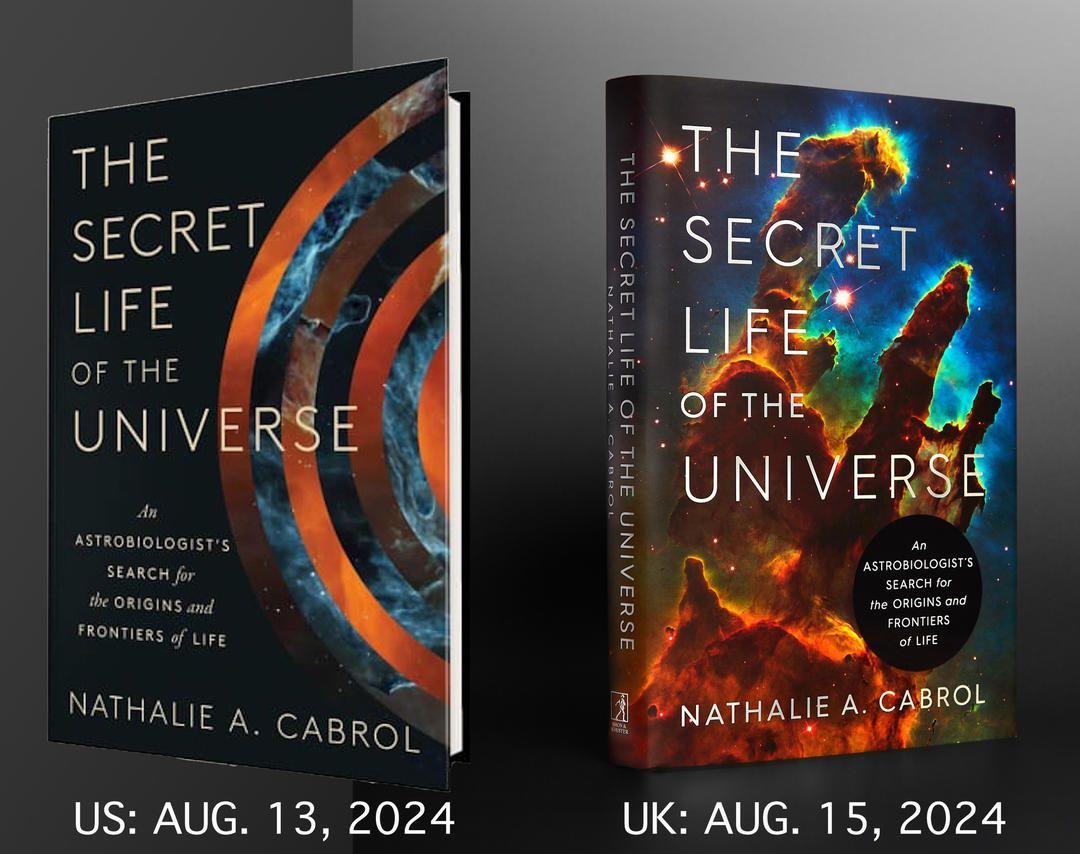
A New Book from Nathalie Cabrol
Publication Alert! "The Secret Life of the Universe" by Dr. Nathalie Cabrol, the SETI Institute's chief scientist and Director of the Carl Sagan Center at the SETI Institute, is coming out this week, both in the US (August 13, 2024) and in the UK (August 15, 2024). Scriber/Simon & Schuster publishes both editions. Cabrol articulates an overview of where we stand today in our search for life in the universe, what's coming, and how looking out for life beyond Earth teaches us about our place on our planet.
Here is an excerpt to inspire you:
On July 11, 2022, the James Webb Space Telescope (JWST) returned its first images, penetrating the wall of time to show us the universe just a few hundred million years after its formation. In a marvelous cosmic irony, this immersion into the depths of our origins propels us into the future, where a revolution looms large in astronomy, in cosmology, and in astrobiology—the search for life in the universe. JWST comes after a few decades of space and planetary exploration during which we have discovered countless habitable environments in our solar system—for (simple) life as we know it, but also thousands of exoplanets in our galaxy, some of them located in the habitable zone of their parent stars.
We are living in a golden age in astrobiology, the beginning of a fantastic odyssey in which much remains to be written, but where our first steps bring the promise of prodigious discoveries. And these first steps have already transformed our species in one generation in a way that we cannot foresee just yet.
Copernicus taught us long ago that the Earth was neither at the center of the universe nor the center of the solar system, for that matter. We also learned from the work of Harlow Shapley and Henrietta Swan Leavitt that the solar system does not even occupy any particularly prominent place in our galaxy. It is simply tucked away at the inner edge of Orion’s spur in the Milky Way, 27,000 light-years from its center, in a galactic suburb of sorts. Our sun is an average-sized star located in a galaxy propelled at 2.1 million kilometers per hour in a visible universe that counts maybe 125 billion such cosmic islands, give or take a few billion. In this immensity, the Kepler mission taught us that planetary systems are the rule, not the exception.
This is how, in a mere quarter of a century, we found ourselves exploring a universe populated by as many planets as stars. Yet, looking up and far into what seems to be an infinite ocean of possibilities, the only echoes we have received so far from our explorations have been barren planetary landscapes and thundering silence. Could it be that we are the only guests at the universal table? Maybe. As a scientist, I cannot wholly discount this hypothesis, but it seems very unlikely and “an awful waste of space,” and for more than one reason.
To begin with, the elementary compounds that make the life we know, carbon, hydrogen, nitrogen, oxygen, phosphorus, and sulfur, are common in the universe. It is no accident that we are made of them. They are the star stuff Carl Sagan always talked about. Organic molecules and volatiles are found at the surface of Mars, in the geysers of Saturn’s tiny moon Enceladus, in the atmosphere of Titan, in Triton’s stratosphere, and on comets. We also discovered them on asteroids, not to mention dwarf planets Ceres and Pluto, and these are only a few examples. Much farther away still, nearly two hundred types of prebiotic complex organic molecules were detected in interstellar clouds near the center of our galaxy. They included the kinds that could play a role in forming amino acids—the building blocks of the life we know. Granted that organic molecules are not life, but they are the elemental building blocks life uses for its carbon and hydrogen backbone, and they are everywhere.
The sheer number of possibilities adds to the probability of an abundance of life in the universe. A basic extrapolation of the Kepler data on the number of exoplanets in our galaxy alone suggests that tens of billions of Earth-sized planets could be located in the habitable zone of sun-like stars. If only one in a billion has developed a type of life that made it to higher levels of complexity and intelligence, then nearly a dozen advanced civilizations could populate our galaxy alone. Even if it were only one per one hundred galaxies, there could still be billions of them in the universe. And because the probability distribution in nature predicts more puddles than large lakes, more small buttes than Himalayas, more small planets than large ones, and more simple life than complex life, it follows that the universe is likely teeming with planets harboring simple life.
What precedes is an obvious oversimplification, but it is not an unreasonable one, and there are several possible scenarios.
The Earth might not be a gold standard for how rapidly life develops. One the one hand, it could represent a population of relatively slow planetary bloomers. After all, it took over 80 percent of our planet’s geological evolution to reach complex life. On the other hand, it could be an example of life on a universal fast track. Living organisms possibly left indirect traces of their presence on our planet in the few oldest rocks that still exist, which formed less than a couple of hundred million years after the Earth’s crust had cooled. In truth, we do not know any better because we only have one data point, and that’s us. Everything is relative and depends on what type of life we refer to. Our knowledge is still modest and imperfect, particularly for these deep times of early Earth, since plate tectonics and erosion have destroyed most of the geological record.
Further, life could also be the result of a generational process associated with the formation of specific stars—in our case, sun-like stars. Our galaxy is about 13.6 billion years old, formed barely 200 million years after the Big Bang, but it did not produce sun-like stars right away. The oldest (Population III) were short-lived (2 to 5 million years), massive, luminous hot stars that would have existed very early in the universe. They had virtually no metals (elements other than hydrogen or helium) in their composition. Their existence remained hypothetical for a long time, only inferred from indirect observations of a galaxy seen through gravitational lensing in a faraway region of our universe. Recent observations with Gemini North, a ground telescope, and the James Webb Space Telescope seem to confirm their past existence and hint at titanic stars, hundreds of times more massive than our sun.
Population II stars are more recent and metal-poor in comparison to younger stars like ours, for instance. They are distributed between the bulge near the center of our galaxy and its halo. The death of these Population II and III stars produced the heavier elements now being used by life as we know it. Population I, or metal-rich stars, are the youngest, and our sun is part of that population. The biogenic elements that make life on Earth are the most abundant in the universe and on our planet. The exception is phosphorus, which could have been delivered to Earth’s early atmosphere by extraterrestrial material. It could have been incorporated into Earth during accretion and the Late Heavy Bombardment period through impacts with asteroids and comets. Phosphorus was repackaged into useful forms for biology through chemical reactions and became an essential component of the structural backbone of our genetic code. It drives the energy behind nearly all of life’s metabolism.
The universe has produced biogenic elements for a very long time, as demonstrated by JWST, with the discovery of complex organic molecules in a galaxy more than 12 billion light-years away! Still, life developed on Earth, and maybe elsewhere, possibly because they became sufficiently abundant with the most recent Population I stars, like our sun. If true, this could make life a process associated with specific generations of stars. On the other hand, these biogenic elements are so old that they had to experience a long and complex chemical history before being incorporated into the Earth’s biochemistry, a transformative pathway that could also be key to the origin of life. We do not know if this history played a role in the origin of life on Earth. But if life as we know it is indeed associated with the birth of specific stars, then the universe could just be starting to blossom with cradles of life.
Today, we might still not know exactly where we are heading and what we are looking for, but it does not really matter. Answers will present themselves as we go. What truly matters is that we have set sail. We are now on our way on the most remarkable journey humanity has ever undertaken, searching for our origins and for a cosmic echo that will finally tell us one day that we are not alone.







News
Related News

Jun 1, 2026
SETI Institute Awards $1 Million in STRIDE Grants to Advance Astrobiology, Exoplanet Science, and Public Engagement
#Press Releases #STRIDE #Research #Carl Sagan Center #Spectroscopy #Solar System #SETI #Climate and Bioscience #Astronomy #Astrobiology #Exoplanets #Data Science #Education #Outreach #Hat Creek Radio Observatory #Unistellar #SkyMapper
May 13, 2026
SETI Institute to Honor Dr. Matthew Tiscareno with 2026 Carl Sagan Center Director’s Award
The Drake Awards event will also recognize SETI Forward and SETI Institute REU student award recipients. #Press Releases #Drake Awards #Frank Drake #SETI #Awards #Planetary Astronomy #Astrobiology #SETI Forward #Education #Carl Sagan Center #Matthew Tiscareno #Nathalie Cabrol #REU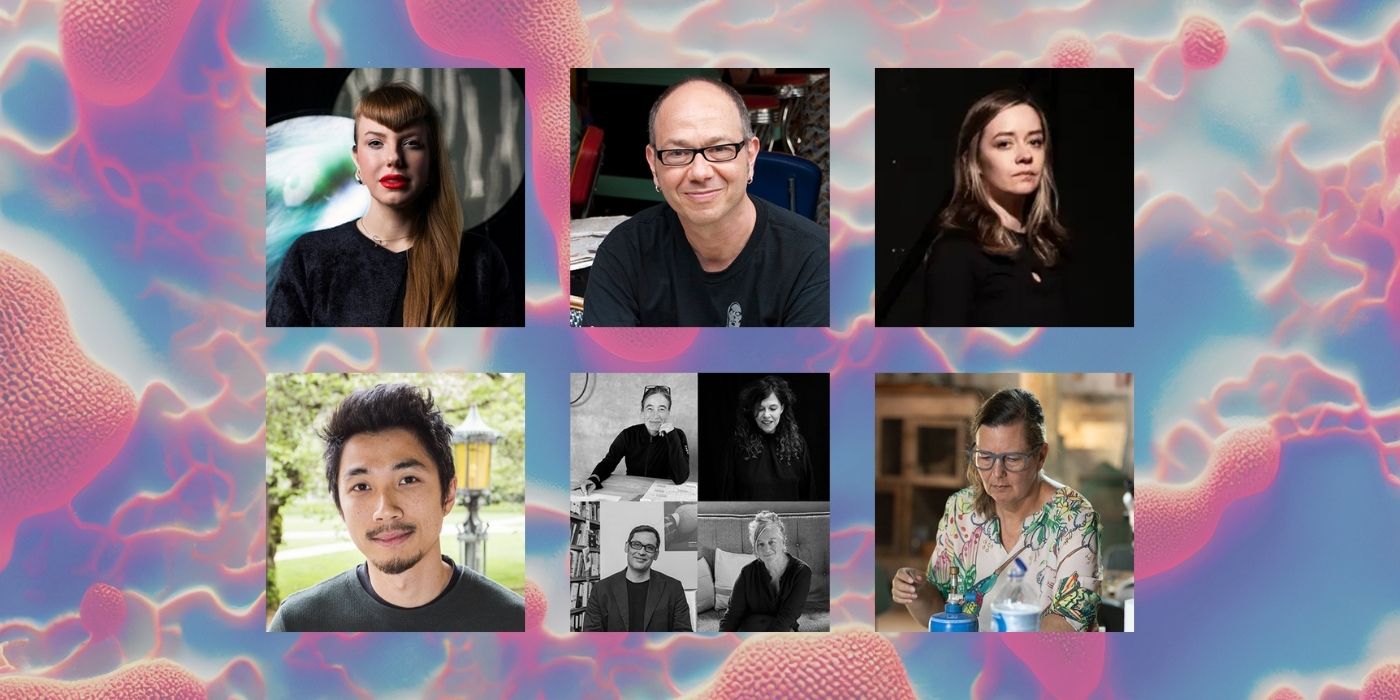
May 4, 2026
SETI Institute Announces Nominees for the Speculative Life BioArt Residency
Six international artists shortlisted for a new residency at the intersection of art, astrobiology, and biotechnology #AIR #SETI Institute #Speculative Life #Astrobiology #Danielle Siembieda #Nathalie Cabrol
Apr 27, 2026
Rethinking Organics on Mars
By Nathalie A. Cabrol, Director of the Carl Sagan Center for Research, SETI Institute #Mars #Astrobiology #Solar System #Curiosity Rover #NASA Missions and Observatories #Nathalie Cabrol
Apr 21, 2026
SETI Institute Launches Discovery and Futures Lab to Explore the Human Dimensions of Life Beyond Earth
New initiative bridges science, society, and the future of discovery in astrobiology and SETI #Press Releases #Discovery and Futures Lab #Lucian Walkowicz #Chelsea Haramia #Carl Sagan Center #Nathalie Cabrol #Simon Steel #Bill Diamond #Astrobiology #SETI
Apr 3, 2026
SETI Institute In the News: March Roundup 2026
In March 2026, SETI Institute researchers contributed to a wide range of conversations about our solar system and the search for life beyond Earth. From explaining unusual features on Mars and studying meteor airbursts in Earth’s atmosphere to advancing new ways of detecting technosignatures, this work reflects how scientists are continually refining our understanding of both nearby and distant worlds. #SETI Institute in the News #SETI Institute #Community #Mars #Pascal Lee #Peter Jenniskens #Comets, Meteors, and Asteroids #Astronomy #Vishal Gajjar #SETI #AI and Machine Learning #Astrobiology #Nathalie Cabrol #Carl Sagan Center #Seth Shostak #Movie Reviews #Bill Diamond
Jun 1, 2026
#Press Releases
#STRIDE
#Research
#Carl Sagan Center
#Spectroscopy
#Solar System
#SETI
#Climate and Bioscience
#Astronomy
#Astrobiology
#Exoplanets
#Data Science
#Education
#Outreach
#Hat Creek Radio Observatory
#Unistellar
#SkyMapper
May 13, 2026
SETI Institute to Honor Dr. Matthew Tiscareno with 2026 Carl Sagan Center Director’s Award
The Drake Awards event will also recognize SETI Forward and SETI Institute REU student award recipients.
#Press Releases
#Drake Awards
#Frank Drake
#SETI
#Awards
#Planetary Astronomy
#Astrobiology
#SETI Forward
#Education
#Carl Sagan Center
#Matthew Tiscareno
#Nathalie Cabrol
#REU
May 4, 2026
SETI Institute Announces Nominees for the Speculative Life BioArt Residency
Six international artists shortlisted for a new residency at the intersection of art, astrobiology, and biotechnology
#AIR
#SETI Institute
#Speculative Life
#Astrobiology
#Danielle Siembieda
#Nathalie Cabrol
Apr 27, 2026
Rethinking Organics on Mars
By Nathalie A. Cabrol, Director of the Carl Sagan Center for Research, SETI Institute
#Mars
#Astrobiology
#Solar System
#Curiosity Rover
#NASA Missions and Observatories
#Nathalie Cabrol
Apr 21, 2026
SETI Institute Launches Discovery and Futures Lab to Explore the Human Dimensions of Life Beyond Earth
New initiative bridges science, society, and the future of discovery in astrobiology and SETI
#Press Releases
#Discovery and Futures Lab
#Lucian Walkowicz
#Chelsea Haramia
#Carl Sagan Center
#Nathalie Cabrol
#Simon Steel
#Bill Diamond
#Astrobiology
#SETI
Apr 3, 2026
SETI Institute In the News: March Roundup 2026
In March 2026, SETI Institute researchers contributed to a wide range of conversations about our solar system and the search for life beyond Earth. From explaining unusual features on Mars and studying meteor airbursts in Earth’s atmosphere to advancing new ways of detecting technosignatures, this work reflects how scientists are continually refining our understanding of both nearby and distant worlds.
#SETI Institute in the News
#SETI Institute
#Community
#Mars
#Pascal Lee
#Peter Jenniskens
#Comets, Meteors, and Asteroids
#Astronomy
#Vishal Gajjar
#SETI
#AI and Machine Learning
#Astrobiology
#Nathalie Cabrol
#Carl Sagan Center
#Seth Shostak
#Movie Reviews
#Bill Diamond
Research
Related Projects

SkyMapper • SETI • Citizen Science • Astronomy
SkyMapper: Expanding Access to Real-time Astronomy Through a Global Astronomical Network
SkyMapper and the SETI Institute are connecting educators, students and the public to live astronomical observations through a distributed astronomical network. #SkyMapper #SETI #Citizen Science #Astronomy
VPL
Virtual Planetary Laboratory
How can we best assess whether an exoplanet supports life? #VPL
Discovery and Futures Lab
Discovery and Futures Lab
What happens if life beyond Earth is discovered? The Discovery and Futures Lab at the SETI Institute fosters novel and anticipatory research at the intersection of science, society, our planet, and the search for life beyond Earth. #Discovery and Futures Lab
May 17, 2026
SkyMapper: Expanding Access to Real-time Astronomy Through a Global Astronomical Network
SkyMapper and the SETI Institute are connecting educators, students and the public to live astronomical observations through a distributed astronomical network.
#SkyMapper
#SETI
#Citizen Science
#Astronomy
May 5, 2026
Virtual Planetary Laboratory
How can we best assess whether an exoplanet supports life?
#VPL
Apr 16, 2026
Discovery and Futures Lab
What happens if life beyond Earth is discovered? The Discovery and Futures Lab at the SETI Institute fosters novel and anticipatory research at the intersection of science, society, our planet, and the search for life beyond Earth.
#Discovery and Futures Lab
Support Us
Support the
SETI Institute
Scientists are getting closer in their search for life beyond earth. But with limited federal funding for the search for extraterrestrial intelligence, supporters are the reason cutting-edge scientists can keep their eyes on the sky.
