









Updates from two SETI Institute projects
From curious signals to a government report on UAPs, the search for life beyond Earth has been a hot topic throughout 2021. The SETI Institute does many things, but the search for extraterrestrial intelligence is our namesake, and two of our projects to search for advanced civilizations have made significant headway the last 12 months.
Allen Telescope Array
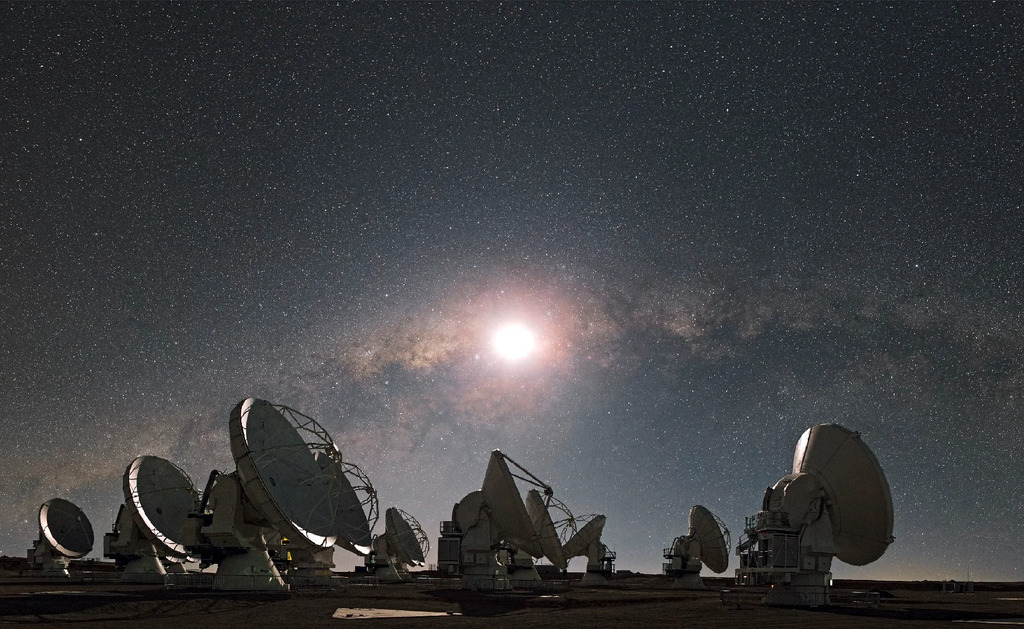
The Allen Telescope Array (ATA) is the SETI Institute’s magnum opus when it comes to searching for intelligent life beyond Earth. The SETI Institute built 42 radio antennae at the Hat Creek Radio Observatory to scour distant star systems for radio waves that could belie advanced civilizations. In the last few years, the SETI Institute took over complete management of the Hat Creek site and got to work upgrading the instruments at the observatory.
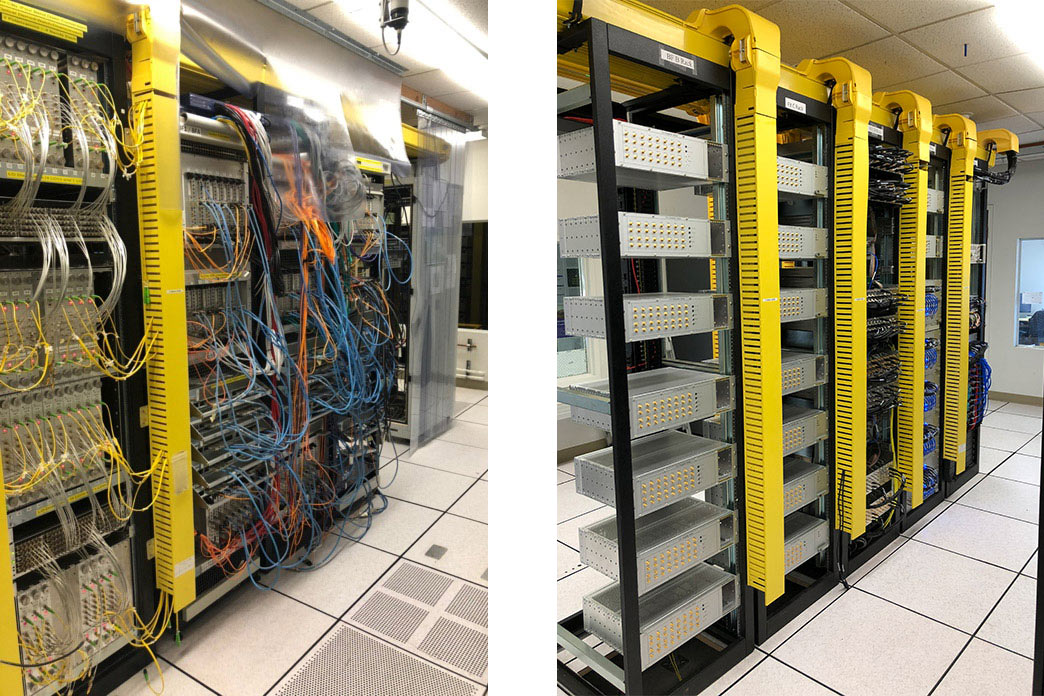
The four scientists who live and work at the ATA have spent the better part of 2021 refurbishing the antennae and the data processing equipment at Hat Creek.
The refurbishment process includes rebuilding part of the antennas’ front-end receivers to make them more sensitive and reliable across additional radio frequencies. This means it can listen for even more signals and record phenomenon like Fast Radio Bursts (FRBs). In total, the team refurbished 21 antennas (half of the full ATA) this year, which is no small feat considering each dish was designed specifically for the ATA and requires specialized hardware.
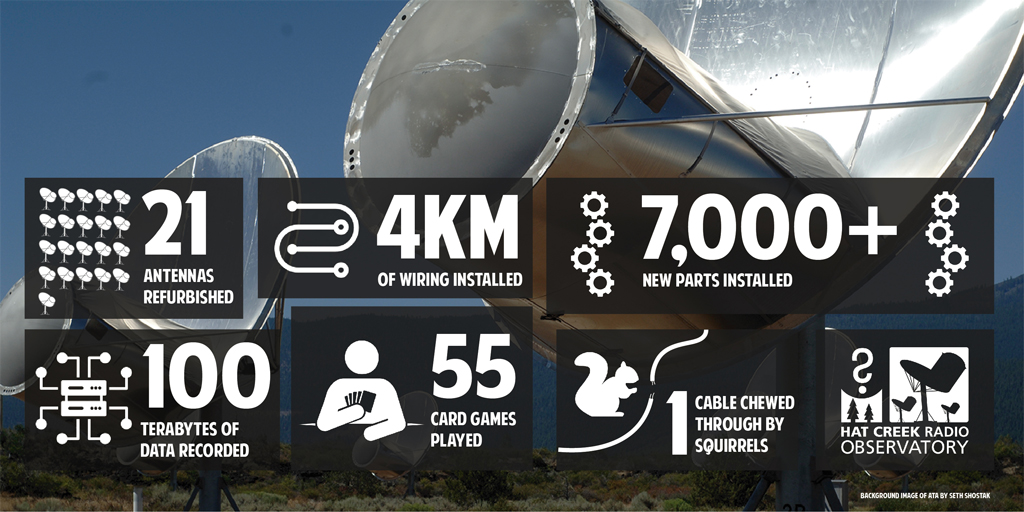
By the numbers:
- 21: Antennas refurbished
- 4: Total kilometers of wiring installed
- 7,000+: New parts installed
- 100: Terabytes of data recorded
- 1: Cable(s) chewed through by squirrels
- 55: Card games played
But what good is a signal if you can’t store and process it? The team is working to replace the legacy signal processing hardware with state-of-the-art equipment. This includes cutting-edge digitizers, which convert raw signal data into digital values. Now, each new module can process 14x the bandwidth compared to the original setup. The team already installed a quarter of this new digital processing backend. In addition, they have installed 8 out of 42 new GPU servers for processing data.
By making the feed more sensitive and reliable, the upgraded ATA can survey the entire visible sky every night across the array’s frequency bandwidth (1-12 GHz).
This updated equipment made the ATA’s first FRB detection earlier this year, illustrating the power and reliability of the refurbished equipment.
The team has worked late nights and weekends to upgrade the telescope array and further the search for other advanced civilizations. But this doesn’t mean they haven’t had fun along the way.
The scientists will continue the refurbishment process into 2022 and will welcome Dr. Sofia Sheikh, a postdoctoral researcher who will help develop additional SETI search methods.
LaserSETI
The 2021 theme for LaserSETI was tenacity.
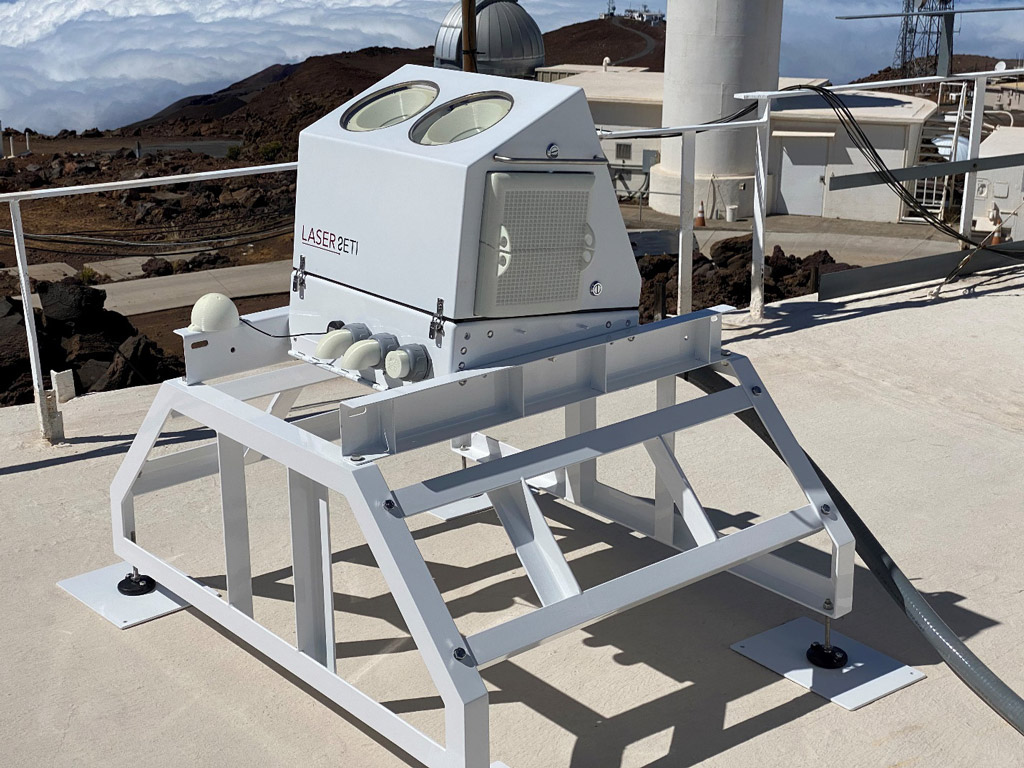
For a little background, LaserSETI searches the skies for laser flashes and aims to be the first to scan all the sky, all the time. Laser flashes are interesting to SETI scientists because advanced civilizations could use them to communicate or propel spacecraft. Eliot Gillum directs this project.
Though the instruments for the second LaserSETI observatory were completed in September 2020, installation at Haleakala Observatory in Maui, Hawai’i was delayed to 2021 due to the ongoing pandemic.
The team was ecstatic when the instruments finally arrived in Hawai’i earlier this year, but upon arrival, a forklift had punctured a hole in one of the cases, fatally wounding the 12V DC transformer that powers the equipment. That would’ve only been a minor Monkeywrench in schedule, except Amazon sent an almost indistinguishable 24V replacement, which was installed and briefly powered on, damaging at least 10 components.
With help from folks at the University of Hawai’i and another trip to the island, all damaged equipment has been repaired and the LaserSETI installation is now up and running.
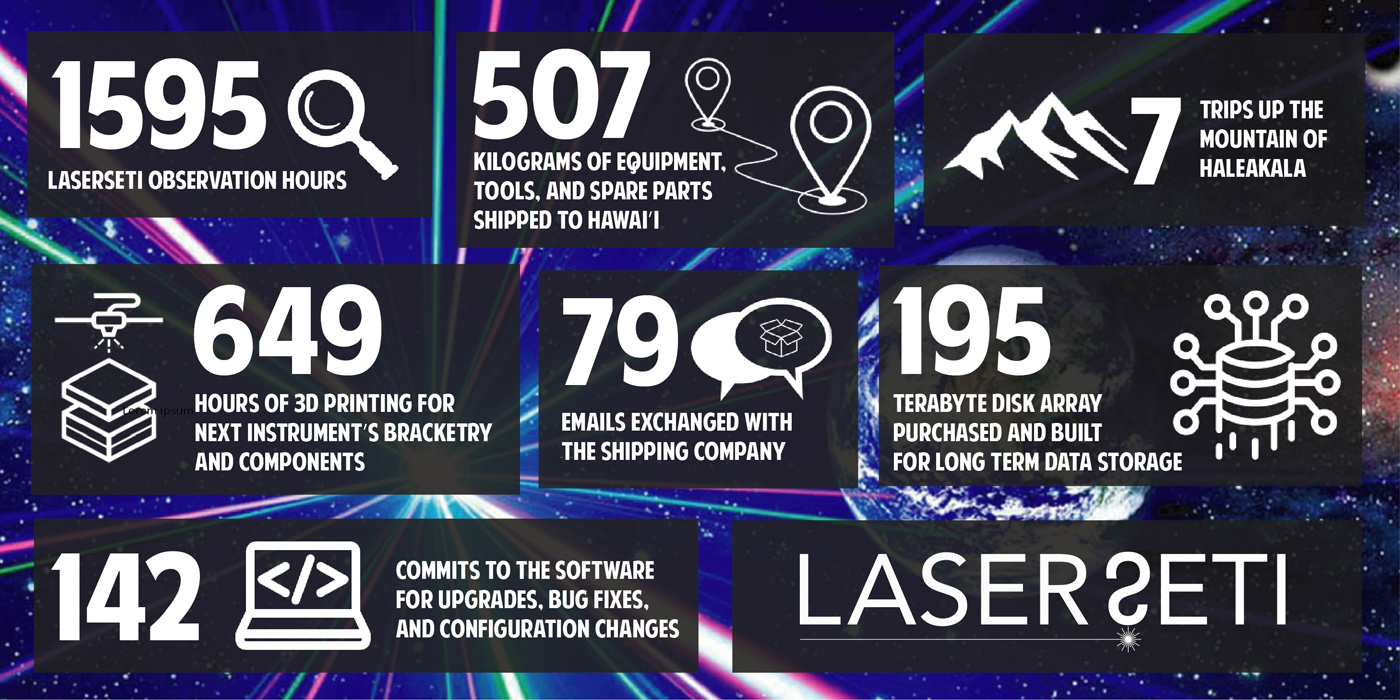
By the numbers:
- 1595: LaserSETI observation hours
- 507: Kilograms of equipment, tools, and spare parts shipped to Hawai’i
- 7: Trips up the mountain of Haleakala
- 79: Emails exchanged with the shipping company
- 649: Hours of 3D printing for next instrument’s bracketry and components
- 195: Terabyte disk array purchased and built for long term data storage
- 142: Commits to the software for upgrades, bug fixes, and configuration changes
Next year, Eliot and team will install two more observatories in the western hemisphere, with eyes on Puerto Rico as the next location. Most of the components have already been procured, including 22 cameras (2 each for the 10 instruments plus 2 spares), and negotiations are ongoing with the host facilities.
News
Related News
Beyond Disclosure Day: The Real-World Protocols
#Press Releases #SETI #Astronomy #Bill Diamond #SETI Institute
SETI Institute In the News: May Roundup 2026
#SETI Institute in the News #SETI Institute #Community #Solar System #Matija Ćuk #Neptune #SETI #Bill Diamond #UAPs #Drake Awards #Lori Marino #Matthew Tiscareno #Outreach #Exoplanets #Carl Sagan Center
SETI Institute Looks for Signs of Technology in Interstellar Visitor 3I/ATLAS
Observations with the Allen Telescope Array set new limits on possible signals from extraterrestrial transmitters. #Press Releases #ATA #3I/ATLAS #Hat Creek Radio Observatory #Radio Astronomy #SETI
SETI Institute Awards $1 Million in STRIDE Grants to Advance Astrobiology, Exoplanet Science, and Public Engagement
#Press Releases #STRIDE #Research #Carl Sagan Center #Spectroscopy #Solar System #SETI #Climate and Bioscience #Astronomy #Astrobiology #Exoplanets #Data Science #Education #Outreach #Hat Creek Radio Observatory #Unistellar #SkyMapper
Celebrating Frank Drake
#Frank Drake #SETI #Project Ozma #Drake Equation #SETI Institute
SETI Institute to Honor Dr. Matthew Tiscareno with 2026 Carl Sagan Center Director’s Award
The Drake Awards event will also recognize SETI Forward and SETI Institute REU student award recipients. #Press Releases #Drake Awards #Frank Drake #SETI #Awards #Planetary Astronomy #Astrobiology #SETI Forward #Education #Carl Sagan Center #Matthew Tiscareno #Nathalie Cabrol #REUResearch
Related Projects
SkyMapper: Expanding Access to Real-time Astronomy Through a Global Astronomical Network
SkyMapper and the SETI Institute are connecting educators, students and the public to live astronomical observations through a distributed astronomical network. #SkyMapper #SETI #Citizen Science #Astronomy
Virtual Planetary Laboratory
How can we best assess whether an exoplanet supports life? #VPL
Discovery and Futures Lab
What happens if life beyond Earth is discovered? The Discovery and Futures Lab at the SETI Institute fosters novel and anticipatory research at the intersection of science, society, our planet, and the search for life beyond Earth. #Discovery and Futures LabSupport the
SETI Institute
Scientists are getting closer in their search for life beyond earth. But with limited federal funding for the search for extraterrestrial intelligence, supporters are the reason cutting-edge scientists can keep their eyes on the sky.