)

Monday, Mar 28, 2022

Shelley Wright. Photo credit: Laurie Hatch Photography.
March 28, 2022, Mountain View, CA – On May 12, 2022, Dr. Shelley Wright will receive the SETI Institute’s 2022 Drake Award. Wright has been a pioneer in optical and near-infrared SETI instrument development and research throughout her career. Some of Wright's contributions include leading and collaborating on the design, construction and implementation of pulsed-laser SETI instruments. Wright was a critical team member who developed one of the most advanced optical SETI experiments and was the Principal Investigator of the first near-infrared SETI instrument (NIROSETI) and survey. Wright is currently the Principal Investigator of an all-sky, all-the-time panoramic SETI observatory called “PANOSETI.”
The Drake Award is named for Dr. Frank Drake, the first president of the SETI Institute’s Board of Trustees and creator of the so-called “Drake Equation.” Drake is considered the father of scientific SETI research, having conducted the first SETI experiment, Project Ozma, at the Green Bank Radio Observatory in 1960, and his Drake Equation is recognized as a roadmap for the field of astrobiology. Drake Award honorees are nominated by the SETI Institute’s Science Advisory Board and approved by its Board of Trustees.
“I’m honored to receive the Drake Award,” said Wright, Associate Professor at the University of California San Diego. “It is Frank Drake's lifelong investment in SETI research, and his committed mentorship that paved my path here today. For me, the Drake Award extends beyond Frank's excellence in research and touches on his training of the next generation of SETI scholars. I’m lucky to have been part of the SETI community for my entire professional career and look forward to inspiring the next generation of SETI researchers as we follow in Frank's footsteps. The SETI searches that we are embarking on in the next decade are incredibly exciting and ambitious and built off the decades of work by others in the SETI field like Frank Drake and Jill Tarter.”
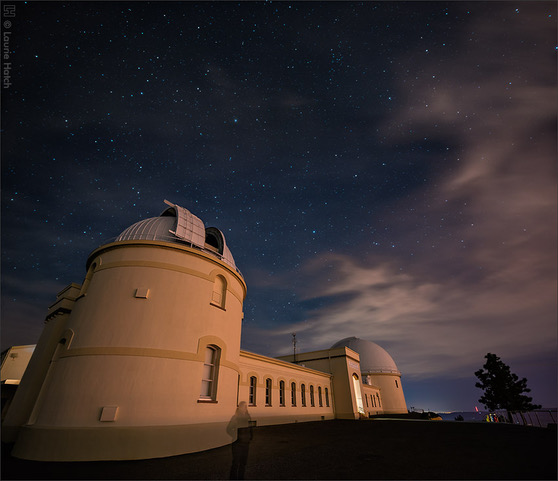
Photo credit: Laurie Hatch Photography.
“It’s such a pleasure to be able to recognize Dr. Wright’s impressive research accomplishments with the Drake Award,” said Dr. Lucianne Walkowicz, Chair of the SETI Institute’s Science Advisory Board. “Dr. Wright has spent her career driving forward instrumental innovations in optical and IR SETI—wavelengths that are often unsung for their potential to make SETI discoveries. She has worked tirelessly and creatively, and I look forward to celebrating her continued successes!”
Established in 2001, past recipients of the Drake Award include:
- Frank Drake — innovation in SETI and life-in-the-Universe research
- Charles Townes — visionary advocacy for optical SETI
- William Borucki — revolutionary contributions to exoplanet research as PI for the Kepler Space Telescope
- Victoria Meadows — seminal contributions to astrobiology and exoplanet research
- Jason Wright — groundbreaking achievements in exoplanet and SETI research
- Paul Horowitz — pioneering work in SETI instrumentation for both radio and optical searches
- Dan Werthimer — developing novel radio spectrometers as well as optical SETI detection systems
“Shelley is a wonderfully deserving recipient of this year’s Drake Award,” said Bill Diamond, President & CEO of the SETI Institute. “Our current knowledge of the ubiquity of planets and the vast number of habitable worlds in our own galaxy make SETI research more compelling than ever, and Shelley has expanded the field beyond radio astronomy to new and innovative search modalities. We are thus delighted to honor her work and dedication to the field of SETI research through this recognition.”
The 2022 Drake Awards presentation will take place on May 12, 2022, at a public event held at SRI International in Menlo Park, CA. The award presentation will also be livestreamed via Zoom for those unable to attend in person. Science Advisory Board member Timiebi Aganaba will host the 2022 Drake Award event. Additional honorees will include recipients of the SETI Forward Award, which encourages future scientists to pursue careers in the search for life in the universe, and the Carl Sagan Center Director’s Award, which honors outstanding achievement in astrobiology, technology and exploration of life in the universe.
Additional information about the 2022 Drake Awards event and tickets for both the in-person and virtual events are here.
About Shelley Wright:
Shelley Wright is an Associate Professor at the University of California San Diego, in the Department of Physics and the Center for Astrophysics and Space Sciences. Wright has extensive experience working with optical and infrared instrumentation, with a particular focus on imaging cameras and spectrographs that operate behind large telescopes and SETI instrumentation. Her observational research focuses on galaxy and supermassive black hole formation and evolution across cosmic time. Wright currently serves as Principal Investigator for the next-generation AO instrument Liger for the W. M. Keck Observatory and the Project Scientist for the first-light instrument (IRIS) for the future Thirty Meter Telescope.
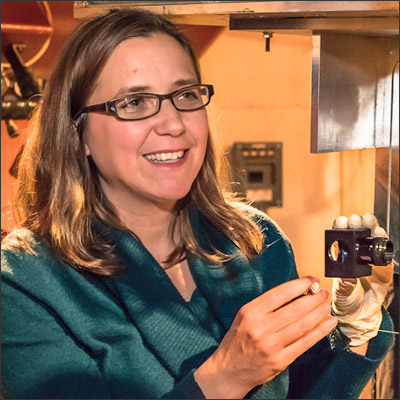
Photo credit: Laurie Hatch Photography.
Throughout her career, Wright has been a pioneer in optical and near-infrared SETI instrument development and research. She has been involved with the design, construction and implementation of pulsed-laser SETI instruments. Wright was a critical team member who developed one of the most advanced optical SETI experiments and was the Principal Investigator of the first near-infrared SETI instrument (NIROSETI) and survey. Wright is currently the Principal Investigator of an all-sky, all-time SETI observatory called PANOSETI.
Wright received her B.S. in Physics at the University of California, Santa Cruz in 2001. She served as support astronomer at the Isaac Newton Group of Telescopes on La Palma, then continued her graduate studies at the University of California, Los Angeles (UCLA) in the Physics & Astronomy Department. Wright conducted her graduate research on W. M. Keck Observatory instrumentation and observations while working in the Infrared Astrophysical Laboratory at UCLA, receiving her Ph.D. in 2008. She then served as a postdoctoral researcher at the University of California, Irvine, working on instrumentation development and scientific studies for the Thirty Meter Telescope. In 2009 she received a NASA Hubble Postdoctoral Fellowship and the University of California President's Fellowship at UC Berkeley for her observational research on distant galaxies. Prior to her arrival at UC San Diego, Wright was Assistant Professor at the University of Toronto in the Department of Astronomy & Astrophysics and the Dunlap Institute for Astronomy & Astrophysics from 2012–2014. She currently serves as the Vice-Chair of Astronomy in the UC San Diego Physics Department and, as of 2020, chairs the University of California Observatories Advisory Committee (UCOAC).
About the SETI Institute
Founded in 1984, the SETI Institute is a non-profit, multi-disciplinary research and education organization whose mission is to lead humanity's quest to understand the origins and prevalence of life and intelligence in the universe and share that knowledge with the world. Our research encompasses the physical and biological sciences and leverages data analytics, machine learning and advanced signal detection technologies. The SETI Institute is a distinguished research partner for industry, academia and government agencies, including NASA and the National Science Foundation.
Contact information
Rebecca McDonald
Director of Communications
SETI Institute
[email protected]







News
Related News

Jun 29, 2026
Humanity's Plan for First Contact: Who Speaks for Earth?
#Blog #Lauren Sgro #Lucian Walkowicz #Chelsea Haramia #SETI #SETI Institute
Jun 9, 2026
Disclosure Needs Data
#SkyMapper #Franck Marchis #SETI #citizen science
Jun 8, 2026
The Sounds of Intelligence: A Conversation with 2026 Drake Award Recipient Lori Marino
#Blog #Drake Awards #Lori Marino #SETI
Jun 5, 2026
Beyond Disclosure Day: The Real-World Protocols
#Press Releases #SETI #Astronomy #Bill Diamond #SETI Institute
Jun 4, 2026
SETI Institute In the News: May Roundup 2026
#SETI Institute in the News #SETI Institute #Community #Solar System #Matija Ćuk #Neptune #SETI #Bill Diamond #UAPs #Drake Awards #Lori Marino #Matthew Tiscareno #Outreach #Exoplanets #Carl Sagan Center
Jun 3, 2026
SETI Institute Looks for Signs of Technology in Interstellar Visitor 3I/ATLAS
Observations with the Allen Telescope Array set new limits on possible signals from extraterrestrial transmitters. #Press Releases #ATA #3I/ATLAS #Hat Creek Radio Observatory #Radio Astronomy #SETI
Jun 29, 2026
#Blog
#Lauren Sgro
#Lucian Walkowicz
#Chelsea Haramia
#SETI
#SETI Institute
Jun 9, 2026
#SkyMapper
#Franck Marchis
#SETI
#citizen science
Disclosure Needs Data
Jun 8, 2026
#Blog
#Drake Awards
#Lori Marino
#SETI
The Sounds of Intelligence: A Conversation with 2026 Drake Award Recipient Lori Marino
Jun 5, 2026
#Press Releases
#SETI
#Astronomy
#Bill Diamond
#SETI Institute
Beyond Disclosure Day: The Real-World Protocols
Jun 4, 2026
#SETI Institute in the News
#SETI Institute
#Community
#Solar System
#Matija Ćuk
#Neptune
#SETI
#Bill Diamond
#UAPs
#Drake Awards
#Lori Marino
#Matthew Tiscareno
#Outreach
#Exoplanets
#Carl Sagan Center
SETI Institute In the News: May Roundup 2026
Jun 3, 2026
SETI Institute Looks for Signs of Technology in Interstellar Visitor 3I/ATLAS
Observations with the Allen Telescope Array set new limits on possible signals from extraterrestrial transmitters.
#Press Releases
#ATA
#3I/ATLAS
#Hat Creek Radio Observatory
#Radio Astronomy
#SETI
Research
Related Projects

SkyMapper • SETI • Citizen Science • Astronomy
SkyMapper: Expanding Access to Real-time Astronomy Through a Global Astronomical Network
SkyMapper and the SETI Institute are connecting educators, students and the public to live astronomical observations through a distributed astronomical network. #SkyMapper #SETI #Citizen Science #Astronomy
VPL
Virtual Planetary Laboratory
How can we best assess whether an exoplanet supports life? #VPL
Discovery and Futures Lab
Discovery and Futures Lab
What happens if life beyond Earth is discovered? The Discovery and Futures Lab at the SETI Institute fosters novel and anticipatory research at the intersection of science, society, our planet, and the search for life beyond Earth. #Discovery and Futures Lab
May 17, 2026
SkyMapper: Expanding Access to Real-time Astronomy Through a Global Astronomical Network
SkyMapper and the SETI Institute are connecting educators, students and the public to live astronomical observations through a distributed astronomical network.
#SkyMapper
#SETI
#Citizen Science
#Astronomy
May 5, 2026
Virtual Planetary Laboratory
How can we best assess whether an exoplanet supports life?
#VPL
Apr 16, 2026
Discovery and Futures Lab
What happens if life beyond Earth is discovered? The Discovery and Futures Lab at the SETI Institute fosters novel and anticipatory research at the intersection of science, society, our planet, and the search for life beyond Earth.
#Discovery and Futures Lab
Support Us
Support the
SETI Institute
Scientists are getting closer in their search for life beyond earth. But with limited federal funding for the search for extraterrestrial intelligence, supporters are the reason cutting-edge scientists can keep their eyes on the sky.
