)

Wednesday, Nov 13, 2024
The SETI Institute, a scientific research center dedicated to the search for life in the universe, is pleased to offer three community college students the chance to intern with researchers during the spring semester, 2025. Currently, this opportunity is open to students at Diablo Valley College, Evergreen Valley College and Foothill College only.
The internship, for one [or two days] per week, will be in-person at the Institute’s Mountain View headquarters, or at the Unistellar Office, San Francisco. Travel expenses and a stipend will be provided. The online application can be found at seti.org/ccstemip; applications are now closed.
Students who have an interest in astronomy, data science, programming, mathematics, and outreach are encouraged to apply. For more information, contact Dr. Celso Batalha at [email protected] (EVC) Dr. Jean Chiar at [email protected] (DVC) or Dr. Simon Steel ([email protected]) (Foothill).
Meet the SETI Institute
SETI (the Search for Extraterrestrial Intelligence) is the search for intelligent, alien civilizations. The SETI Institute was founded in 1984 to do just that, but in its 40-year history, it has expanded its scientific mission to search for all forms of life, from fossil microbes on Mars to hunting for habitable planets orbiting other stars in our galaxy. The Institute’s 100 researchers are experts in astronomy, chemistry, biology, engineering, and computing. While interning at the Institute, you will be able to meet and talk to the scientists and learn more about their amazing research as we get closer to answering one of the biggest questions of all: are we alone in the universe?
Meet the Scientists
Three SETI Institute scientists are interested in hosting an intern for the spring semester, 2025. While here, you will participate in their scientific research and outreach.

The project will involve using models of protoplanetary disks to understand and explain emission lines from different gaseous species seen with the James Webb Space Telescope. The student will look at how different emission lines scale with the water emission seen by JWST and how these relate to the evolutionary state of the disk as it forms planets. The work will involve data analysis and comparison of modeling and simulation results with observational data.
Her work is theoretical in nature, although she does connect her model results to data. For the project to be of any value to the student, the applicant would have to be thinking of pursuing higher degrees (at least a graduate from a 4-year university) in physics, astronomy, mathematics, or computer science. Some programming experience is necessary, either in Python or a higher-level language. A physics or math major is preferred, but anyone interested is encouraged to apply.

The work he envisions for the intern will be fairly computer intensive, but will start with mostly running existing programs and collecting/organizing results. The work will involve reviewing data analysis results to determine the validity of potential planet candidates, so an interest in astronomy and exoplanets is a plus. Hopefully, as the work progresses, the intern will be able to get more into programming/updating the data analysis code and work with a team to apply a machine learning system to review the analysis results. Experience with using the Linux/Unix operating system would be a big plus, but any computer experience and a willingness to learn is good. For programming, Python experience would be a plus but is not required.

This exciting internship offers a unique opportunity to be part of the Unistellar Citizen Science program's global outreach efforts. As an intern, you will assist in connecting with and expanding our network of citizen astronomers worldwide. Your role will be crucial in developing their interests through innovative engagement strategies and by facilitating collaboration with our team of professional astronomers. You will help design and implement a rewarding program and create compelling content for our website and app. This internship is ideal for students eager to contribute to a vibrant international community and gain experience in science communication and program development.







News
Related News
Jun 17, 2026
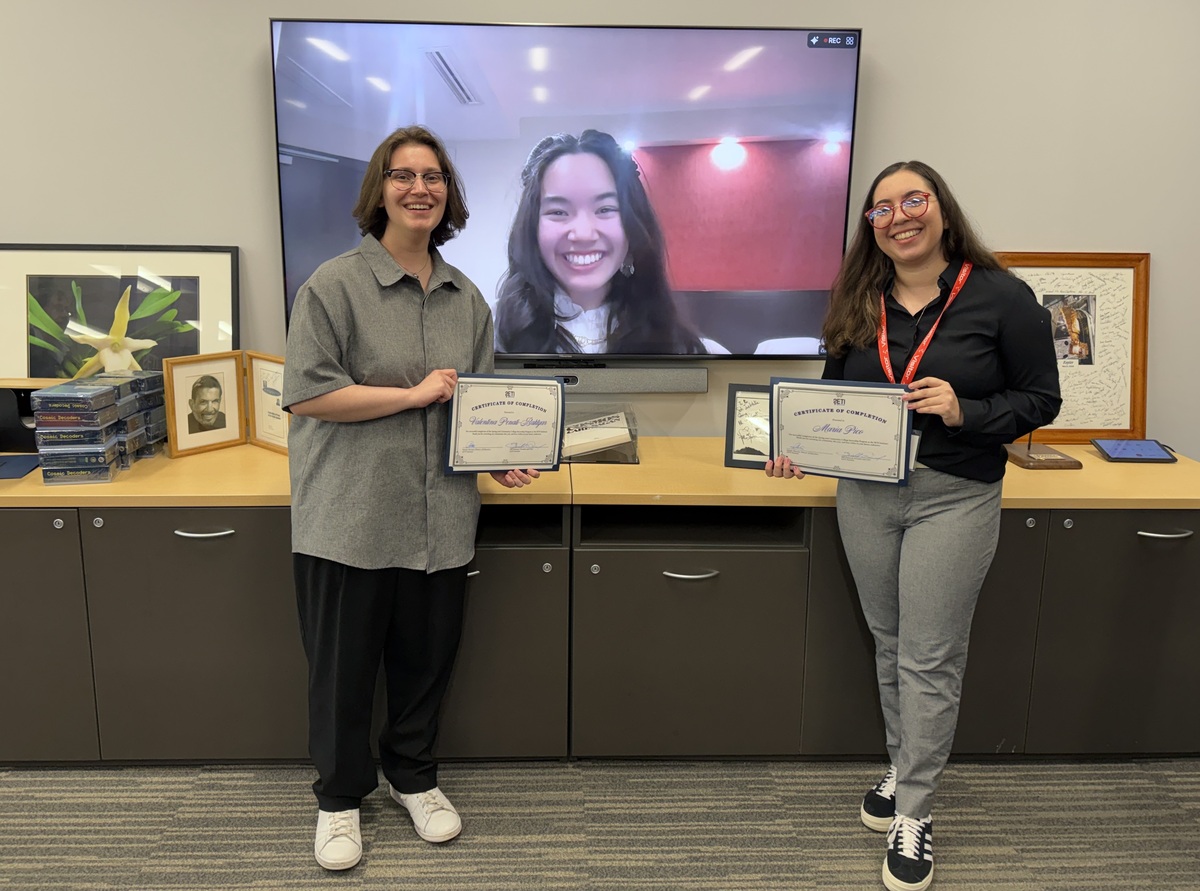
Community College Internship Program Celebrates Fourth Year of Student Research Achievement
#Community College Internship #Education #Lauren Sgro #Unistellar #Uma Gorti #Douglas Caldwell #Pamela Harman #Simon Steel
Jun 1, 2026
SETI Institute Awards $1 Million in STRIDE Grants to Advance Astrobiology, Exoplanet Science, and Public Engagement
#Press Releases #STRIDE #Research #Carl Sagan Center #Spectroscopy #Solar System #SETI #Climate and Bioscience #Astronomy #Astrobiology #Exoplanets #Data Science #Education #Outreach #Hat Creek Radio Observatory #Unistellar #SkyMapper
May 13, 2026
SETI Institute to Honor Dr. Matthew Tiscareno with 2026 Carl Sagan Center Director’s Award
The Drake Awards event will also recognize SETI Forward and SETI Institute REU student award recipients. #Press Releases #Drake Awards #Frank Drake #SETI #Awards #Planetary Astronomy #Astrobiology #SETI Forward #Education #Carl Sagan Center #Matthew Tiscareno #Nathalie Cabrol #REU
May 5, 2026
Atlanta Science Festival Exploration Expo and the Arecibo Message
#Community #SETI Institute #Outreach #Education #Lauren Sgro
Apr 15, 2026
2025 SETI Institute Activity Report
#Activity Reports #Carl Sagan Center #Outreach #Education #AIR #Community
Apr 8, 2026
Middlesex Community College Collaborates with SETI Institute on ARISE Labs
This story was originally published by Middlesex Community College #SETI #ARISE #Community College #Education
Jun 17, 2026
#Community College Internship
#Education
#Lauren Sgro
#Unistellar
#Uma Gorti
#Douglas Caldwell
#Pamela Harman
#Simon Steel
Jun 1, 2026
#Press Releases
#STRIDE
#Research
#Carl Sagan Center
#Spectroscopy
#Solar System
#SETI
#Climate and Bioscience
#Astronomy
#Astrobiology
#Exoplanets
#Data Science
#Education
#Outreach
#Hat Creek Radio Observatory
#Unistellar
#SkyMapper
SETI Institute Awards $1 Million in STRIDE Grants to Advance Astrobiology, Exoplanet Science, and Public Engagement
May 13, 2026
SETI Institute to Honor Dr. Matthew Tiscareno with 2026 Carl Sagan Center Director’s Award
The Drake Awards event will also recognize SETI Forward and SETI Institute REU student award recipients.
#Press Releases
#Drake Awards
#Frank Drake
#SETI
#Awards
#Planetary Astronomy
#Astrobiology
#SETI Forward
#Education
#Carl Sagan Center
#Matthew Tiscareno
#Nathalie Cabrol
#REU
May 5, 2026
#Community
#SETI Institute
#Outreach
#Education
#Lauren Sgro
Atlanta Science Festival Exploration Expo and the Arecibo Message
Apr 15, 2026
#Activity Reports
#Carl Sagan Center
#Outreach
#Education
#AIR
#Community
2025 SETI Institute Activity Report
Apr 8, 2026
Middlesex Community College Collaborates with SETI Institute on ARISE Labs
This story was originally published by Middlesex Community College
#SETI
#ARISE
#Community College
#Education
Research
Related Projects

SkyMapper • SETI • Citizen Science • Astronomy
SkyMapper: Expanding Access to Real-time Astronomy Through a Global Astronomical Network
SkyMapper and the SETI Institute are connecting educators, students and the public to live astronomical observations through a distributed astronomical network. #SkyMapper #SETI #Citizen Science #Astronomy
VPL
Virtual Planetary Laboratory
How can we best assess whether an exoplanet supports life? #VPL
Discovery and Futures Lab
Discovery and Futures Lab
What happens if life beyond Earth is discovered? The Discovery and Futures Lab at the SETI Institute fosters novel and anticipatory research at the intersection of science, society, our planet, and the search for life beyond Earth. #Discovery and Futures Lab
May 17, 2026
SkyMapper: Expanding Access to Real-time Astronomy Through a Global Astronomical Network
SkyMapper and the SETI Institute are connecting educators, students and the public to live astronomical observations through a distributed astronomical network.
#SkyMapper
#SETI
#Citizen Science
#Astronomy
May 5, 2026
Virtual Planetary Laboratory
How can we best assess whether an exoplanet supports life?
#VPL
Apr 16, 2026
Discovery and Futures Lab
What happens if life beyond Earth is discovered? The Discovery and Futures Lab at the SETI Institute fosters novel and anticipatory research at the intersection of science, society, our planet, and the search for life beyond Earth.
#Discovery and Futures Lab
Support Us
Support the
SETI Institute
Scientists are getting closer in their search for life beyond earth. But with limited federal funding for the search for extraterrestrial intelligence, supporters are the reason cutting-edge scientists can keep their eyes on the sky.
