)

Thursday, Aug 21, 2025

Claudio Maccone, Italian SETI astronomer and mathematician, passed away this week at the age of 77. Claudio was an early proponent of SETI research and was globally known for his work in the field. A longtime friend of the SETI Institute, one of Claudio's dreams was to put a radio telescope on the far side of the moon to search for evidence of extraterrestrial technology.
As a mathematician, Claudio believed that mathematics was the universal language of science, and he developed statistical frameworks to explore the evolution of life on Earth and beyond Earth. These include his Statistical Drake Equation and the Evo-SETI theory.
“Claudio was a tireless champion for both the science and the profundity of SETI as a legitimate and compelling field of research,” said Bill Diamond, CEO and President, SETI Institute. “He brought the perspectives of a mathematician to bear on the field of SETI and presented his latest ideas and theories with passion and childlike enthusiasm. Claudio was also an outspoken advocate for placement of a radio telescope on the lunar far side for SETI research and radio astronomy. Perhaps we will one day honor him by powering up the Maccone Lunar Observatory (MLO)!”

Claudio Maccone (2nd row, 2nd from the right) at SETI Institute's Decoding Alien Intelligence workshop in 2018.
Claudio was passionate about sharing science and his ideas with the science community, advocating for SETI, and also with the public, hoping to inspire people about the possibilities of what could lie in the cosmos. He spoke numerous times at the SETI Institute's long-running public lecture series, SETI Talks, breaking down his approach to what he called Mathematical SETI. In 2018, he participated in the SETI Institute's Decoding Alien Intelligence workshop, which aimed to bring a multidisciplinary approach to developing an integrated strategy for the search for life beyond Earth.
Last year, several SETI Institute speakers were privileged to share the stage with Claudio at an event for undergraduate students and the public at the Università degli Studi dell'Insubria in Milan, Italy.
“Claudio was truly a singular figure in the SETI community, with an unbridled passion and zeal for searching for life in the universe and living life here on Earth,” said Andrew Siemion, Bernard M. Oliver Chair for SETI at the SETI Institute. “His passing leaves a tremendous void, but the impact he has had on his family, friends and colleagues is indelible.”
Born in Turin, Italy, Claudio earned his undergraduate degrees in mathematics and physics at the University of Turin. He later received his PhD in Applied Mathematics at King's College, London. His 50+ year career spanned industry and academia. While he worked at Alenia Spazio (now Thales Alenia Space Italia), he collaborated on mission designs for NASA and ESA. His most ambitious mission proposal was for the FOCAL mission, a plan to send a spacecraft nearly 50 billion miles past Earth to use the Sun as a gravitational lens telescope, enabling scientists to image exoplanets in great detail and to boost faint radio signals from distant civilizations.
Claudio chaired the SETI Permanent Committee of the International Academy of Astronautics (IAA) from 2012 to 2021 and later served as chair of the IAA Committee for Moon Farside Protection.
Claudio received the Giordano Bruno Award from the SETI League in 2002, as well as multiple IAA Book awards. In 2001, the International Astronomical Union named asteroid 11264 Claudiomaccone in his honor.
The SETI Institute sends its condolences to Claudio’s family, friends and the entire SETI community. He will be missed, and he will be remembered.
SETI Live:
Evo-SETI: A Model for Civilization Evolution (May 26, 2021)
SETI Talks (December 26, 2010):
Habitable Planet Statistics - Claudio Maccone
SETI Talks (December 7, 2009):
SETI from Deep Space - Claudio Maccone







News
Related News

Jun 29, 2026
Humanity's Plan for First Contact: Who Speaks for Earth?
#Blog #Lauren Sgro #Lucian Walkowicz #Chelsea Haramia #SETI #SETI Institute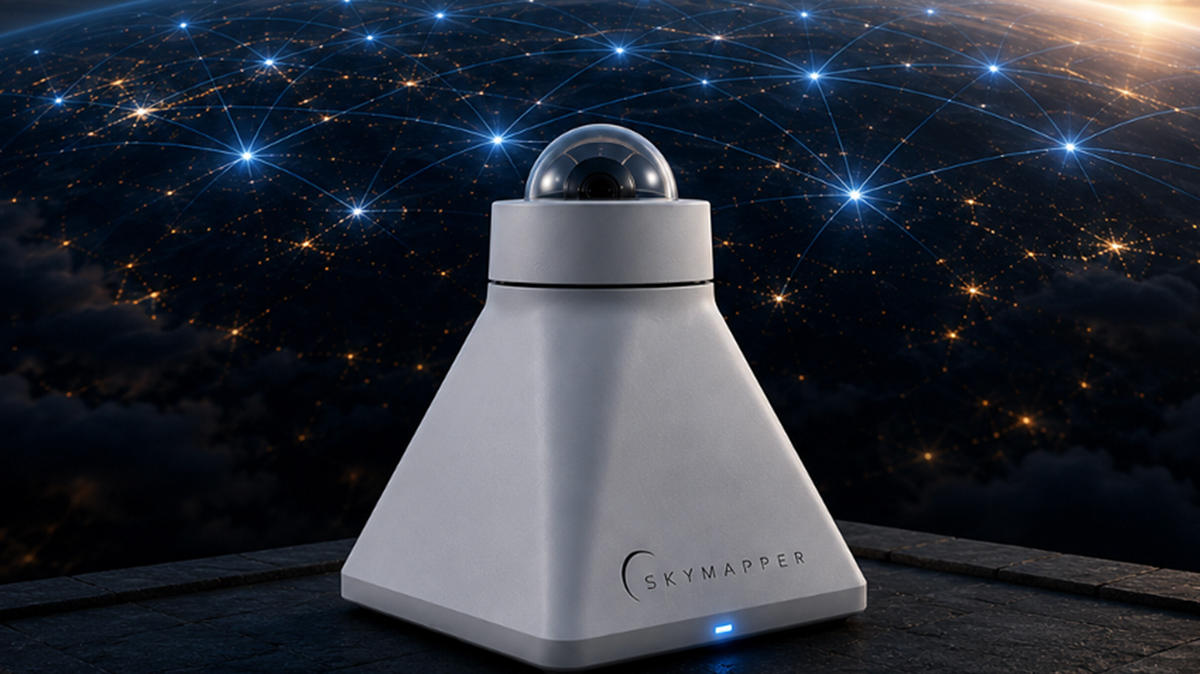
Jun 9, 2026
Disclosure Needs Data
#SkyMapper #Franck Marchis #SETI #citizen science
Jun 8, 2026
The Sounds of Intelligence: A Conversation with 2026 Drake Award Recipient Lori Marino
#Blog #Drake Awards #Lori Marino #SETI
Jun 5, 2026
Beyond Disclosure Day: The Real-World Protocols
#Press Releases #SETI #Astronomy #Bill Diamond #SETI Institute
Jun 4, 2026
SETI Institute In the News: May Roundup 2026
#SETI Institute in the News #SETI Institute #Community #Solar System #Matija Ćuk #Neptune #SETI #Bill Diamond #UAPs #Drake Awards #Lori Marino #Matthew Tiscareno #Outreach #Exoplanets #Carl Sagan Center
Jun 3, 2026
SETI Institute Looks for Signs of Technology in Interstellar Visitor 3I/ATLAS
Observations with the Allen Telescope Array set new limits on possible signals from extraterrestrial transmitters. #Press Releases #ATA #3I/ATLAS #Hat Creek Radio Observatory #Radio Astronomy #SETI
Jun 29, 2026
#Blog
#Lauren Sgro
#Lucian Walkowicz
#Chelsea Haramia
#SETI
#SETI Institute
Jun 9, 2026
#SkyMapper
#Franck Marchis
#SETI
#citizen science
Disclosure Needs Data
Jun 8, 2026
#Blog
#Drake Awards
#Lori Marino
#SETI
The Sounds of Intelligence: A Conversation with 2026 Drake Award Recipient Lori Marino
Jun 5, 2026
#Press Releases
#SETI
#Astronomy
#Bill Diamond
#SETI Institute
Beyond Disclosure Day: The Real-World Protocols
Jun 4, 2026
#SETI Institute in the News
#SETI Institute
#Community
#Solar System
#Matija Ćuk
#Neptune
#SETI
#Bill Diamond
#UAPs
#Drake Awards
#Lori Marino
#Matthew Tiscareno
#Outreach
#Exoplanets
#Carl Sagan Center
SETI Institute In the News: May Roundup 2026
Jun 3, 2026
SETI Institute Looks for Signs of Technology in Interstellar Visitor 3I/ATLAS
Observations with the Allen Telescope Array set new limits on possible signals from extraterrestrial transmitters.
#Press Releases
#ATA
#3I/ATLAS
#Hat Creek Radio Observatory
#Radio Astronomy
#SETI
Research
Related Projects

SkyMapper • SETI • Citizen Science • Astronomy
SkyMapper: Expanding Access to Real-time Astronomy Through a Global Astronomical Network
SkyMapper and the SETI Institute are connecting educators, students and the public to live astronomical observations through a distributed astronomical network. #SkyMapper #SETI #Citizen Science #Astronomy
VPL
Virtual Planetary Laboratory
How can we best assess whether an exoplanet supports life? #VPL
Discovery and Futures Lab
Discovery and Futures Lab
What happens if life beyond Earth is discovered? The Discovery and Futures Lab at the SETI Institute fosters novel and anticipatory research at the intersection of science, society, our planet, and the search for life beyond Earth. #Discovery and Futures Lab
May 17, 2026
SkyMapper: Expanding Access to Real-time Astronomy Through a Global Astronomical Network
SkyMapper and the SETI Institute are connecting educators, students and the public to live astronomical observations through a distributed astronomical network.
#SkyMapper
#SETI
#Citizen Science
#Astronomy
May 5, 2026
Virtual Planetary Laboratory
How can we best assess whether an exoplanet supports life?
#VPL
Apr 16, 2026
Discovery and Futures Lab
What happens if life beyond Earth is discovered? The Discovery and Futures Lab at the SETI Institute fosters novel and anticipatory research at the intersection of science, society, our planet, and the search for life beyond Earth.
#Discovery and Futures Lab
Support Us
Support the
SETI Institute
Scientists are getting closer in their search for life beyond earth. But with limited federal funding for the search for extraterrestrial intelligence, supporters are the reason cutting-edge scientists can keep their eyes on the sky.
