Author: Seth Shostak
Tuesday, May 23, 2017

They're baaaaack, and as peevish as ever.

Well, not exactly. To say that the nasty aliens in Ridley Scott's eponymous franchise have returned is wrong. His new movie, "Alien: Covenant," is a prequel, so we get to see just how repugnant these fiendish foes were before Sigourney Weaver snuffed one out in the famous 1979 film "Alien."

The storyline in "Alien: Covenant" is tricky, but so what? This is a haunted house movie, and the real fun is finding out what fresh hell lies beyond the next airlock.

Of course, for those who imagine a future in which humans boldly cross the final frontier to acquire new real estate and frolic with exotic aliens, this film's dystopian view is a bummer. The cosmos, often portrayed as beautiful and beguiling, is here a ghoulish abattoir.

Consider the fate of the Covenant, a colonization starship from 2104 that's stuffed with thousands of snoozing settlers and drawers of chilled embryos. Unlike its 16th century predecessors, there don't seem to be any cattle or chickens aboard. While this precludes the need for poultry wranglers, it does seem like a serious oversight that will condemn the colonists to uninteresting cuisine once they set up shop.

As the film begins, the Covenant is placidly plowing through space en route to a habitable-zone planet known as Origae-6. But before you can start on your popcorn, an unexpected storm of neutrinos rattles the ship. Mind you, trillions of neutrinos storm through your head every second without disturbing a single piece of dandruff, but this is Tinsel Town science.

The freakish cosmic weather causes the Covenant captain to make a bad move, the equivalent of taking the wrong exit on the freeway. The colonists soon land on a second-string planet with ceaselessly bad weather (a frequent feature of Ridley Scott's films, but then again, he grew up in northeastern England), and soon the crew members are being used by the resident aliens for breeding experiments.

The protomorph welcomes humans to its planet in "Alien: Covenant." Twentieth Century Fox via AP

This is not entirely novel: Polls suggest that roughly 8 percent of Americans think they've been abducted by aliens, and often with similar intent. The implication is that the true worth of Homo sapiens is to be wombs for other species.

Once alien spores have entered your body, it's too late for last rites or a revocable trust. These critters have a gestation time measured in minutes — a real challenge for mitosis but an advantage in avoiding tiresome delays in the storyline. And, as everyone knows, each alien is birthed with a do-it-yourself caesarean, uncomfortable for all concerned.

Now here's the dismaying part: The aliens, who look like the product of an unwholesome experiment to cross a scorpion with a mole rat, enter the world aggressive, energetic, and hungry. Well, one can presume they're hungry, as their only interest is to pounce on any humans within reach. Like starved cats at a rodent convention. But curiously, they don't seem to actually eat their prey. They just leave the gore on the floor and move on.

You've got to wonder: How does this help them?

The movie may be a cautionary tale about sending hi-tech Mayflowers into space, but it also touches on some slightly less icky ideas. For example, the premise that a species might seed other worlds. Francis Crick, of DNA fame, proposed that Earth was deliberately infected with life long ago, ferried to our planet by advanced aliens with a Johnny Appleseed mentality. There's no evidence for this, and the original colonists would have had to be microbes to be compatible with natural history. Still, the idea is similar to what the Ridley Scott aliens do — with their cucumber heads, chest-of-drawers teeth, and gratuitous mucus.

However, there's an even darker thread in this extraterrestrial hatch plot, and of more immediate concern than the creatures: artificial intelligence that runs amok. AI researchers frequently opine that generalized artificial intelligence — with cognitive abilities equal to or better than humans — could be developed in this century. It probably won't look like us, and it might not be as witty in conversation.

And it might not want to help us, either.

So it's more than a little disturbing when one of the artificial sentients in the film offhandedly declares that humans are old school. We're a dying species.

Uh, huh. Does that mean that the future of the galaxy belongs to pallid, hyper-aggressive lizards? After all, they can reproduce quickly and spread through space.

Maybe. But if I were one of Ridley Scott's hypothesized life forms, I'd watch my spike-tipped back. Just like mosquitoes, these creatures are precariously dependent on another species to reproduce. Not so the robots.

The truth may be out there, and the truth may be that, except on a few worlds, it's protoplasm that's old school. Have a nice day.

Article originally published on nbcnews.com

News

Related News

Featured Image
Jun 5, 2026
Beyond Disclosure Day: The Real-World Protocols
#Press Releases #SETI #Astronomy #Bill Diamond #SETI Institute
Featured Image
Jun 4, 2026
SETI Institute In the News: May Roundup 2026
#SETI Institute in the News #SETI Institute #Community #Solar System #Matija Ćuk #Neptune #SETI #Bill Diamond #UAPs #Drake Awards #Lori Marino #Matthew Tiscareno #Outreach #Exoplanets #Carl Sagan Center
Featured Image
Jun 3, 2026
SETI Institute Looks for Signs of Technology in Interstellar Visitor 3I/ATLAS
Observations with the Allen Telescope Array set new limits on possible signals from extraterrestrial transmitters. #Press Releases #ATA #3I/ATLAS #Hat Creek Radio Observatory #Radio Astronomy #SETI
Featured Image
Jun 1, 2026
SETI Institute Awards $1 Million in STRIDE Grants to Advance Astrobiology, Exoplanet Science, and Public Engagement
#Press Releases #STRIDE #Research #Carl Sagan Center #Spectroscopy #Solar System #SETI #Climate and Bioscience #Astronomy #Astrobiology #Exoplanets #Data Science #Education #Outreach #Hat Creek Radio Observatory #Unistellar #SkyMapper
Featured Image
May 28, 2026
Celebrating Frank Drake
#Frank Drake #SETI #Project Ozma #Drake Equation #SETI Institute
Featured Image
May 13, 2026
SETI Institute to Honor Dr. Matthew Tiscareno with 2026 Carl Sagan Center Director’s Award
The Drake Awards event will also recognize SETI Forward and SETI Institute REU student award recipients. #Press Releases #Drake Awards #Frank Drake #SETI #Awards #Planetary Astronomy #Astrobiology #SETI Forward #Education #Carl Sagan Center #Matthew Tiscareno #Nathalie Cabrol #REU
Research

Related Projects

Featured Image
SkyMapper • SETI • Citizen Science • Astronomy
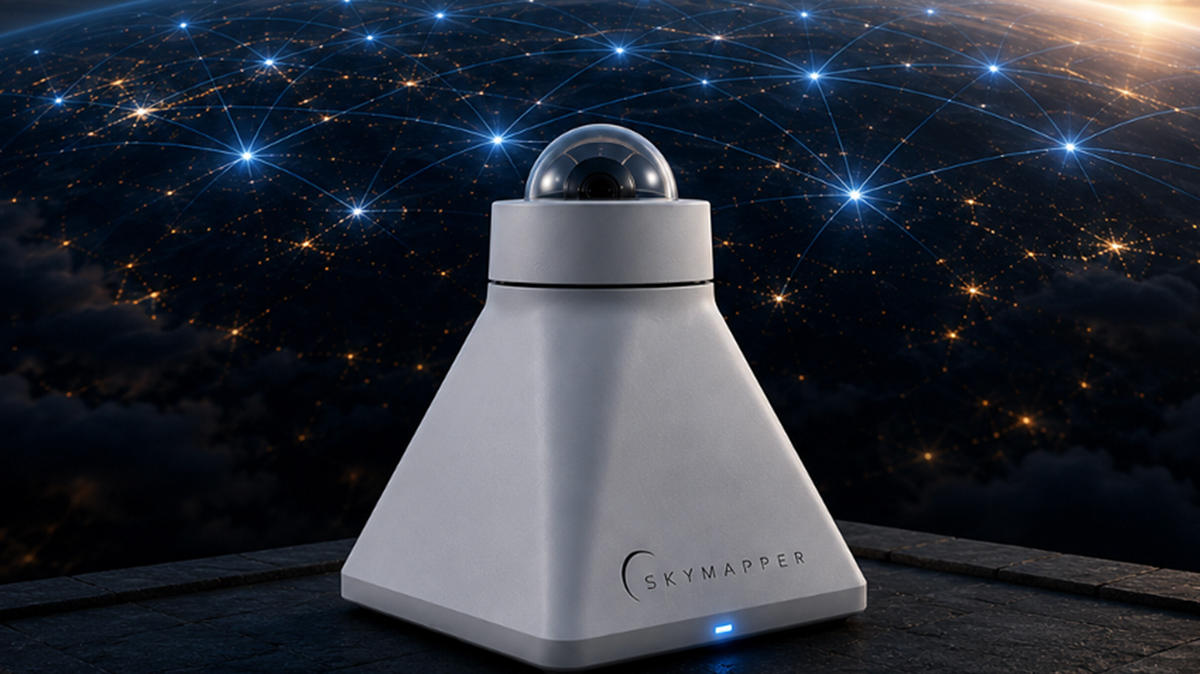
SkyMapper: Expanding Access to Real-time Astronomy Through a Global Astronomical Network
SkyMapper and the SETI Institute are connecting educators, students and the public to live astronomical observations through a distributed astronomical network. #SkyMapper #SETI #Citizen Science #Astronomy
Featured Image
VPL
Virtual Planetary Laboratory
How can we best assess whether an exoplanet supports life? #VPL
Featured Image
Discovery and Futures Lab
What happens if life beyond Earth is discovered? The Discovery and Futures Lab at the SETI Institute fosters novel and anticipatory research at the intersection of science, society, our planet, and the search for life beyond Earth.  #Discovery and Futures Lab
Support Us

Support the
SETI Institute

Scientists are getting closer in their search for life beyond earth. But with limited federal funding for the search for extraterrestrial intelligence, supporters are the reason cutting-edge scientists can keep their eyes on the sky.