)

Tuesday, Apr 02, 2024
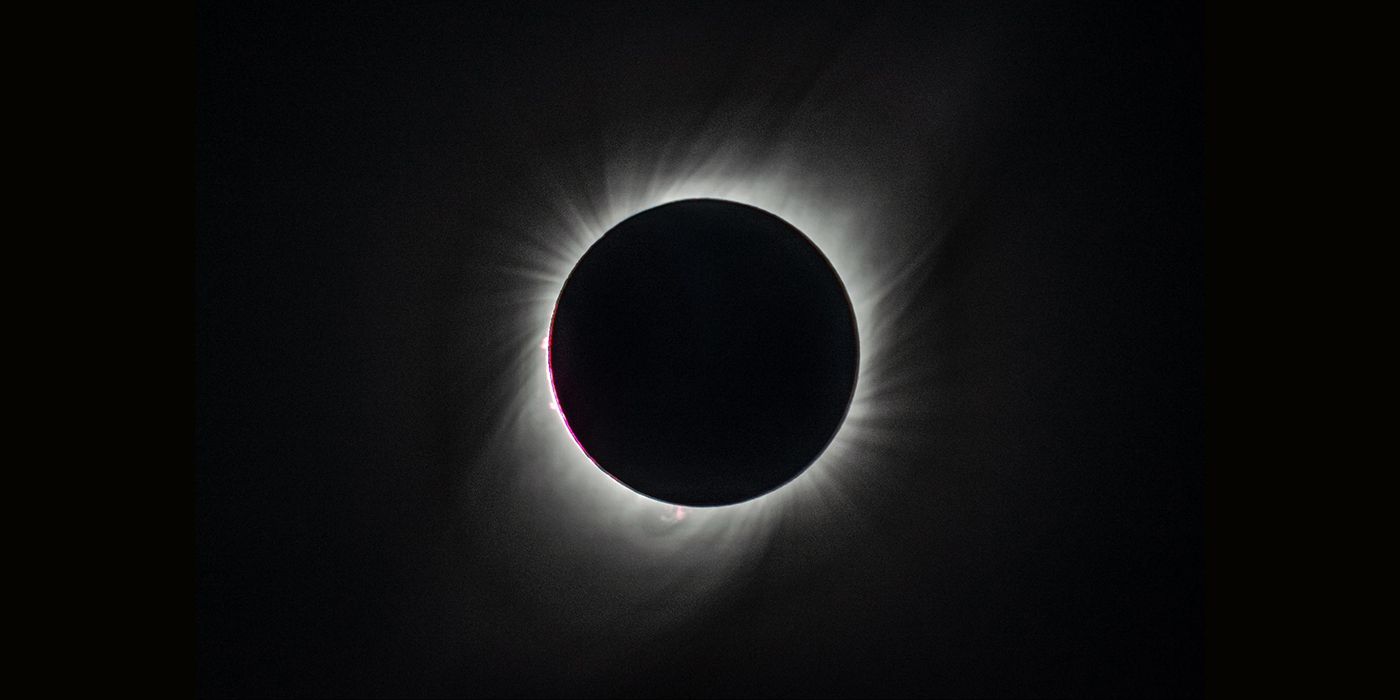
The Sun’s corona during totality from a 2019 total solar eclipse. Credit: NASA/Goddard/Rebecca Roth via Flickr
The total solar eclipse slated for April 8, 2024 marks a once-in-a-lifetime spectacle for many across North America. This eclipse is special not only because of its broad path of totality, stretching from Mexico through the United States to Canada, but also because it offers an unparalleled view of the Sun's corona, turning day into an enchanting twilight for a few mesmerizing minutes.
A solar eclipse occurs when the Sun, Moon, and Earth align in such a way that the Moon passes in front of the Sun, partially or completely blocking its light from some parts of our planet, and there are three main types. Only during a total solar eclipse, like the one on April 8, is the Moon the right distance away so that it appears large enough to completely cover the Sun, leading to a brief period of darkness in the path of totality, caused by the darkest part of the Moon’s shadow. The only thing left to see of the Sun is its hot and expansive corona, or outer atmosphere, which is only visible to us without special equipment during totality.

Path of totality and eclipse map of where the Unistellar team is going to be on April 8th observing. Credit: UNISTELLAR.
For this upcoming eclipse, the corona will be especially breathtaking as the sun is nearing its solar maximum, a period of heightened activity. This is a stark contrast to the solar eclipse in 2017, which took place closer to solar minimum. Plus, the path of totality on April 8 will be 60% wider compared to the 2017 path, making this eclipse a prime opportunity for millions to witness the awe-inspiring power and beauty of the cosmos firsthand. Those who are in the path of totality on April 8 will experience up to 4.5 minutes of totality, in which the sky will be bathed in an eerie dusk-like light that even animals and bugs react to.
The rarity of such an event in any given location amplifies its significance, as another coast-to-coast North American eclipse won’t occur again until 2045. Luckily for us, this 2024 eclipse will carve a path through densely populated areas, providing easy access for communities to come together and share in the wonder of the universe. That’s why the SETI Institute and UNISTELLAR are bringing the eclipse to you live, with team members and their UNISTELLAR telescopes spread along the path of totality. We’ll be streaming our telescopic views to those at home so that we can all experience the eclipse together.
Join us live on April 8th!
The SETI Institute and UNISTELLAR are proud to present a special three-hour SETI Live event. Hosts Beth Johnson, Planetary Scientist & SETI Institute's Communications Specialist and Tom Esposito, Astronomer at the SETI Institute and Space Science Principal at UNISTELLAR who will be joined by an exciting slate of scientists and observers along the path of totality, discussing their research, the local conditions and crowds, and the state of the eclipse.
UNISTELLAR EVSCOPEs and ODYSSEYs have been deployed to bring these stunning views directly to you, so please join us for an amazing experience!
WATCH LIVE ON YOUTUBE
WATCH LIVE ON FACEBOOK
WATCH LIVE ON LINKEDIN
WATCH LIVE ON TWITCH
SETI Live planned schedule for April 8th, 2024:
10:00-10:10: Introduction and Welcome
10:10-10:25: Start of eclipse with Franck Marchis
10:25-10:35: Steve Trimberger, Board of Trustees, from Waco, TX
10:35-10:40: Ariel Graykowski from Dallas, TX
10:40-10:45: Michael Primm from Austin, TX
10:45-10:50: Lauren Sgro from Greenbrier, AR
10:50-11:00: Interview with Victor Trees, re: cloud dissipation
11:00-11:05: Stefan Will from Raleigh, NC
11:05-11:15: Pascal Lee from Austin, TX
11:15-11:20: Amaury Perrocheau from St. Catharines, ON, Canada
11:20-11:25: Ian Weaver from Dayton, OH
11:25-11:30: Daniel Peluso from Vallejo, CA
11:30-11:38: Totality with Franck Marchis
11:40-11:45: Ryan Lambert from Bloomington, IN
11:45-11:53: Beginning of totality with Lauren Sgro
11:55-12:00: Post-totality with Ariel Graykowski
12:00-12:11: Totality with Ryan Lambert
12:05-12:15: Totality with Ian Weaver
12:15-12:20: Totality with Amaury Perrocheau
12:20-12:30: Interview with AstroAthens
12:30-12:40: Interview with Amir Caspi, re: citizen science
12:40-12:50: Interview with Lika Guhathakurta, re: heliophysics
12:50-13:00: Wrap-up and Thanks
Meet the Team

Dr. Franck Marchis - Chief Scientific Officer of Unistellar and Senior Planetary Astronomer at the SETI Institute is the head of Unistellar Citizen Science at SETI and co-founded Unistellar. He also discovered the first triple asteroid system and is heavily involved in outreach.

Dr. Tom Esposito - Space Science Principal leads the Transients program at Unistellar and manages all pipeline infrastructure and science campaigns. He has worked in AO since 2013.

Dr. Lauren Sgro - Exoplanet Lead leads the Exoplanet program at Unistellar and is strongly involved in the outreach & communications at the SETI Institute. She finished her Ph.D. in 2022 on circumstellar debris disks.

Dr. Ariel Graykowski - Comets Lead leads the Cometary Activity program at Unistellar is strongly involved in the VR activity at the SETI Institute. She finished her Ph.D. in 2022 on comets and small solar system bodies.

Dr. Ryan Lambert - Planetary Defense Lead heads the Planetary Defense program at Unistellar and manages the VR program at the SETI Institute. He finished his Ph.D. in 2021 on the study of galaxy interactions.

Dr. Ian Weaver - Unistellar Education Lead heads the Education program at Unistellar. He finished his Ph.D. in 2022 on the study of exoplanets.
Dr. Daniel Peluso - Outreach and Education Implemented the Education program at Unistellar before moving forward to finish his Ph.D. on citizen science in 2024.

Amaury Perrocheau - Assistant Researcher engineers in the SETI/Unistellar group. He joined the institute in 2022 to support our activity in coding and outreach.

Beth Johnson is a science communicator and the social media manager for the SETI Institute. She is currently at SJSU working on a master's degree in geology after earning her undergraduate degree in physics.
Observations with the UNISTELLAR Network
Take a look at the amazing observations of the Sun the Unistellar network has captured in the past!
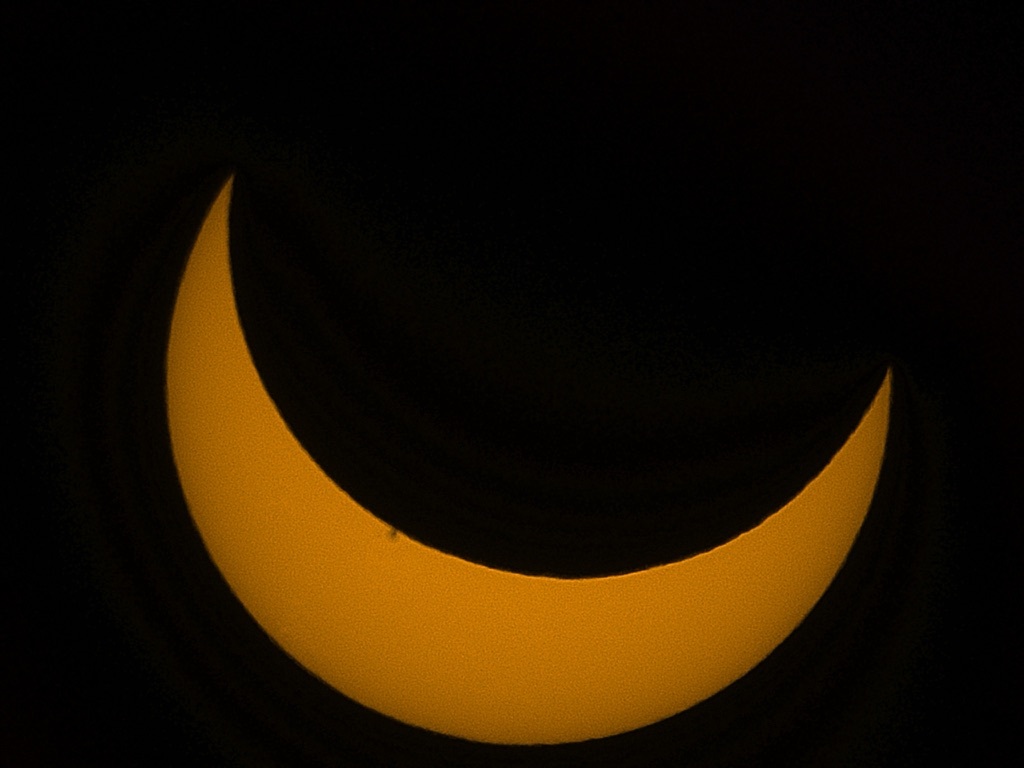
Partial eclipse during the 2023 Annular Eclipse. Image by Mike Mitchell with his UNISTELLAR telescope.
Annular Eclipse from Austin, TX. October 14th, 2023. 100x Time Lapse. Recorded with a UNISTELLAR eVscope1 by Mike Primm.
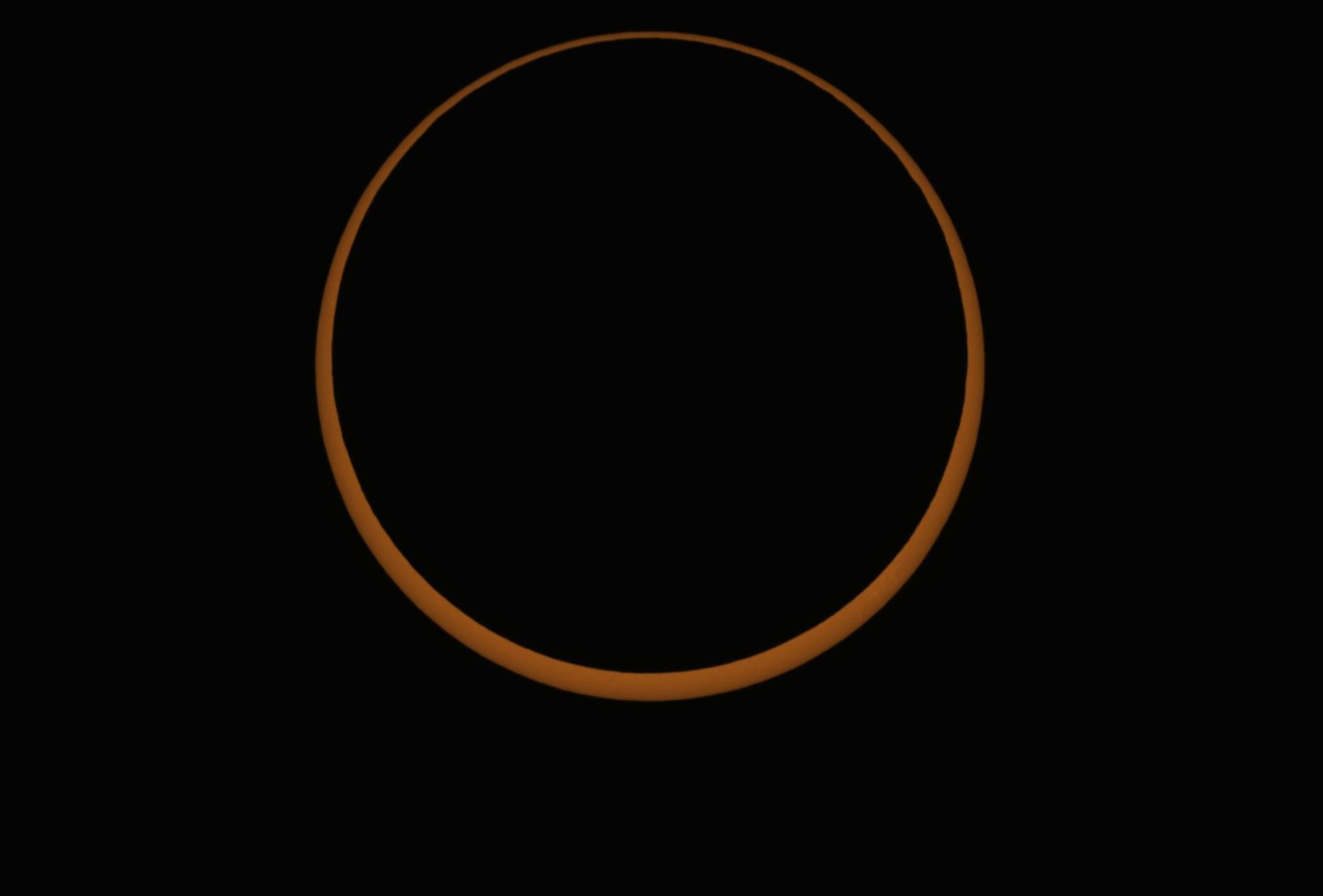
Ring Of Fire Eclipse, October 2023. Credit: Mike Mitchell.
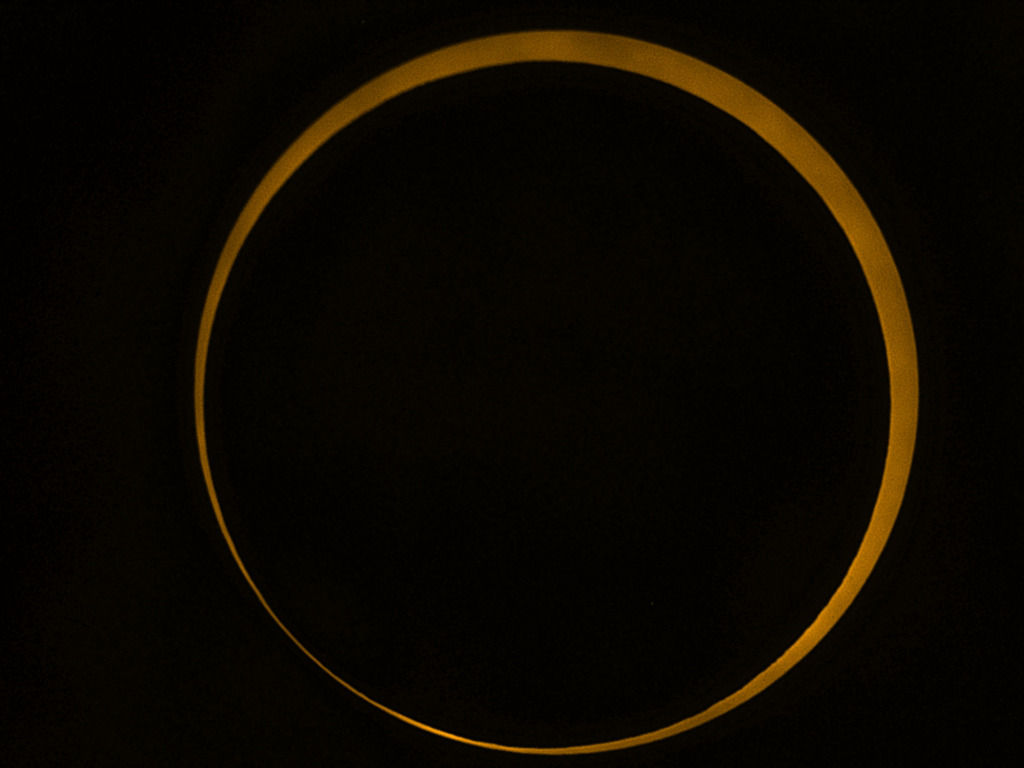

The Ring of Fire 2023 captured by UNISTELLAR Citizen Astronomer Greg Redfern with his telescope!
Eclipse Tips
- Get your Eclipse Viewing Glasses before the big day! You can find these in stores or online here: https://www.chopshopstore.com/products/seti-eclipse-glasses
You need eclipse viewing glasses to look at the Sun for the entire eclipse duration unless you are observing during totality - and only then can you look at the Sun directly without your glasses! If you are not in the path of totality or are observing during the partial portion of the eclipse, you need to protect your eyes with these special glasses.
- Use your UNISTELLAR telescope, equipped with the Smart Solar Filter, to observe! For guidance on how to observe the Sun with your telescope, check out this article.
- No telescope or eclipse glasses? Try looking at the Sun through a pinhole camera! You don’t even have to make one yourself - small holes such as those in a colander or between leaves act as a pinhole camera during the eclipse. All you have to do is gaze at the shadow on the ground cast from these objects!
Here's a helpful resource for us in the Bay Area around the SETI Institute headquarters.
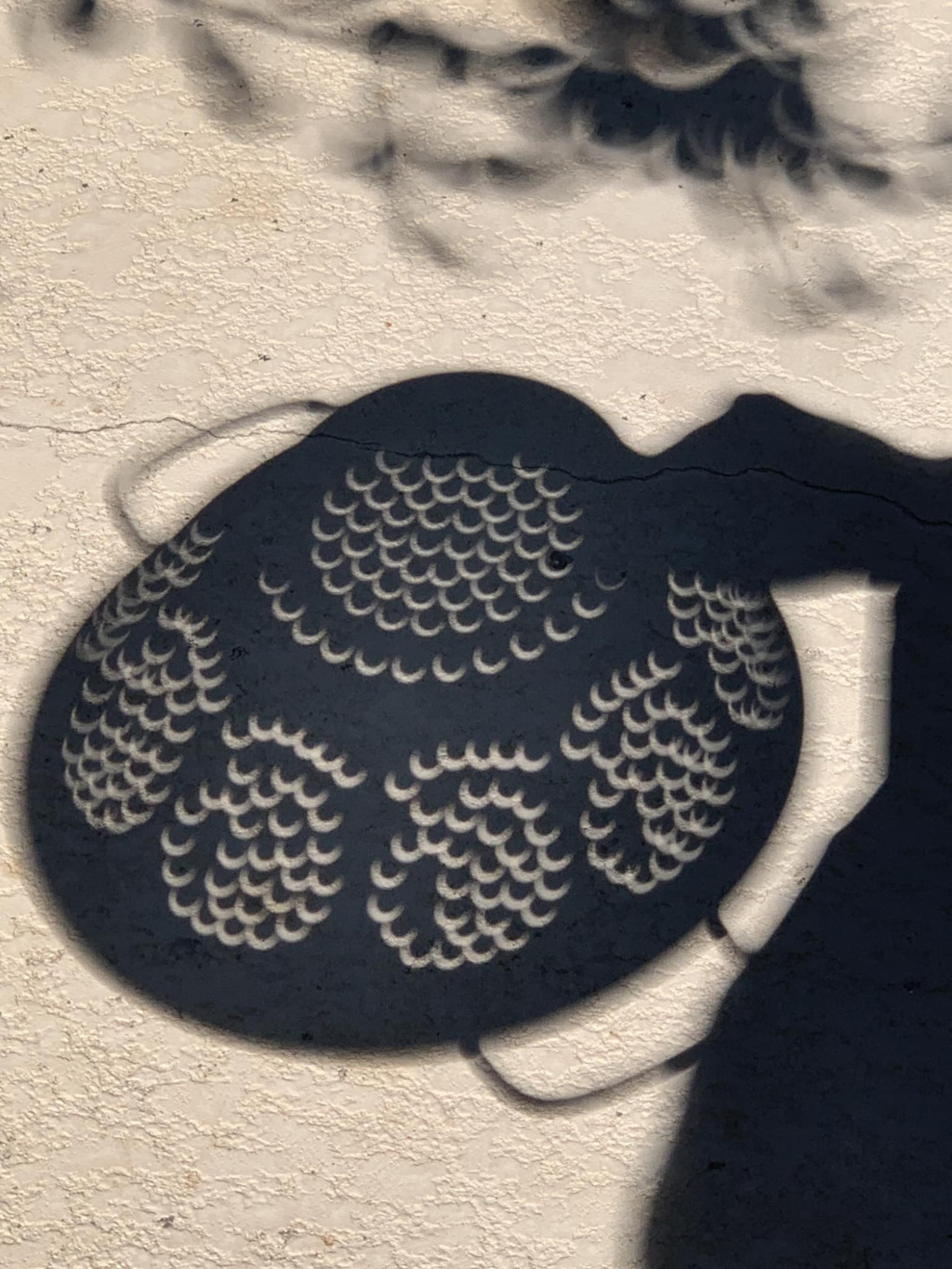
A colander shows the partial solar eclipse during October 2023. Courtesy of Michael Primm.
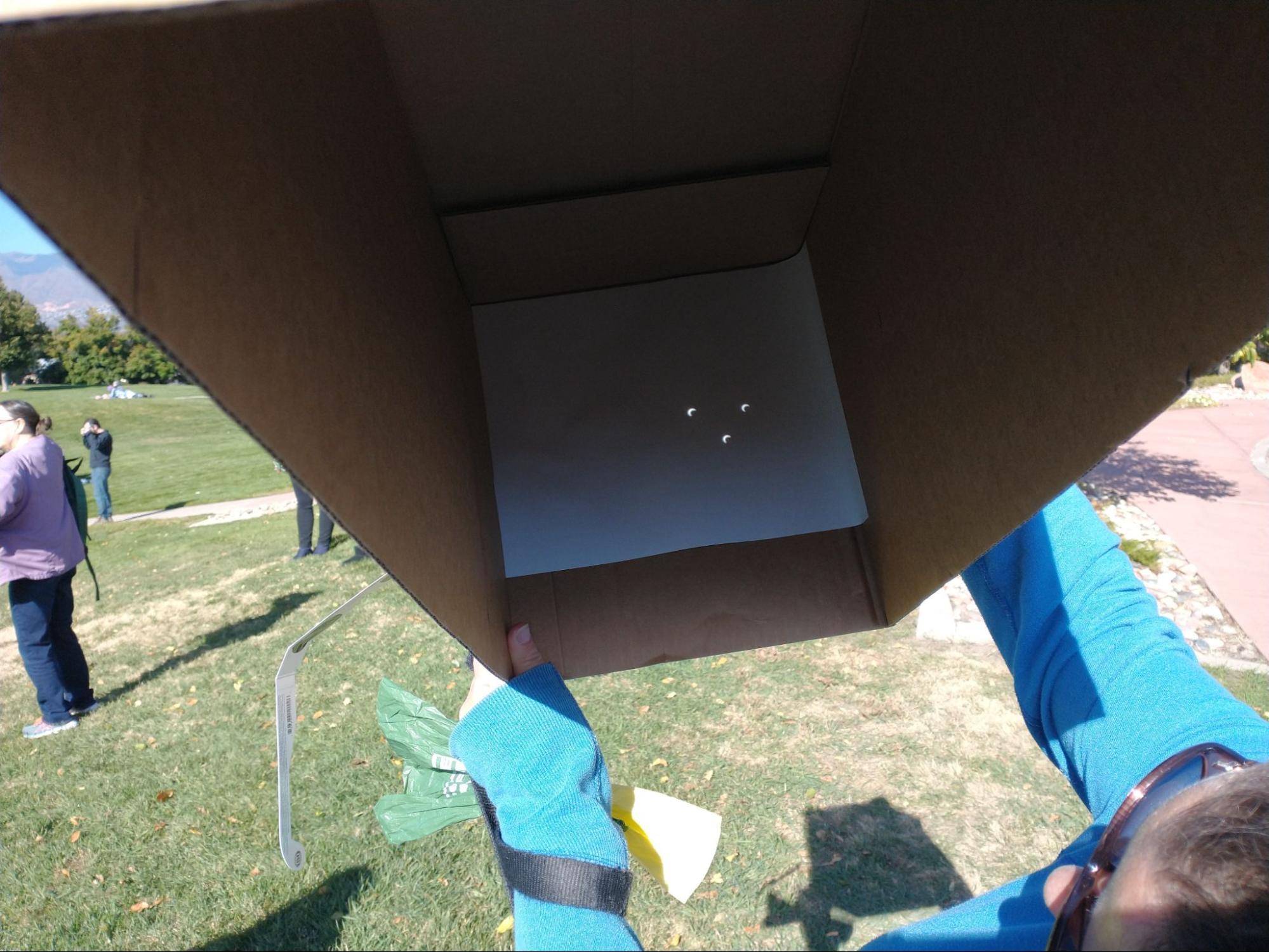
A homemade pinhole camera also showed the October 2023 solar eclipse. Courtesy of Unistellar Network member Dave Koster.
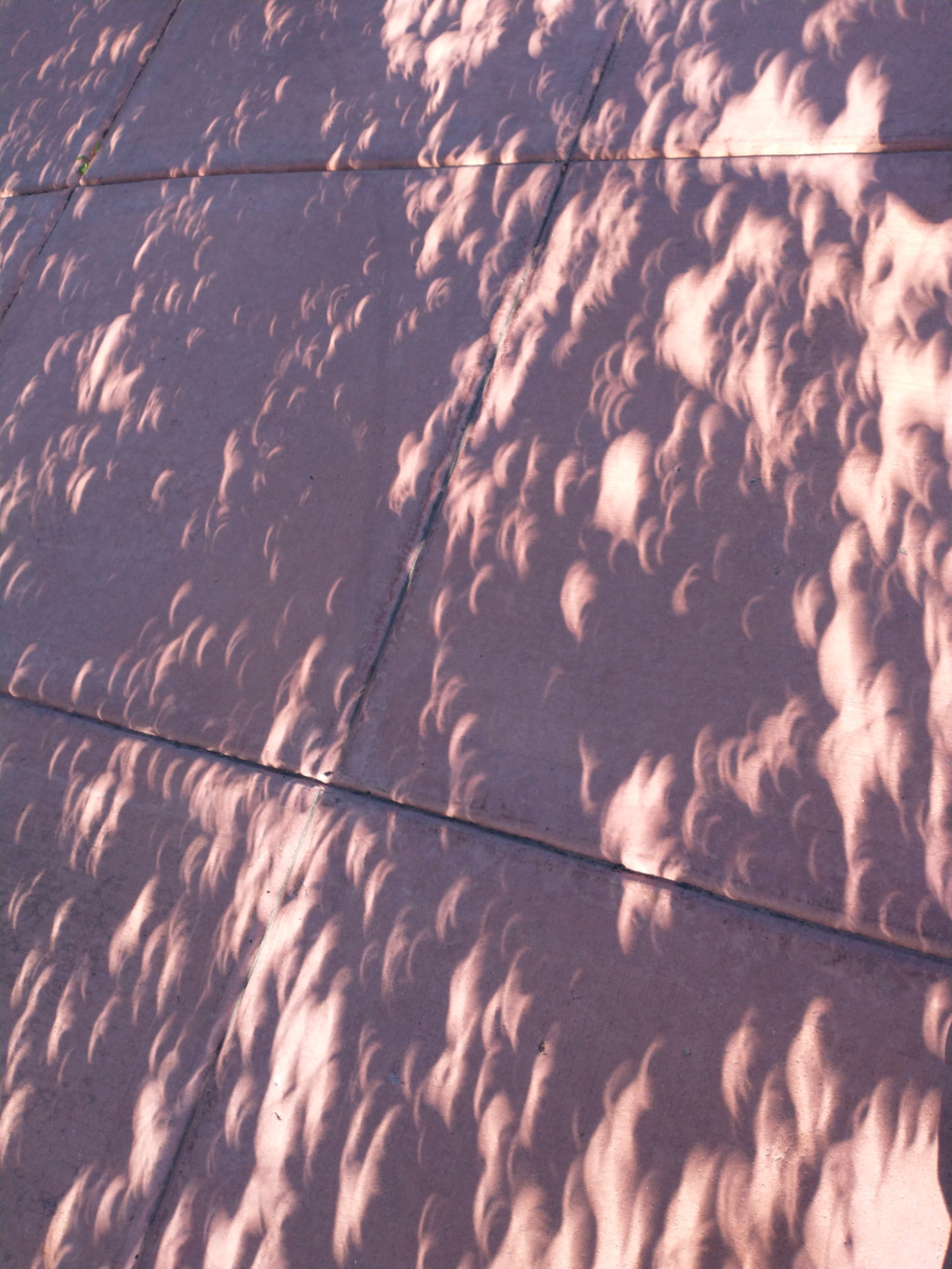
You can even see the solar eclipse through the spaces between leaves and the shadow they cast! Courtesy of Dave Koster.







News
Related News

Jul 24, 2026
A New Way to Search for Alien Civilizations
#Blog #Lauren Sgro
Jul 20, 2026
SETI Institute In the News: June Roundup 2026
Throughout June 2026, SETI Institute scientists, affiliates, and collaborators contributed to discussions spanning interstellar visitors, planetary science, technosignature searches, animal cognition, and the scientific process guiding the search for life beyond Earth. #SETI Institute in the News #SETI Institute #Community #Eduardo Bendek #Optical SETI #SETI #3I/ATLAS #ATA #Comets, Meteors, and Asteroids #Solar System #Franck Marchis #Ariel Graykowski #Jill Tarter #Vishal Gajjar #Radio Astronomy #Bill Diamond #Lori Marino
Jul 17, 2026
Two SETI Institute Scientists Honored with Asteroids Bearing Their Names
#Comets, Meteors, and Asteroids #Ariel Graykowski #Matthew Tiscareno #Planetary Astronomy #Solar System #Saturn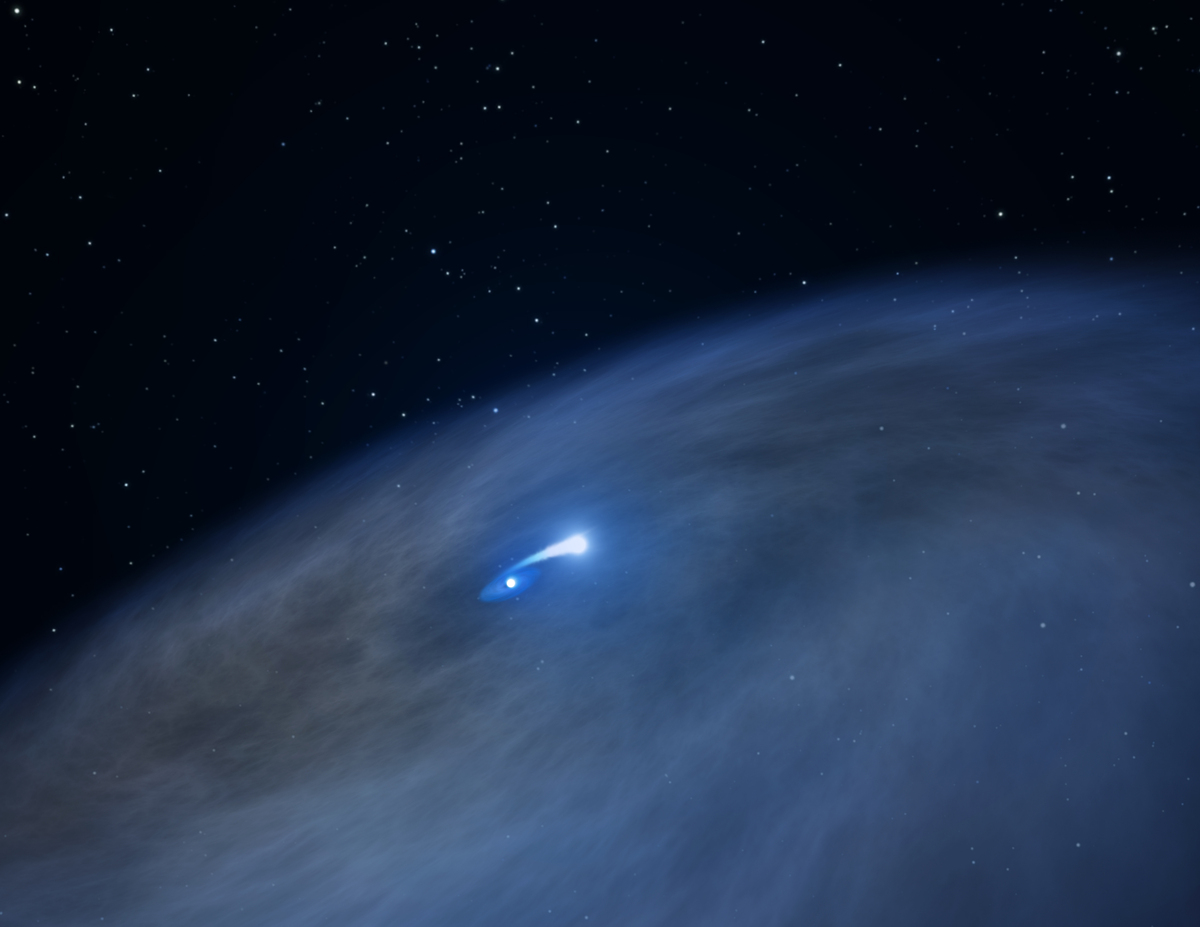
Jul 10, 2026
SETI Institute Achievements: Q1 2026 Activity Report
#Activity Reports #Carl Sagan Center #Outreach #Education #AIR #Community #Research
Jul 2, 2026
How Clouds Hide Alien Worlds—and How Astronomers See Through Them
#Blog #Lauren Sgro
Jun 29, 2026
Humanity's Plan for First Contact: Who Speaks for Earth?
#Blog #Lauren Sgro #Lucian Walkowicz #Chelsea Haramia #SETI #SETI Institute
Jul 24, 2026
#Blog
#Lauren Sgro
Jul 20, 2026
SETI Institute In the News: June Roundup 2026
Throughout June 2026, SETI Institute scientists, affiliates, and collaborators contributed to discussions spanning interstellar visitors, planetary science, technosignature searches, animal cognition, and the scientific process guiding the search for life beyond Earth.
#SETI Institute in the News
#SETI Institute
#Community
#Eduardo Bendek
#Optical SETI
#SETI
#3I/ATLAS
#ATA
#Comets, Meteors, and Asteroids
#Solar System
#Franck Marchis
#Ariel Graykowski
#Jill Tarter
#Vishal Gajjar
#Radio Astronomy
#Bill Diamond
#Lori Marino
Jul 17, 2026
#Comets, Meteors, and Asteroids
#Ariel Graykowski
#Matthew Tiscareno
#Planetary Astronomy
#Solar System
#Saturn
Two SETI Institute Scientists Honored with Asteroids Bearing Their Names
Jul 10, 2026
#Activity Reports
#Carl Sagan Center
#Outreach
#Education
#AIR
#Community
#Research
SETI Institute Achievements: Q1 2026 Activity Report
Jul 2, 2026
#Blog
#Lauren Sgro
How Clouds Hide Alien Worlds—and How Astronomers See Through Them
Jun 29, 2026
#Blog
#Lauren Sgro
#Lucian Walkowicz
#Chelsea Haramia
#SETI
#SETI Institute
Humanity's Plan for First Contact: Who Speaks for Earth?
Research
Related Projects

SkyMapper • SETI • Citizen Science • Astronomy
SkyMapper: Expanding Access to Real-time Astronomy Through a Global Astronomical Network
SkyMapper and the SETI Institute are connecting educators, students and the public to live astronomical observations through a distributed astronomical network. #SkyMapper #SETI #Citizen Science #Astronomy
VPL
Virtual Planetary Laboratory
How can we best assess whether an exoplanet supports life? #VPL
Discovery and Futures Lab
Discovery and Futures Lab
What happens if life beyond Earth is discovered? The Discovery and Futures Lab at the SETI Institute fosters novel and anticipatory research at the intersection of science, society, our planet, and the search for life beyond Earth. #Discovery and Futures Lab
May 17, 2026
SkyMapper: Expanding Access to Real-time Astronomy Through a Global Astronomical Network
SkyMapper and the SETI Institute are connecting educators, students and the public to live astronomical observations through a distributed astronomical network.
#SkyMapper
#SETI
#Citizen Science
#Astronomy
May 5, 2026
Virtual Planetary Laboratory
How can we best assess whether an exoplanet supports life?
#VPL
Apr 16, 2026
Discovery and Futures Lab
What happens if life beyond Earth is discovered? The Discovery and Futures Lab at the SETI Institute fosters novel and anticipatory research at the intersection of science, society, our planet, and the search for life beyond Earth.
#Discovery and Futures Lab
Support Us
Support the
SETI Institute
Scientists are getting closer in their search for life beyond earth. But with limited federal funding for the search for extraterrestrial intelligence, supporters are the reason cutting-edge scientists can keep their eyes on the sky.
