)

Tuesday, Oct 22, 2024
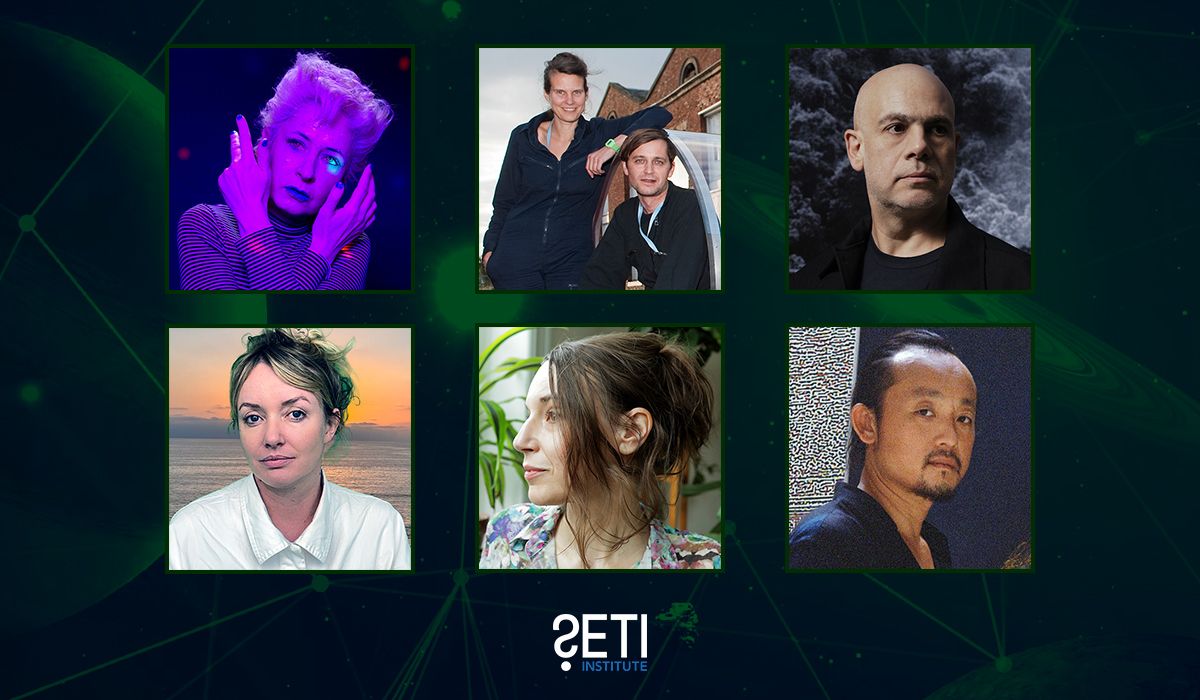
October 22, 2024, Mountain View, CA – The SETI Artist in Residency (AIR) program announced Algorithmic Imaginings, a new residency that explores how AI technologies affect science and society. The residency focuses on creative research topics such as imaginary life, human-AI collaboration, AI futures, posthumanism, AI and consciousness, and the ethics of AI data. It also connects with current SETI Institute research, including exoplanet studies, astrobiology, signal detection, and advanced computing. The two-year program offers $30,000 in funding and an exhibition at the ZKM | Center for Art and Media in Karlsruhe, Germany.
“AI is on everyone’s mind right now, be it ChatGPT4, text-to-video generators such as Sora, and discussions surrounding fake news and copyright,” said Bettina Forget, Director of the AIR program. “AI is a phenomenal tool, but it also comes with opportunities and concerns that should be addressed. This residency allows artists working at the intersection of art and technology to explore new avenues of thinking and connect them to SETI Institute research.”
Internationally recognized media art curator Zhang Ga, SETI AIR program Director Bettina Forget, and SETI AIR program Founder and Senior Advisor Charles Lindsay lead the SETI AIR Algorithmic Imaginings residency. Andrew Siemion, the SETI Institute’s Bernard M. Oliver Chair for SETI Research, and AI researcher Robert Alvarez, who collaborates with the SETI Institute as a mentor for its Frontier Development Lab program, bring their science and technology expertise to this residency.
The residency’s team of advisors selected six outstanding media artists and invited them to submit a project proposal for the SETI AIR Algorithmic Imaginings residency.
“These artists are notable voices with a solid track record of critically and inventively confronting the pressing issues raised by a pervasively technological world,” said Zhang Ga.
“SETI AIR is uniquely poised to participate in the AI zeitgeist that is exploding in San Francisco and Silicon Valley,” said Charles Lindsay. “We will support the most innovative artists of our time. It is time. Now.”
The SETI Institute will announce the winning artist later this fall.
The six nominees of the Art and AI residency are:
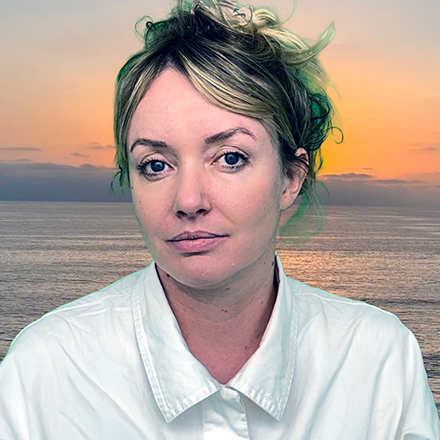
Tega Brain
Tega Brain’s work examines ecology, data, automation, and infrastructure. She has created projects such as digital networks controlled by environmental phenomena, schemes for obfuscating personal data, and a wildly popular online smell-based dating service.
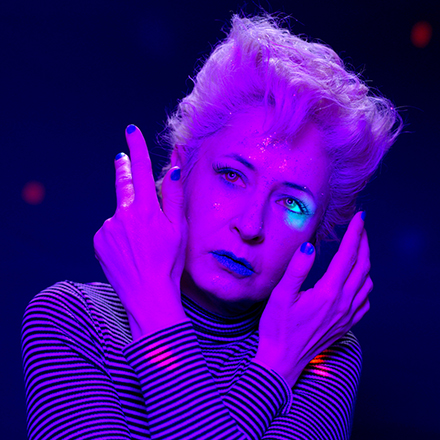
Dominique Gonzalez Foerster
An experimental artist based in Paris, Dominique Gonzalez-Foerster explores the different modalities of sensory and cognitive relationships between bodies and spaces, real or fictitious, up to the point of questioning the distance between organic and inorganic life.
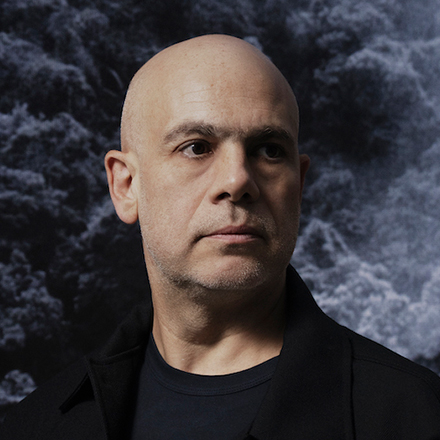
Laurent Grasso
French-born artist Laurent Grasso has developed a fascination with the visual possibilities related to the science of electromagnetic energy, radio waves, and naturally occurring phenomena.
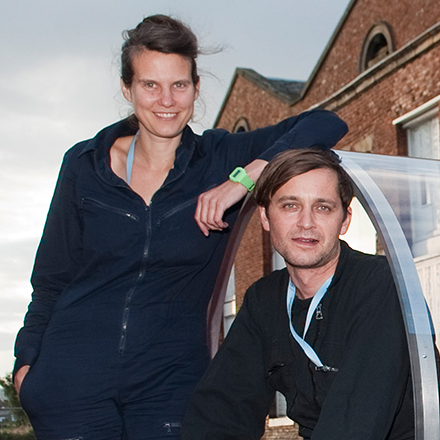
HeHe (Helen Evans, Heiko Hansen)
HeHe is an artist duo consisting of Helen Evans (French, British) and Heiko Hansen (German), based in Le Havre, France. Their works are about the social, industrial, and ecological paradoxes found in today's technological landscapes. Their practice explores the relationship between art, media, and the environment.

Terike Haapoja
Terike Haapoja is an interdisciplinary visual artist, writer, and researcher. Haapoja’s work investigates our world's existential and political boundaries, specifically focusing on issues arising from the anthropocentric worldview of Western traditions. Animality, multispecies politics, cohabitation, time, loss, and repairing connections are recurring themes in Haapoja’s work.
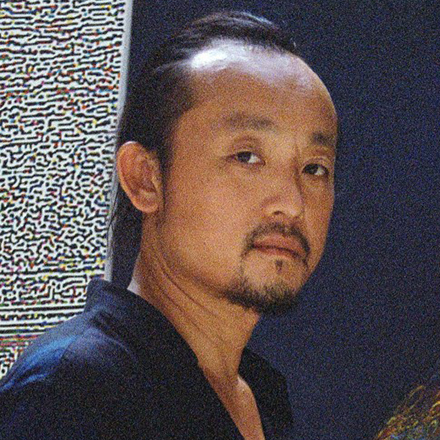
Wang Yuyang
Wang Yuyang is a renowned contemporary Chinese artist teaching at the Central Academy of Fine Arts. Focused on techno-art, his work explores the relationships between technology and art, nature and artificiality, and material and immaterial through an interdisciplinary and multimedia approach.
About the SETI Institute
Founded in 1984, the SETI Institute is a non-profit, multi-disciplinary research and education organization whose mission is to lead humanity’s quest to understand the origins and prevalence of life and intelligence in the Universe and to share that knowledge with the world. Our research encompasses the physical and biological sciences and leverages expertise in data analytics, machine learning and advanced signal detection technologies. The SETI Institute is a distinguished research partner for industry, academia and government agencies, including NASA and NSF.
Contact information
Rebecca McDonald
Director of Communications
SETI Institute
[email protected]







News
Related News
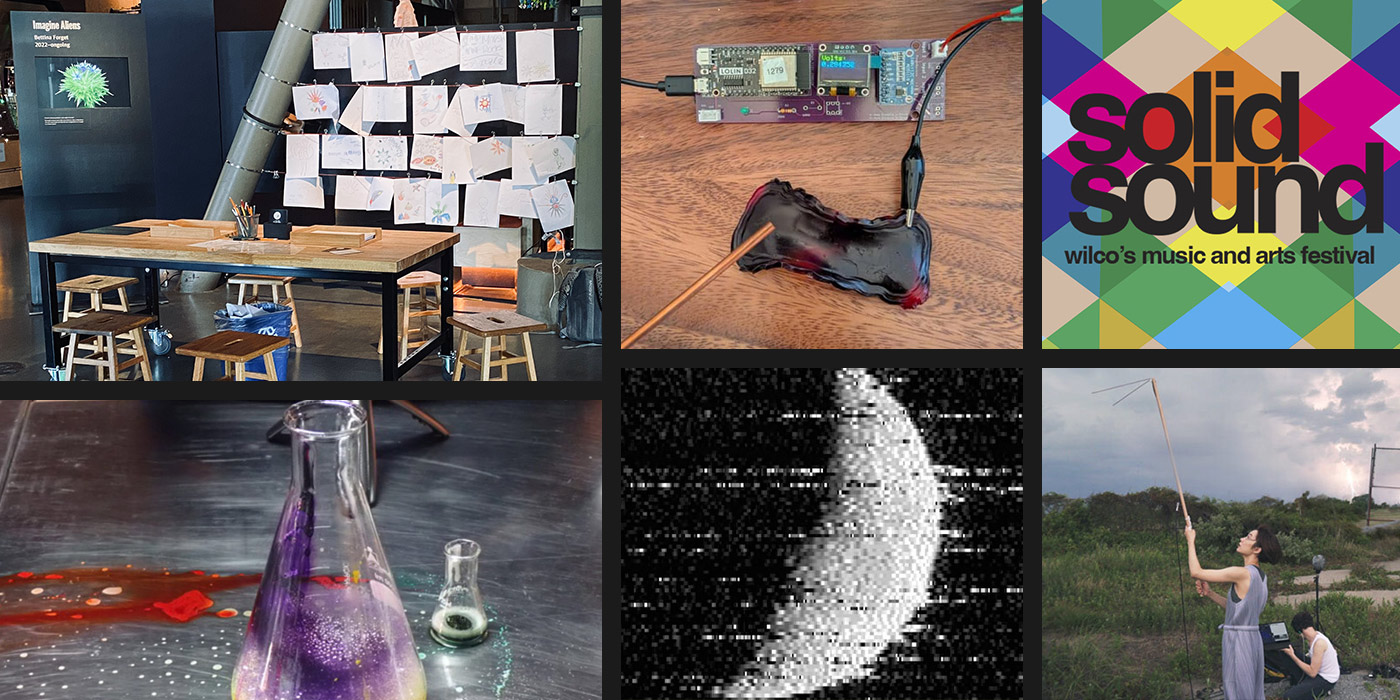
Jun 24, 2026
SETI AIR Newsletter - June 2026
#AIR #SETI AIR Newsletter #Bettina Forget #Daniela Brill Estrada #Bart Kuipers #Julie-Michèle Morin #Xin Liu #Richelle Ellis #Jonathon Keats #Scott Kildall #Daniela de Paulis
Jun 5, 2026
Beyond Disclosure Day: The Real-World Protocols
#Press Releases #SETI #Astronomy #Bill Diamond #SETI Institute
Jun 3, 2026
SETI Institute Looks for Signs of Technology in Interstellar Visitor 3I/ATLAS
Observations with the Allen Telescope Array set new limits on possible signals from extraterrestrial transmitters. #Press Releases #ATA #3I/ATLAS #Hat Creek Radio Observatory #Radio Astronomy #SETI
Jun 1, 2026
SETI Institute Awards $1 Million in STRIDE Grants to Advance Astrobiology, Exoplanet Science, and Public Engagement
#Press Releases #STRIDE #Research #Carl Sagan Center #Spectroscopy #Solar System #SETI #Climate and Bioscience #Astronomy #Astrobiology #Exoplanets #Data Science #Education #Outreach #Hat Creek Radio Observatory #Unistellar #SkyMapper
May 19, 2026
SETI AIR Newsletter - May 2026
#AIR #SETI AIR Newsletter #Speculative Life #Bettina Forget #Xin Liu #Laurent Grasso #Daniela Brill Estrada #Jonathon Keats #Brittany Nelson #Daniela de Paulis
May 13, 2026
SETI Institute to Honor Dr. Matthew Tiscareno with 2026 Carl Sagan Center Director’s Award
The Drake Awards event will also recognize SETI Forward and SETI Institute REU student award recipients. #Press Releases #Drake Awards #Frank Drake #SETI #Awards #Planetary Astronomy #Astrobiology #SETI Forward #Education #Carl Sagan Center #Matthew Tiscareno #Nathalie Cabrol #REU
Jun 24, 2026
#AIR
#SETI AIR Newsletter
#Bettina Forget
#Daniela Brill Estrada
#Bart Kuipers
#Julie-Michèle Morin
#Xin Liu
#Richelle Ellis
#Jonathon Keats
#Scott Kildall
#Daniela de Paulis
Jun 5, 2026
#Press Releases
#SETI
#Astronomy
#Bill Diamond
#SETI Institute
Beyond Disclosure Day: The Real-World Protocols
Jun 3, 2026
SETI Institute Looks for Signs of Technology in Interstellar Visitor 3I/ATLAS
Observations with the Allen Telescope Array set new limits on possible signals from extraterrestrial transmitters.
#Press Releases
#ATA
#3I/ATLAS
#Hat Creek Radio Observatory
#Radio Astronomy
#SETI
Jun 1, 2026
#Press Releases
#STRIDE
#Research
#Carl Sagan Center
#Spectroscopy
#Solar System
#SETI
#Climate and Bioscience
#Astronomy
#Astrobiology
#Exoplanets
#Data Science
#Education
#Outreach
#Hat Creek Radio Observatory
#Unistellar
#SkyMapper
SETI Institute Awards $1 Million in STRIDE Grants to Advance Astrobiology, Exoplanet Science, and Public Engagement
May 19, 2026
#AIR
#SETI AIR Newsletter
#Speculative Life
#Bettina Forget
#Xin Liu
#Laurent Grasso
#Daniela Brill Estrada
#Jonathon Keats
#Brittany Nelson
#Daniela de Paulis
SETI AIR Newsletter - May 2026
May 13, 2026
SETI Institute to Honor Dr. Matthew Tiscareno with 2026 Carl Sagan Center Director’s Award
The Drake Awards event will also recognize SETI Forward and SETI Institute REU student award recipients.
#Press Releases
#Drake Awards
#Frank Drake
#SETI
#Awards
#Planetary Astronomy
#Astrobiology
#SETI Forward
#Education
#Carl Sagan Center
#Matthew Tiscareno
#Nathalie Cabrol
#REU
Research
Related Projects

SkyMapper • SETI • Citizen Science • Astronomy
SkyMapper: Expanding Access to Real-time Astronomy Through a Global Astronomical Network
SkyMapper and the SETI Institute are connecting educators, students and the public to live astronomical observations through a distributed astronomical network. #SkyMapper #SETI #Citizen Science #Astronomy
VPL
Virtual Planetary Laboratory
How can we best assess whether an exoplanet supports life? #VPL
Discovery and Futures Lab
Discovery and Futures Lab
What happens if life beyond Earth is discovered? The Discovery and Futures Lab at the SETI Institute fosters novel and anticipatory research at the intersection of science, society, our planet, and the search for life beyond Earth. #Discovery and Futures Lab
May 17, 2026
SkyMapper: Expanding Access to Real-time Astronomy Through a Global Astronomical Network
SkyMapper and the SETI Institute are connecting educators, students and the public to live astronomical observations through a distributed astronomical network.
#SkyMapper
#SETI
#Citizen Science
#Astronomy
May 5, 2026
Virtual Planetary Laboratory
How can we best assess whether an exoplanet supports life?
#VPL
Apr 16, 2026
Discovery and Futures Lab
What happens if life beyond Earth is discovered? The Discovery and Futures Lab at the SETI Institute fosters novel and anticipatory research at the intersection of science, society, our planet, and the search for life beyond Earth.
#Discovery and Futures Lab
Support Us
Support the
SETI Institute
Scientists are getting closer in their search for life beyond earth. But with limited federal funding for the search for extraterrestrial intelligence, supporters are the reason cutting-edge scientists can keep their eyes on the sky.
