)

Author: Andrew Fraknoi
Thursday, Feb 12, 2026
1. What Is Happening?
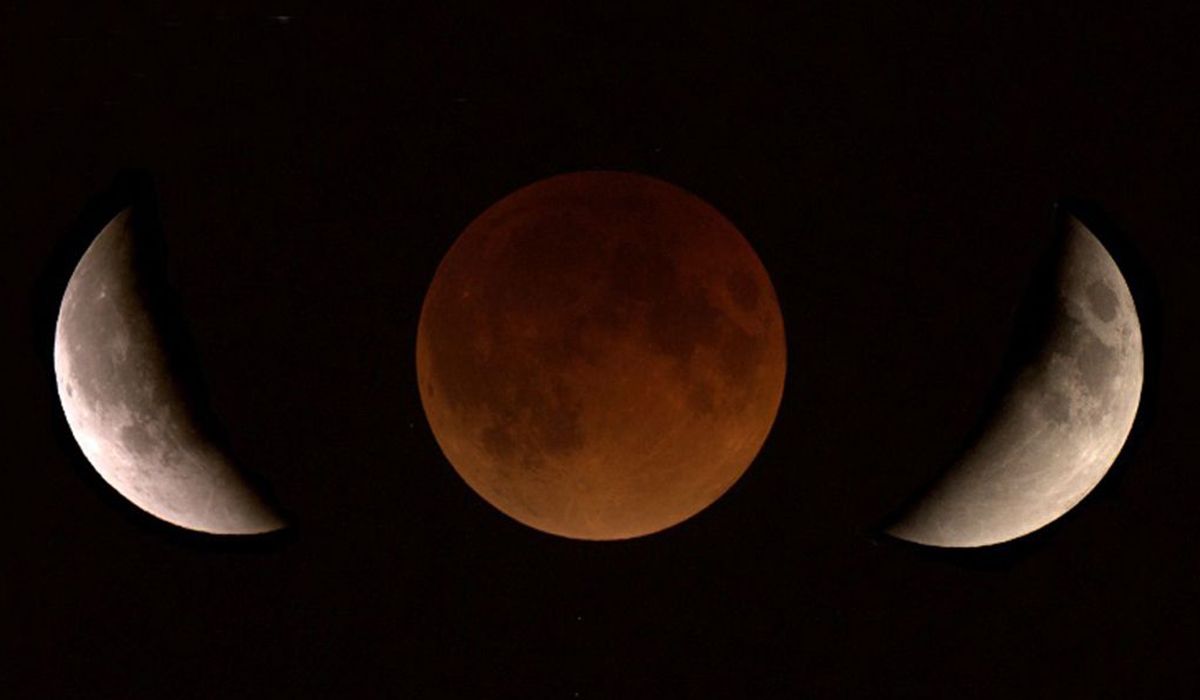
Early Tuesday morning, March 3, a total eclipse of the Moon will be visible from throughout the U.S. (and North and America). In a lunar eclipse, the Moon and the Sun are exactly opposite each other in our sky, and the Earth gets between them. This means the Earth’s shadow falls on the Moon, darkening it.
It’s a nicely democratic event; no special equipment is needed to see it (provided it’s not cloudy or foggy.) However, the times (see box below) are not so convenient for people who have to go to work or school, still, it may be that, with advance notice, allowances can be made.
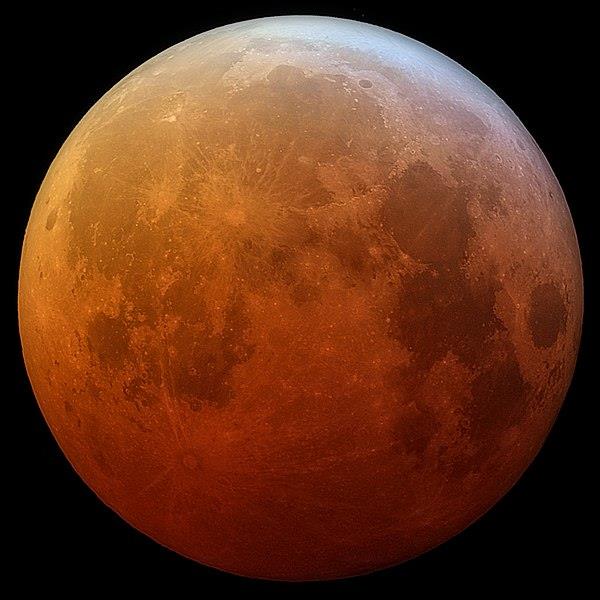
Photo by Giuseppe Donatiello (in public domain)
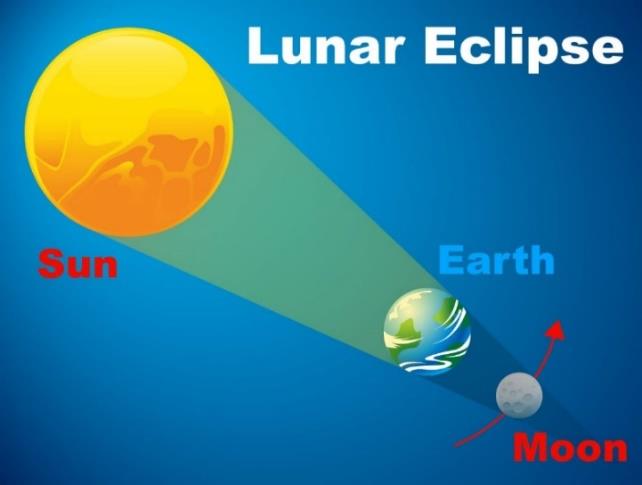
NASA Diagram
2. When Will the Eclipse Happen in the US?
| Event | Pacific | Mountain | Central | Eastern |
|
Partial eclipse starts |
1:50 am |
2:50 am |
3:50 am |
4:50 am |
|
Total eclipse starts |
3:05 am |
4:04 am |
5:04 am |
6:04 am |
|
Total eclipse ends |
4:03 am |
5:03 am |
6:02 am |
* |
|
Partial eclipse ends |
5:17 am |
6:17 am |
* | * |
* The Moon will set on the western horizon before the eclipse ends. In New York City, for example, the Moon will be seen to set around 6:28 am, but, as dawn approaches, may be too dim to see on the horizon a little before.
As the Moon moves slowly through the Earth’s shadow, we first see only part of the Moon darkening (partial eclipse). But then, as the Moon moves fully into the Earth’s shadow, we see its entire disk of the Moon bec
3. What Is Visible During a Lunar Eclipse?
As the shadow of the Earth covers the Moon, note that our natural satellite doesn’t become completely dark. Some of the sunlight bent by the Earth’s atmosphere still reaches the shadowed Moon and gives it a dull brown or reddish glow. The exact color of the glow and its darkness depend in part on the “sooty-ness” of our atmosphere – how recently volcanoes have erupted, plus how much cloud cover,storm activity, fire smoke, and human pollution there is around the globe. Once the Moon is eclipsed, the stars in the sky should become easier to see. Note that in the eastern parts of the country the eclipsed Moon will be low in the western sky, and may be hard to see if you have hills or buildings on the horizon.
4. Is It Safe to Watch, and How Do I Watch?
Since the Moon is safe to look at, and eclipses make the Moon darker, there’s no danger in watching the eclipse with your eyes, binoculars, or a telescope. And lunar eclipses don’t require you to go to a dark location. Bring binoculars to see the Moon larger, but just your eyes are fine. Be sure to bundle up against the cold night and to take someone along with whom you like to spend time in the dark!
5. What Can I Tell My Kids (or Grandkids)?
Suggest that they take a careful look at the shadow of the Earth as it moves across the bright face of the Moon. What shape is it? The round shape of the Earth’s shadow during such eclipses suggested to the ancient Greeks, more than 2000 years ago, that the Earth’s shape must be round like a ball. Eclipse after eclipse, they saw that the Earth cast a round shadow, and deduced that we lived on a ball-shaped planet (long before we had pictures of it from space).
Note the round shadow (Photo by Brian Day NASA).
6. The Eclipse from the Moon
An eclipse of the Moon from Earth can be seen as an eclipse of the Sun (by the Earth) from the Moon. See the diagram on page 1 and imagine you are on the side of the Moon facing Earth. It’s too bad that there will no one on the Moon to see this eclipse. (The Artemis II mission is not leaving Earth in time.)
Andrew Fraknoi is a retired astronomer, textbook author, and college professor. He is the lead author of a free, on-line astronomy textbook at: http://bit.ly/astronomytextbook (now the most frequently-used introductory astronomy textbook in the U.S.) and writes science fiction stories on astronomical themes (11 published so far). He is co-author (with Dennis Schatz) of a children’s book about eclipses: When the Sun Goes Dark and appears regularly on regional and national radio programs explaining astronomy.
You can read his fiction, and see more about his educational work and writings, at http://www.fraknoi.com The International Astronomical Union has named Asteroid 4859 Asteroid Fraknoi in recognition of his work advancing the public understanding of science.







News
Related News

May 1, 2026
Asteroid Named in Honor of SETI Researcher and Communicator Seth Shostak
#Comets, Meteors, and Asteroids #Seth Shostak #SETI #Astronomy #Big Picture Science #Outreach #Andrew Fraknoi
Mar 7, 2025
Total Eclipse of the Moon Coming to the Americas on the Night of March 13-14
#Moon #Solar System #Eclipse
Apr 2, 2024
Totality 2024: Witness the Solar Eclipse Live!
#Eclipse #SETI Institute #Outreach #Education #Community #Unistellar #Franck Marchis #Thomas Esposito #Lauren Sgro #Ariel Graykowski #Ryan Lambert #Ian Weaver
Aug 17, 2017
Girl Scouts Works with the SETI Institute to Skyrocket Girls’ Interest in STEM
New Girl Scout badges make space science more accessible to girls. #Press Releases #Girl Scout Stars #Eclipse #Outreach #Education
Aug 16, 2017
Reaching for the Stars: NASA Science for Girl Scouts
#Girl Scout Stars #Eclipse #Education
May 1, 2026
#Comets, Meteors, and Asteroids
#Seth Shostak
#SETI
#Astronomy
#Big Picture Science
#Outreach
#Andrew Fraknoi
Mar 7, 2025
#Moon
#Solar System
#Eclipse
Total Eclipse of the Moon Coming to the Americas on the Night of March 13-14
Apr 2, 2024
#Eclipse
#SETI Institute
#Outreach
#Education
#Community
#Unistellar
#Franck Marchis
#Thomas Esposito
#Lauren Sgro
#Ariel Graykowski
#Ryan Lambert
#Ian Weaver
Totality 2024: Witness the Solar Eclipse Live!
Aug 17, 2017
Girl Scouts Works with the SETI Institute to Skyrocket Girls’ Interest in STEM
New Girl Scout badges make space science more accessible to girls.
#Press Releases
#Girl Scout Stars
#Eclipse
#Outreach
#Education
Aug 16, 2017
#Girl Scout Stars
#Eclipse
#Education
Reaching for the Stars: NASA Science for Girl Scouts
Research
Related Projects

SkyMapper • SETI • Citizen Science • Astronomy
SkyMapper: Expanding Access to Real-time Astronomy Through a Global Astronomical Network
SkyMapper and the SETI Institute are connecting educators, students and the public to live astronomical observations through a distributed astronomical network. #SkyMapper #SETI #Citizen Science #Astronomy
VPL
Virtual Planetary Laboratory
How can we best assess whether an exoplanet supports life? #VPL
Discovery and Futures Lab
Discovery and Futures Lab
What happens if life beyond Earth is discovered? The Discovery and Futures Lab at the SETI Institute fosters novel and anticipatory research at the intersection of science, society, our planet, and the search for life beyond Earth. #Discovery and Futures Lab
May 17, 2026
SkyMapper: Expanding Access to Real-time Astronomy Through a Global Astronomical Network
SkyMapper and the SETI Institute are connecting educators, students and the public to live astronomical observations through a distributed astronomical network.
#SkyMapper
#SETI
#Citizen Science
#Astronomy
May 5, 2026
Virtual Planetary Laboratory
How can we best assess whether an exoplanet supports life?
#VPL
Apr 16, 2026
Discovery and Futures Lab
What happens if life beyond Earth is discovered? The Discovery and Futures Lab at the SETI Institute fosters novel and anticipatory research at the intersection of science, society, our planet, and the search for life beyond Earth.
#Discovery and Futures Lab
Support Us
Support the
SETI Institute
Scientists are getting closer in their search for life beyond earth. But with limited federal funding for the search for extraterrestrial intelligence, supporters are the reason cutting-edge scientists can keep their eyes on the sky.
