)

Friday, Aug 15, 2014

End of flight fragmentation of the Oct. 18, 2012, fireball over the San Francisco Bay Area (shown in a horizontally mirrored image to depict the time series from left to right). These photographs were taken from a distance of about 65 km. Image Credit: Robert P. Moreno Jr., Jim Albers and Peter Jenniskens.
A meteorite that fell onto the roof of a house in Novato, California, on Oct. 17, 2012, has revealed a detailed picture of its origin and tumultuous journey through space and Earth's atmosphere. An international consortium of fifty researchers studied the fallen meteorite and published their findings in the August issue of the journal Meteoritics and Planetary Science.
"Our investigation has revealed a long history that dates to when the Moon formed from the Earth after a giant impact," says Peter Jenniskens, a meteor astronomer and consortium study lead working for the SETI Institute, Mountain View, California at NASA's Ames Research Center in Moffett Field, California.
Jenniskens captured the meteorite's fall in NASA's Cameras for Allsky Meteor Surveillance and quickly calculated the likely fall area over the city of Novato. Novato residents Lisa Webber and Glenn Rivera then remembered hearing something hit their garage roof that night, found the first meteorite, and made it available for study. Often researchers use the location a meteorite was found to name to the rock; this meteorite now is officially known as "Novato" according to the Meteoritical Society.
"We determined that the meteorite likely got its black appearance from massive impact shocks causing a collisional resetting event 4.472 billion years ago, roughly 64-126 million years after the formation of the solar system," says Qing-zhu Yin, professor in the Department of Earth and Planetary Sciences at the University of California (UC), Davis. "We now suspect that the moon-forming impact may have scattered debris all over the inner solar system and hit the parent body of the Novato meteorite."
Yin and collaborators also measured when the meteorites' parent body broke into fragments during another massive collision, about 470 million years ago. This created a debris field in the asteroid belt between Mars and Jupiter from which Novato-like meteorites, which are known as "L6 ordinary chondrites," now are coming to Earth.
Scientists had earlier identified the similarly-aged Gefion asteroid family in the middle of the main asteroid belt as the likely source of Novato-like meteorites. Jenniskens successfully measured the Novato approach orbit and confirmed that Gefion can be the source of these meteorites.
"Novato broke from one of the Gefion family asteroids nine million years ago," said Kees Welten, cosmochemist at UC Berkeley. "But may have been buried in a larger object until about one million years ago," added Kunihiko Nishiizumi, cosmochemist also of UC Berkeley.
After the Novato meteoroid was ejected from the asteroid belt, its path periodically brought it back to the asteroid belt. Scientists at Ames measured the meteorites' thermoluminescence – the light re-emitted when heating of the material and releasing the stored energy of past electromagnetic and ionizing radiation exposure – to determine that Novato may have had another collision less than 100,000 years ago.
"We can tell the rock was heated, but the cause of the heating is unclear," said Derek Sears, a meteoriticist working for the Bay Area Environmental Research Institute in Sonoma, California, at Ames. "It seems that Novato was hit again."
When the Novato meteoroid finally hit Earth's atmosphere, scientists approximate it measured 14 inches (35 centimeters) and weighed 176 pounds (80 kilograms). Robert P. Moreno, Jr., photographed in great detail the meteoroid's final breakup in Earth's atmosphere from Santa Rosa, California.
"These photographs show that this meteorite – now one of the best studied meteorites of its kind – broke in spurts, each time creating a flash of light as it entered Earth's atmosphere," said Jenniskens. "In all, six surviving fragments were recovered."
Researchers were surprised to find that all these impacts did not completely destroy the organic compounds in this meteorite. Qinghao Wu and Richard Zare of Stanford University in California measured a rich array of polycyclic aromatic hydrocarbon compounds - complex, carbon-rich molecules that are both widespread and abundant throughout the universe.
Daniel Glavin at NASA's Goddard Space Flight Center in Greenbelt, Maryland, led a team to search the Novato meteorites for amino acids – molecules present in and essential for life on Earth – and detected some unusual non-protein amino acids that are now very rare on Earth but indigenous to the Novato meteorite.
"The quick recovery of the Novato meteorites made these studies possible," says Jenniskens.
The research was supported by the NASA Near Earth Object Observation, Planetary Astronomy and Cosmochemistry programs, and the Swiss National Science Foundation.
For more information about the Cameras for Allsky Meteor Surveillance project and Novato meteorite, visit: http://cams.seti.org/index-N.html
Text issued as Ames news release 14-057AR at nasa.gov.
About the SETI Institute
Founded in 1984, the SETI Institute is a non-profit, multi-disciplinary research and education organization whose mission is to lead humanity’s quest to understand the origins and prevalence of life and intelligence in the Universe and to share that knowledge with the world. Our research encompasses the physical and biological sciences and leverages expertise in data analytics, machine learning and advanced signal detection technologies. The SETI Institute is a distinguished research partner for industry, academia and government agencies, including NASA and NSF.
Contact information
Rachel Hoover
Ames Research Center, Moffett Field, Calif.
650-604-4789
[email protected]
Seth Shostak
SETI Institute, Mountain View, Calif.
650-960-4530
[email protected]







News
Related News
Jul 10, 2026
A Remarkably Ancient Visitor: 3I/ATLAS
#3I/ATLAS #Comets, Meteors, and Asteroids #JWST
Jul 10, 2026
SETI Institute Achievements: Q1 2026 Activity Report
#Activity Reports #Carl Sagan Center #Outreach #Education #AIR #Community #Research
Jun 5, 2026
Beyond Disclosure Day: The Real-World Protocols
#Press Releases #SETI #Astronomy #Bill Diamond #SETI Institute
Jun 4, 2026
SETI Institute In the News: May Roundup 2026
#SETI Institute in the News #SETI Institute #Community #Solar System #Matija Ćuk #Neptune #SETI #Bill Diamond #UAPs #Drake Awards #Lori Marino #Matthew Tiscareno #Outreach #Exoplanets #Carl Sagan Center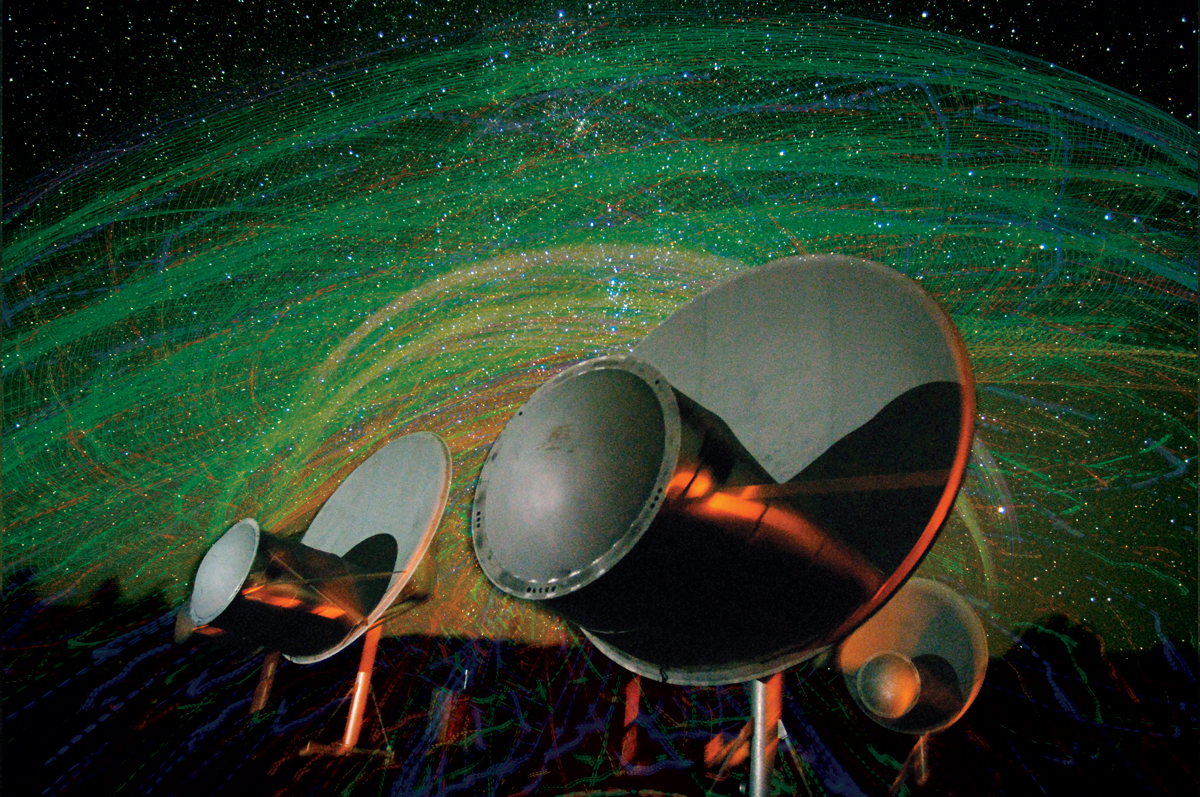
Jun 3, 2026
SETI Institute Looks for Signs of Technology in Interstellar Visitor 3I/ATLAS
Observations with the Allen Telescope Array set new limits on possible signals from extraterrestrial transmitters. #Press Releases #ATA #3I/ATLAS #Hat Creek Radio Observatory #Radio Astronomy #SETI
Jun 1, 2026
SETI Institute Awards $1 Million in STRIDE Grants to Advance Astrobiology, Exoplanet Science, and Public Engagement
#Press Releases #STRIDE #Research #Carl Sagan Center #Spectroscopy #Solar System #SETI #Climate and Bioscience #Astronomy #Astrobiology #Exoplanets #Data Science #Education #Outreach #Hat Creek Radio Observatory #Unistellar #SkyMapper
Jul 10, 2026
#3I/ATLAS
#Comets, Meteors, and Asteroids
#JWST
Jul 10, 2026
#Activity Reports
#Carl Sagan Center
#Outreach
#Education
#AIR
#Community
#Research
SETI Institute Achievements: Q1 2026 Activity Report
Jun 5, 2026
#Press Releases
#SETI
#Astronomy
#Bill Diamond
#SETI Institute
Beyond Disclosure Day: The Real-World Protocols
Jun 4, 2026
#SETI Institute in the News
#SETI Institute
#Community
#Solar System
#Matija Ćuk
#Neptune
#SETI
#Bill Diamond
#UAPs
#Drake Awards
#Lori Marino
#Matthew Tiscareno
#Outreach
#Exoplanets
#Carl Sagan Center
SETI Institute In the News: May Roundup 2026
Jun 3, 2026
SETI Institute Looks for Signs of Technology in Interstellar Visitor 3I/ATLAS
Observations with the Allen Telescope Array set new limits on possible signals from extraterrestrial transmitters.
#Press Releases
#ATA
#3I/ATLAS
#Hat Creek Radio Observatory
#Radio Astronomy
#SETI
Jun 1, 2026
#Press Releases
#STRIDE
#Research
#Carl Sagan Center
#Spectroscopy
#Solar System
#SETI
#Climate and Bioscience
#Astronomy
#Astrobiology
#Exoplanets
#Data Science
#Education
#Outreach
#Hat Creek Radio Observatory
#Unistellar
#SkyMapper
SETI Institute Awards $1 Million in STRIDE Grants to Advance Astrobiology, Exoplanet Science, and Public Engagement
Research
Related Projects

SkyMapper • SETI • Citizen Science • Astronomy
SkyMapper: Expanding Access to Real-time Astronomy Through a Global Astronomical Network
SkyMapper and the SETI Institute are connecting educators, students and the public to live astronomical observations through a distributed astronomical network. #SkyMapper #SETI #Citizen Science #Astronomy
VPL
Virtual Planetary Laboratory
How can we best assess whether an exoplanet supports life? #VPL
Discovery and Futures Lab
Discovery and Futures Lab
What happens if life beyond Earth is discovered? The Discovery and Futures Lab at the SETI Institute fosters novel and anticipatory research at the intersection of science, society, our planet, and the search for life beyond Earth. #Discovery and Futures Lab
May 17, 2026
SkyMapper: Expanding Access to Real-time Astronomy Through a Global Astronomical Network
SkyMapper and the SETI Institute are connecting educators, students and the public to live astronomical observations through a distributed astronomical network.
#SkyMapper
#SETI
#Citizen Science
#Astronomy
May 5, 2026
Virtual Planetary Laboratory
How can we best assess whether an exoplanet supports life?
#VPL
Apr 16, 2026
Discovery and Futures Lab
What happens if life beyond Earth is discovered? The Discovery and Futures Lab at the SETI Institute fosters novel and anticipatory research at the intersection of science, society, our planet, and the search for life beyond Earth.
#Discovery and Futures Lab
Support Us
Support the
SETI Institute
Scientists are getting closer in their search for life beyond earth. But with limited federal funding for the search for extraterrestrial intelligence, supporters are the reason cutting-edge scientists can keep their eyes on the sky.
