)

Author: Lauren Sgro
Friday, Nov 08, 2024
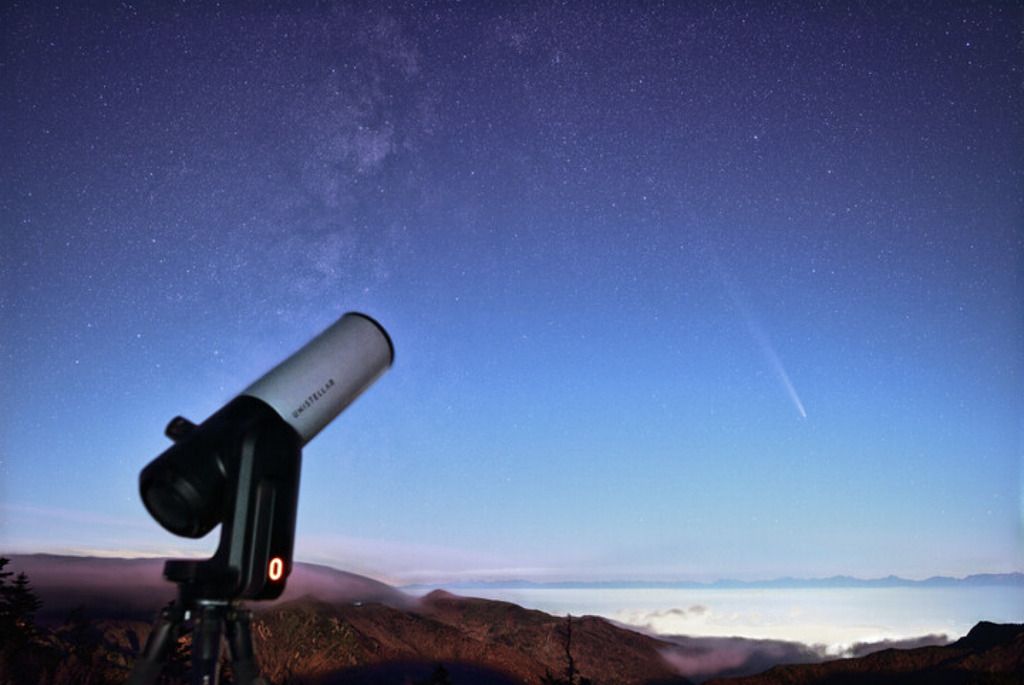
Above: Takaya Okada (Japan) observes Comet C/2023 A3 with his Unistellar EVSCOPE2. In the background you can see the comet tracing its beautiful tail across the sky.
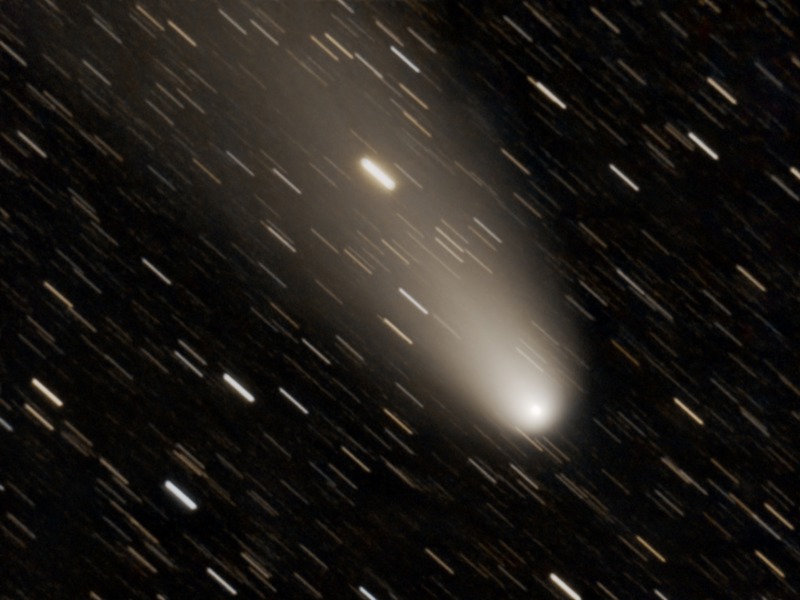
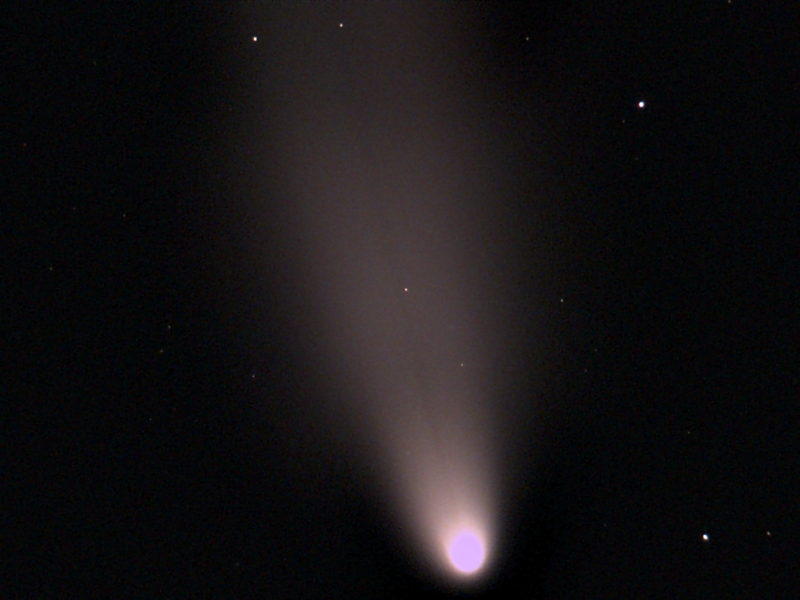
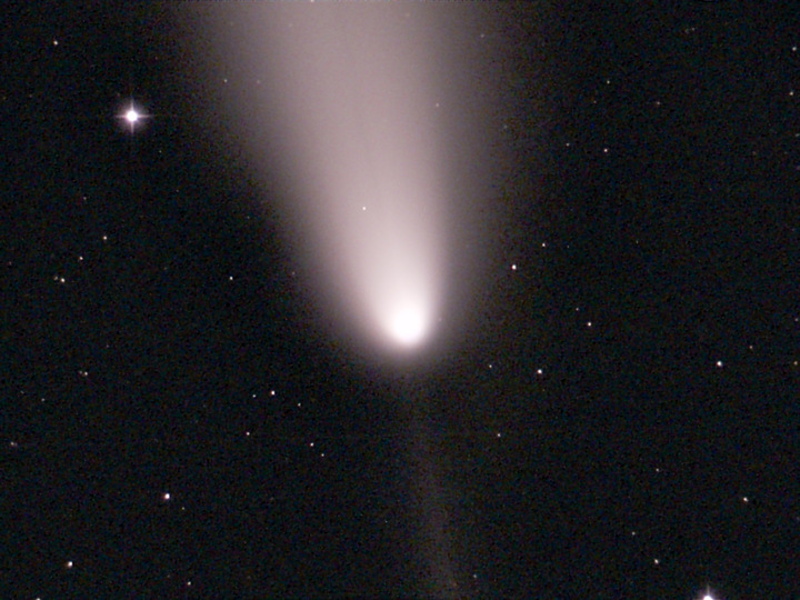
These past couple months, observers across the world observed Comet C/2023 A3 (Tsuchinan-Atlas) as it flew by our planet. This icy visitor from the distant Oort Cloud, was just discovered last year and had the world wondering if it would become naked-eye in 2024 as it was warmed by the Sun. And it did not disappoint!
Comet A3 made its close approach to the Sun – called perihelion – on September 27, where it passed less than half an Earth-Sun distance by our star. Around this time the comet was an early morning object and became so incredibly bright that it was hard to observe through Unistellar telescopes. Just a couple of weeks later on October 12, it reached its closest approach to Earth — called perigee. Because the comet survived its passage by the Sun, it is still visible to observers in the Northern Hemisphere as it moves away from our planet, so catch it while you can! It won’t be visiting again for another 80,000 years.
Brighter than Expected
Citizen Astronomers with the Unistellar & SETI Institute Network have been watching Comet A3 since mid 2023 to help astronomers track and predict its activity. Cometary Activity program lead Dr. Ariel Graykowski used their data to create models which suggested Comet A3 would shine as brightly as the North Star when it approached. But it did much more than that! At its most luminous, Comet A3 reached a magnitude of -5… that’s over 600 times brighter than the North Star, Polaris, and 25 times brighter than the brightest star in the sky, Sirius!
“A3 was an exciting comet for me!” says Graykowski. “The fate of the comet was highly debated amongst astronomers from potential disintegration to an amazing naked eye comet enhanced by forward scattering. We got the amazing option! This is the brightest comet I’ve ever seen myself, so it was really special.”
Forward scattering is the phenomenon responsible for Comet A3 appearing so prominently in our skies. When this phenomenon occurs, sunlight that comes from behind the comet (from our viewpoint) scatters off of dust particles in the coma and toward us, causing significant enhancement! Comet A3’s proximity, forward scattering, and survival worked together to create the perfect opportunity for observers to catch it in its full glory.
A Naked-Eye Comet Contest
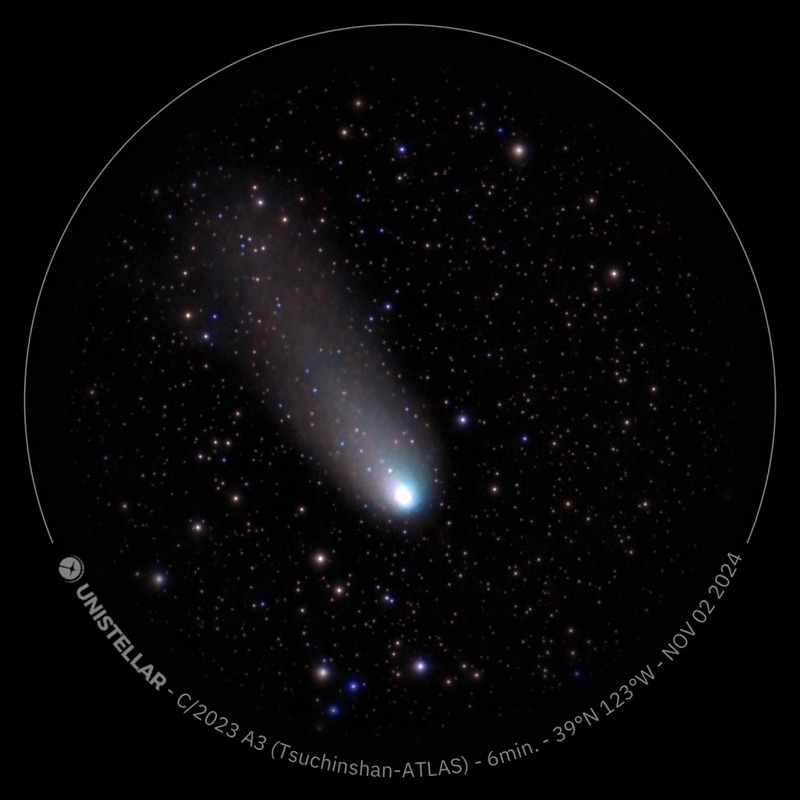
From Comet A3’s perihelion through the end of October, comet watchers worldwide participated in the SETI Institute and Unistellar Comet A3 Contest! They submitted their images on social media as entries into the contest for a chance to win swag, a Unistellar Solar Filter, and a ticket to the SETI Institute’s 40th Anniversary Celebration.
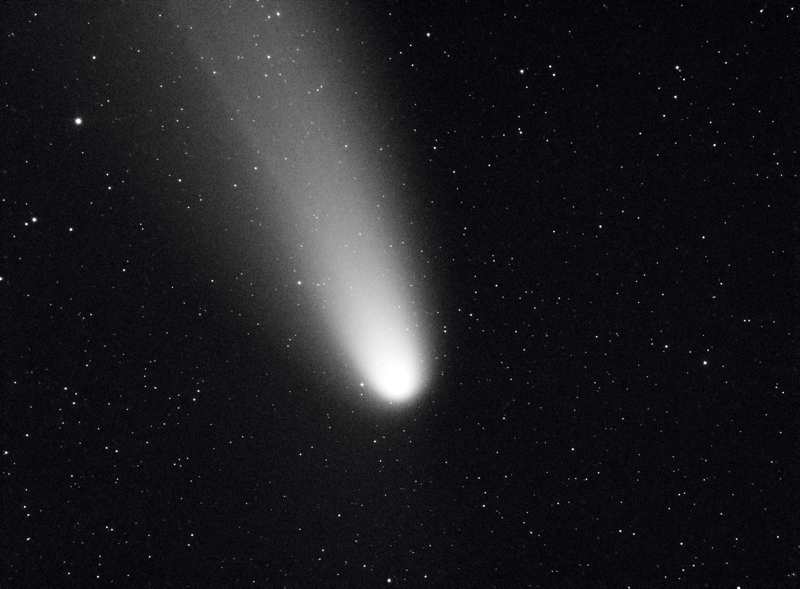
Congratulations to Scott K. (US) and Thierry G. (France)! Although the two winners were randomly selected, everyone’s images were dazzling. Some observers witnessed an even more rare sight than a naked-eye comet alone – Comet A3’s anti-tail. The anti-tail of a comet is a unique, short-lived tail that actually points toward the Sun, unlike the main tail, which points away. This happens because of the distribution and orbit of larger dust particles left behind by the comet, which align in a way that creates a “forward-facing” tail when seen from Earth at certain times.
Other observers may not have spotted the anti-tail, but they did see the shadow of the comet’s nucleus cast upon its tail! By mid October, the comet’s main tail stretched approximately 20 degrees across the sky – that’s the span of 40 moons stacked side by side!
Luckily, Comet A3’s cosmic showcase is not over, although some of these more unusual features are beginning to fade. Be sure to look up before it’s gone for good!
Observe Comet A3 with your Unistellar Telescope
You can still see Comet A3 if you’re in the Northern half of the globe! This comet is in the Unistellar App Catalog, so it is easy to observe.
To make a Science observation, visit the Comets Tutorial Page and follow the Observation section instructions for 1A: The target is in the Unistellar app’s database.
In the Recording field be sure the following information is entered:
Record duration : 20min
Exposure time : 3971ms
Gain : 25db
When you are done, don’t forget to submit a Comet Observation Report. Happy Comet Watching!
This blog post was originally published at science.unistellar.com.







News
Related News
Jun 17, 2026
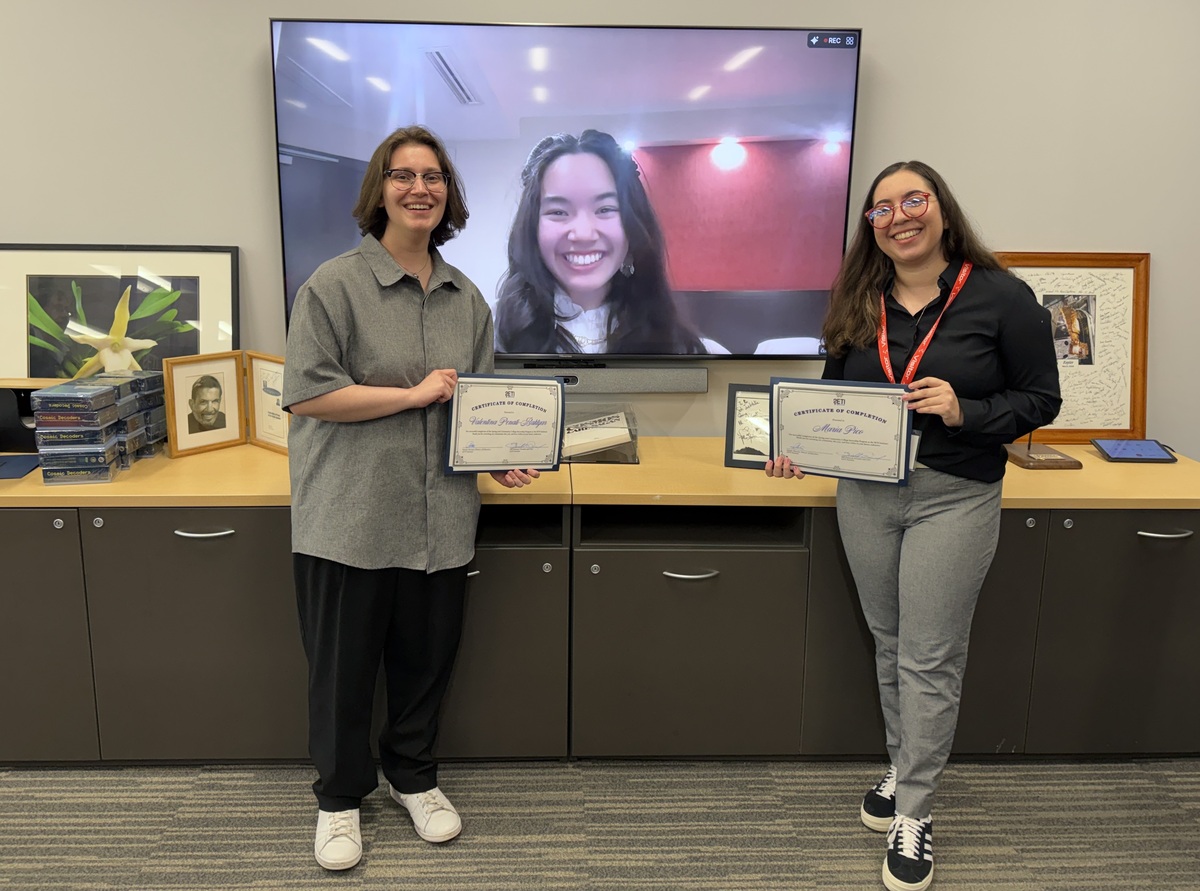
Community College Internship Program Celebrates Fourth Year of Student Research Achievement
#Community College Internship #Education #Lauren Sgro #Unistellar #Uma Gorti #Douglas Caldwell #Pamela Harman #Simon Steel
Jun 1, 2026
SETI Institute Awards $1 Million in STRIDE Grants to Advance Astrobiology, Exoplanet Science, and Public Engagement
#Press Releases #STRIDE #Research #Carl Sagan Center #Spectroscopy #Solar System #SETI #Climate and Bioscience #Astronomy #Astrobiology #Exoplanets #Data Science #Education #Outreach #Hat Creek Radio Observatory #Unistellar #SkyMapper
May 1, 2026
Asteroid Named in Honor of SETI Researcher and Communicator Seth Shostak
#Comets, Meteors, and Asteroids #Seth Shostak #SETI #Astronomy #Big Picture Science #Outreach #Andrew Fraknoi
Apr 23, 2026
SkyMapper Goes Live: Building a Real-Time, Global Network for Astronomy
SkyMapper functions as an observational infrastructure, a system that links instruments, users, and data streams. Its goal is ambitious: to continuously observe and map the entire sky. #Blog #SkyMapper #LaserSETI #SETI #Astronomy #Exoplanet Detection #Comets, Meteors, and Asteroids #Planetary Defense #Technosignatures #Franck Marchis #Lauren Sgro
Apr 3, 2026
SETI Institute In the News: March Roundup 2026
In March 2026, SETI Institute researchers contributed to a wide range of conversations about our solar system and the search for life beyond Earth. From explaining unusual features on Mars and studying meteor airbursts in Earth’s atmosphere to advancing new ways of detecting technosignatures, this work reflects how scientists are continually refining our understanding of both nearby and distant worlds. #SETI Institute in the News #SETI Institute #Community #Mars #Pascal Lee #Peter Jenniskens #Comets, Meteors, and Asteroids #Astronomy #Vishal Gajjar #SETI #AI and Machine Learning #Astrobiology #Nathalie Cabrol #Carl Sagan Center #Seth Shostak #Movie Reviews #Bill Diamond
Mar 25, 2026
From Earth to the Moon with Artemis II – And Citizen Scientists
#Artemis II #citizen science #Unistellar
Jun 17, 2026
#Community College Internship
#Education
#Lauren Sgro
#Unistellar
#Uma Gorti
#Douglas Caldwell
#Pamela Harman
#Simon Steel
Jun 1, 2026
#Press Releases
#STRIDE
#Research
#Carl Sagan Center
#Spectroscopy
#Solar System
#SETI
#Climate and Bioscience
#Astronomy
#Astrobiology
#Exoplanets
#Data Science
#Education
#Outreach
#Hat Creek Radio Observatory
#Unistellar
#SkyMapper
SETI Institute Awards $1 Million in STRIDE Grants to Advance Astrobiology, Exoplanet Science, and Public Engagement
May 1, 2026
#Comets, Meteors, and Asteroids
#Seth Shostak
#SETI
#Astronomy
#Big Picture Science
#Outreach
#Andrew Fraknoi
Asteroid Named in Honor of SETI Researcher and Communicator Seth Shostak
Apr 23, 2026
SkyMapper Goes Live: Building a Real-Time, Global Network for Astronomy
SkyMapper functions as an observational infrastructure, a system that links instruments, users, and data streams. Its goal is ambitious: to continuously observe and map the entire sky.
#Blog
#SkyMapper
#LaserSETI
#SETI
#Astronomy
#Exoplanet Detection
#Comets, Meteors, and Asteroids
#Planetary Defense
#Technosignatures
#Franck Marchis
#Lauren Sgro
Apr 3, 2026
SETI Institute In the News: March Roundup 2026
In March 2026, SETI Institute researchers contributed to a wide range of conversations about our solar system and the search for life beyond Earth. From explaining unusual features on Mars and studying meteor airbursts in Earth’s atmosphere to advancing new ways of detecting technosignatures, this work reflects how scientists are continually refining our understanding of both nearby and distant worlds.
#SETI Institute in the News
#SETI Institute
#Community
#Mars
#Pascal Lee
#Peter Jenniskens
#Comets, Meteors, and Asteroids
#Astronomy
#Vishal Gajjar
#SETI
#AI and Machine Learning
#Astrobiology
#Nathalie Cabrol
#Carl Sagan Center
#Seth Shostak
#Movie Reviews
#Bill Diamond
Mar 25, 2026
#Artemis II
#citizen science
#Unistellar
From Earth to the Moon with Artemis II – And Citizen Scientists
Research
Related Projects

SkyMapper • SETI • Citizen Science • Astronomy
SkyMapper: Expanding Access to Real-time Astronomy Through a Global Astronomical Network
SkyMapper and the SETI Institute are connecting educators, students and the public to live astronomical observations through a distributed astronomical network. #SkyMapper #SETI #Citizen Science #Astronomy
VPL
Virtual Planetary Laboratory
How can we best assess whether an exoplanet supports life? #VPL
Discovery and Futures Lab
Discovery and Futures Lab
What happens if life beyond Earth is discovered? The Discovery and Futures Lab at the SETI Institute fosters novel and anticipatory research at the intersection of science, society, our planet, and the search for life beyond Earth. #Discovery and Futures Lab
May 17, 2026
SkyMapper: Expanding Access to Real-time Astronomy Through a Global Astronomical Network
SkyMapper and the SETI Institute are connecting educators, students and the public to live astronomical observations through a distributed astronomical network.
#SkyMapper
#SETI
#Citizen Science
#Astronomy
May 5, 2026
Virtual Planetary Laboratory
How can we best assess whether an exoplanet supports life?
#VPL
Apr 16, 2026
Discovery and Futures Lab
What happens if life beyond Earth is discovered? The Discovery and Futures Lab at the SETI Institute fosters novel and anticipatory research at the intersection of science, society, our planet, and the search for life beyond Earth.
#Discovery and Futures Lab
Support Us
Support the
SETI Institute
Scientists are getting closer in their search for life beyond earth. But with limited federal funding for the search for extraterrestrial intelligence, supporters are the reason cutting-edge scientists can keep their eyes on the sky.
