)


Applications for the Mino Fellowship 2026 are now closed.
The SETI Institute is pleased to announce the call for applications to the Mino Postdoctoral Fellowship. This research program offers an exceptional opportunity for talented early career scientists worldwide to contribute significant advances in the following fields:
- Origins of life and prebiotic chemistry
- Biophysics and the nature of life
- Planetary habitability and environmental limits on life
- Coevolution of life and planetary environments across spatiotemporal scales
- Modeling and theory of life-environment systems
- Comparative studies of Earth, solar system worlds, and exoplanets
- AI/ML applied to origins, nature of life, and habitability research
The successful candidate will advance...
(i) their field in novel ways using one, or a combination of the following approaches: advanced data analytics, novel instruments and technologies, laboratory research, fieldwork and expeditions, ground and space-based telescopes, theory, modeling, and experimentation; and
(ii) the mission of the SETI Institute: to lead humanity’s quest to understand the origins and prevalence of life and intelligence in the universe and share that knowledge with the world.
Timeline for the 2026 Fellowship:
| November 20, 2025 | Accepting applications. |
| January 16, 2026 | Applications are due. |
| May 1, 2026 | Candidates selected for interviews will be notified. |
The SETI Institute is a world-renowned multidisciplinary institute studying the universe, its habitability and potential for life, intelligence, and consciousness to emerge beyond Earth, and what can be learned from these studies about humanity’s place and role on our planet.
The SETI Institute hosts over 110 researchers in the Carl Sagan Center (CSC) for Research. They specialize in theoretical studies and modeling, planetary missions, terrestrial analogs to planetary environments, laboratory experiments, cutting-edge ground and space-based telescopic research, and education and outreach programs. Their expertise covers a wide range of fields organized in seven research divisions:
- Astrobiology
- Astronomy & Astrophysics
- Data Science
- Exoplanets
- Heliophysics
- Planetary Exploration
- SETI Intelligence and Technosignatures
In addition to the CSC, the Center for Education and the Center for Communication and Outreach focus on STEM engagement. The Center for Education develops programs and resources for students and educators, while the Center for Outreach disseminates information to the broader public and fosters public interest through events, online content and social media.
The SETI Institute’s prime location in Silicon Valley offers exceptional opportunities for Fellows to engage with top research scientists as well as distinguished experts in the tech industry, including the collaborations for the development of AI solutions for research projects.
The Mino Fellowship is a full-time, two-year program, with an option for a one-year extension based upon approval. Applicants must have a PhD in a relevant field by the start of the Fellowship, and a proven track record of research. Working at the SETI Institute headquarters, although not mandatory, is preferred. Hybrid options can be discussed.
Application Process
Candidates must submit a relevant and compelling research project, and three contacts for letters of recommendation. Details about the application process are provided on the "Apply" tab of this page.
A yearly $85,000 stipend and allowances will be provided to cover research-related expenses and conference attendance. The Fellow will also receive comprehensive medical, dental, and vision benefits, including flexible spending and HDHP (Health Saving Account). For a full benefits summary, please contact Arminé Saroian, Director, SETI Institute Human Resources at: [email protected]
Title
Fellows receive the title of SETI Institute Mino Postdoctoral Fellow. This research bearing the name of Minoru Freund represents a commitment to excellence and to imaginative, cross-disciplinary, and daring approaches that advance our understanding of life, habitability, and the coevolution of worlds.
The Fellowship encourages creativity and independence, aiming to foster groundbreaking discoveries among the next generation of researchers in collaboration with leaders in the field. Fellows will be granted access to (i) a dynamic community of researchers that will further collaboration and project development, including mentorship in education projects, and (ii) state-of-the-art facilities, including those of SETI Institute partners. In addition to conducting research, Fellows will have the opportunity to meet with some of the top technologists in Silicon Valley to expand their professional skills.
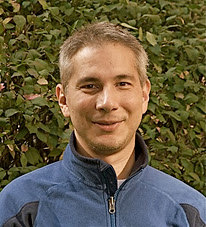
Minoru Freund (February 3, 1962 – January 17, 2012) was an accomplished physicist whose work crossed boundaries. He led pioneering efforts in nanoscale materials and neuroscience at NASA Ames Research Center, and contributed earlier to projects at NASA Goddard Space Flight Center, the Air Force Research Lab, and the SETI Institute, always seeking the next frontier in knowledge. He held a PhD from the Swiss Institute of Technology in Zürich (1990). Beyond his technical skills, Mino was celebrated for his capacity to imagine science differently, to look for connections between fields others kept apart, and to ask daring questions about life, environment, and intelligence.
|
By Friedemann Freund and Hisako Matsubara |
By Alan Weston and Robert Dumais |
Mino in Japan: The Infrared Telescope in Space By Michael D. Bicay |



Q: Is it necessary to be physically based at the SETI Institute or is it possible to work from another location?
A: Working at the SETI Institute in Mountain View, CA, although not mandatory, is preferred. There is the possibility of working remotely, but the Fellow must spend at least some time at the SETI Institute. The amount of time can be discussed.
Questions?
Applicants who have questions regarding the relevance of their research to one of more of the Research Divisions at the SETI Institute can contact the SETI Institute Science Council:
- Science Council Chair & CSC Director
Dr. Nathalie A. Cabrol: [email protected] - Astrobiology Chair
Dr. Kimberley Warren Rhodes: [email protected] - Astronomy & Astrophysics Chair
Dr. Uma Gorti: [email protected] - Data Science Chair
Dr. Jeffrey Smith: [email protected] - Exoplanets Chair
Dr. Douglas Caldwell: [email protected] - Heliophysics Chair
Dr. Juan Martínez-Sykora: [email protected] - Planetary Exploration Chair
Dr. Janice Bishop: [email protected] - SETI Chair
Dr. Chenoa Tremblay: [email protected]
For astrobiology applied to Earth’s environmental change, please contact Dr. Nathalie A. Cabrol: [email protected]
Connect with us on social media (@setiinstitute)
News
Mino Postdoctoral Fellowship
Nov 20, 2025
SETI Institute Invites Applications for the 2026 Mino Postdoctoral Fellowship
#Press Releases #Mino Fellowship #Postdoctoral Fellowships
Nov 20, 2025
#Press Releases
#Mino Fellowship
#Postdoctoral Fellowships