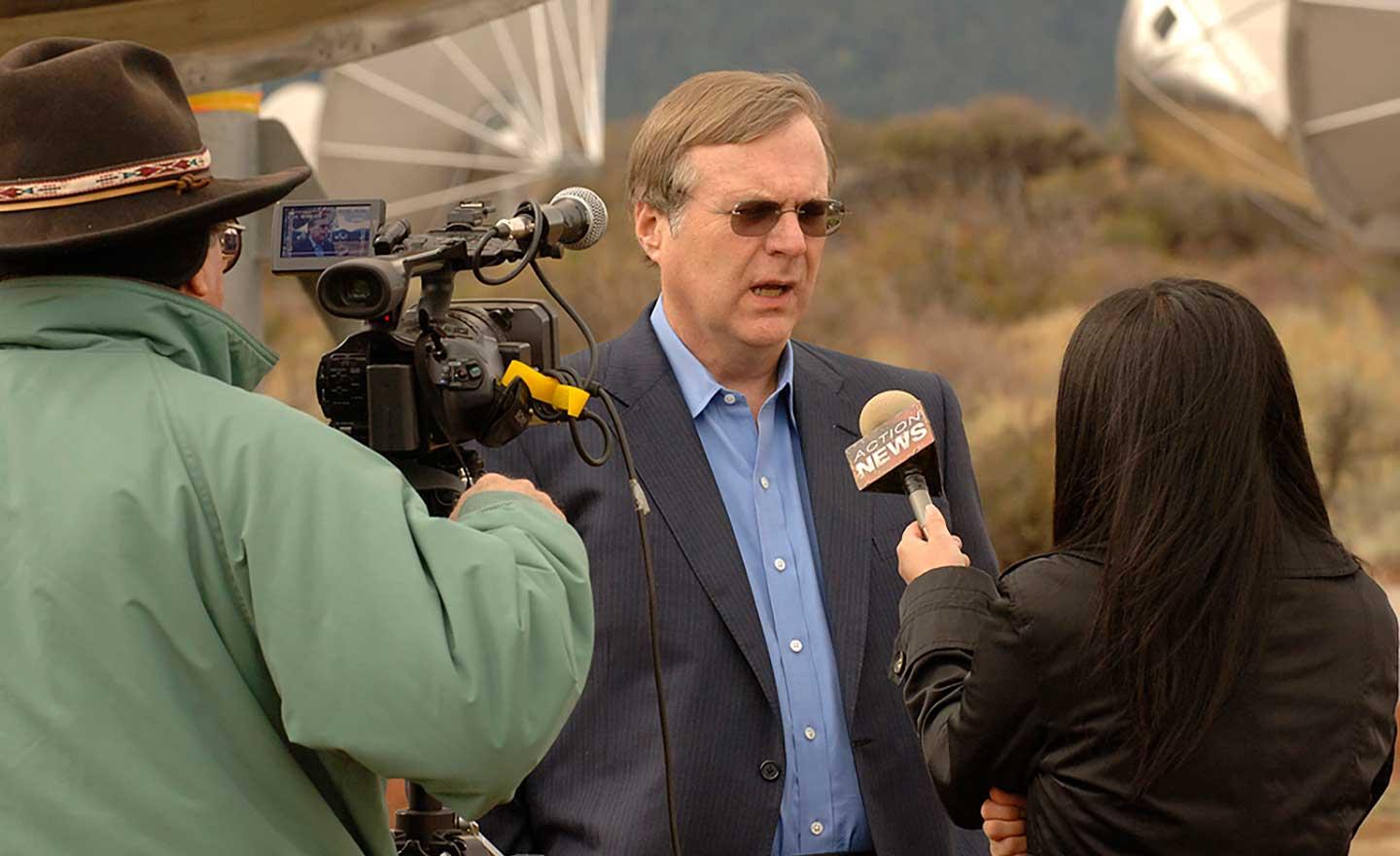









Paul Allen at the christening of the Allen Telescope Array in 2007
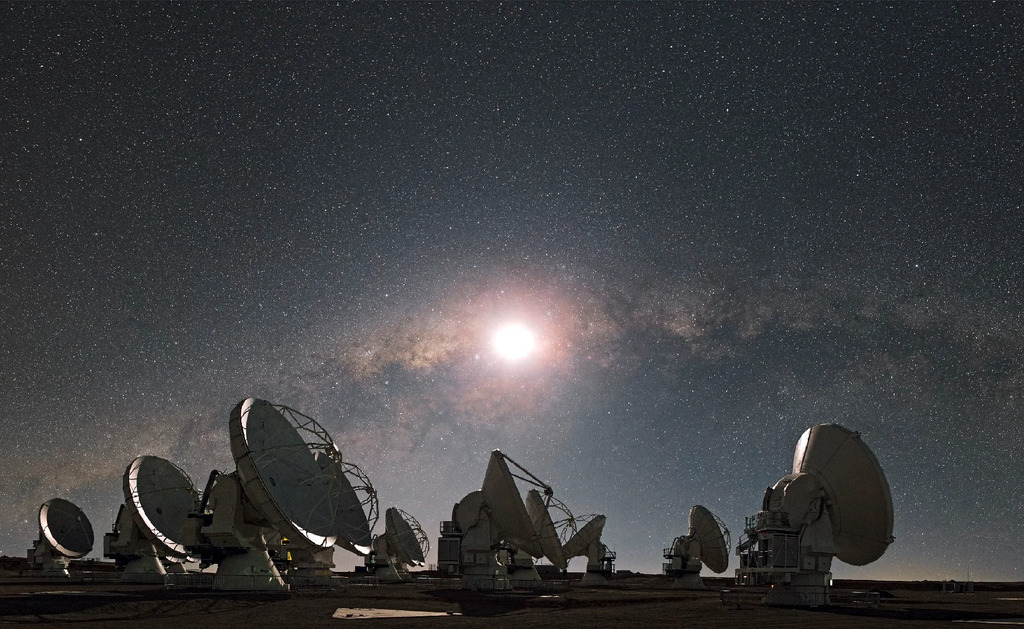
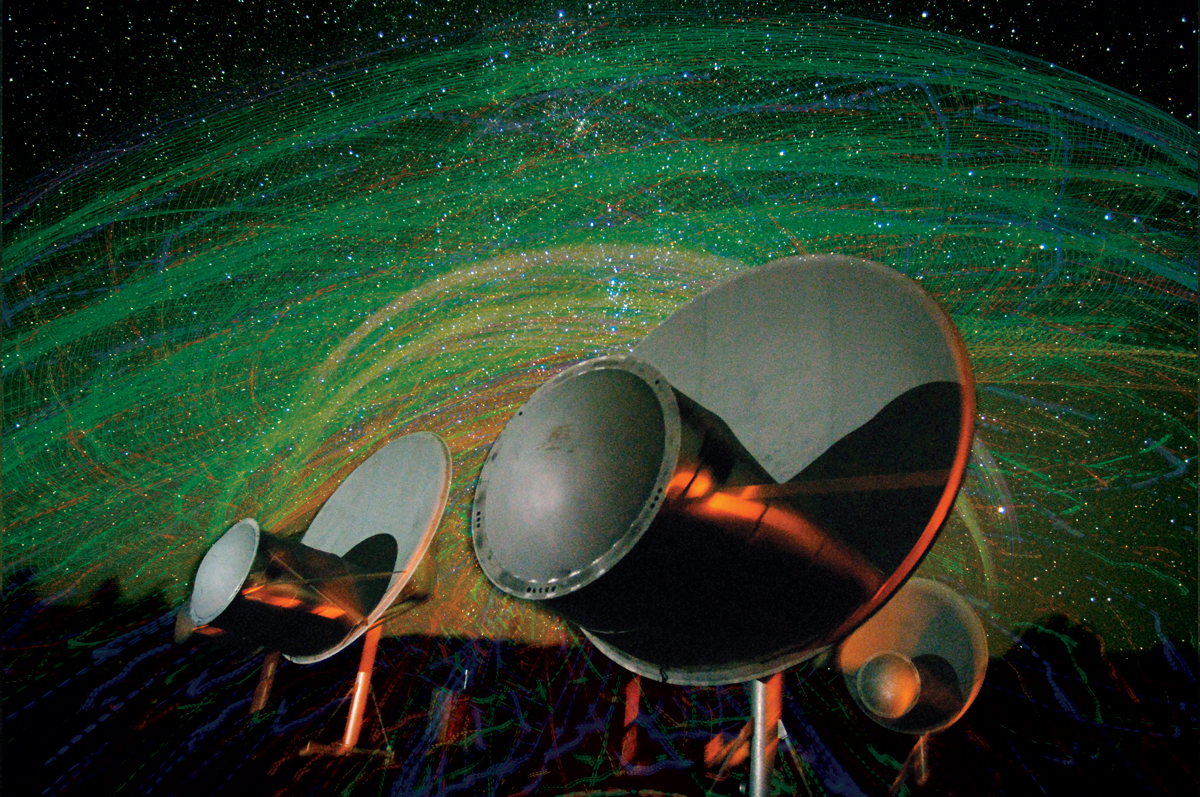
Allen was inextricably involved with the SETI Institute’s efforts to hunt for radio signals coming from extraterrestrial transmitters, funding the research and development of the Allen Telescope Array. This namesake instrument, located in northern California and comprising 42 individual antennas, is used by the Institute every day to search for narrow-band signals coming from the vicinities of other star systems.
In addition to his support of the array that bears his name, Paul Allen joined with Bill Hewlett, David Packard, and Gordon Moore in providing the monies that were so important to keeping the Institute’s SETI efforts afloat following the cancellation of the NASA SETI project in 1993.
Allen gained early fame in the tech sector by co-founding the Microsoft Corporation with Bill Gates in 1975. A subsequent bout with Hodgkins disease compelled him to withdraw from that enterprise. However, he continued to initiate and finance other technology endeavors, as well as foundations that did important research in neuroscience, biology, and artificial intelligence.
Allen also had intense interest in activities beyond technology and science, including sports: He owned the Seattle Seahawks and the Portland Trailblazers. His attraction to popular music and cinema science fiction led him to fund – and largely furnish – the Museum of Pop Culture in Seattle.
In 2007, at the dedication of the Allen Telescope Array in Hat Creek, California, Allen stated that he was particularly drawn to scientific endeavors that had become more attractive thanks to new developments in technology. There is hardly any better example of such synergy than SETI research.
News
Related News
Beyond Disclosure Day: The Real-World Protocols
#Press Releases #SETI #Astronomy #Bill Diamond #SETI Institute
SETI Institute In the News: May Roundup 2026
#SETI Institute in the News #SETI Institute #Community #Solar System #Matija Ćuk #Neptune #SETI #Bill Diamond #UAPs #Drake Awards #Lori Marino #Matthew Tiscareno #Outreach #Exoplanets #Carl Sagan Center
SETI Institute Looks for Signs of Technology in Interstellar Visitor 3I/ATLAS
Observations with the Allen Telescope Array set new limits on possible signals from extraterrestrial transmitters. #Press Releases #ATA #3I/ATLAS #Hat Creek Radio Observatory #Radio Astronomy #SETI
SETI Institute Awards $1 Million in STRIDE Grants to Advance Astrobiology, Exoplanet Science, and Public Engagement
#Press Releases #STRIDE #Research #Carl Sagan Center #Spectroscopy #Solar System #SETI #Climate and Bioscience #Astronomy #Astrobiology #Exoplanets #Data Science #Education #Outreach #Hat Creek Radio Observatory #Unistellar #SkyMapper
Celebrating Frank Drake
#Frank Drake #SETI #Project Ozma #Drake Equation #SETI Institute
SETI Institute In the News: April Roundup 2026
#SETI Institute in the News #SETI Institute #Community #SETI #Discovery and Futures Lab #Lucian Walkowicz #Chelsea Haramia #NASA Missions and Observatories #Pascal Lee #Mars #Janice Bishop #Mark Showalter #JWST #Uranus #Bill Diamond #UAPsResearch
Related Projects
SkyMapper: Expanding Access to Real-time Astronomy Through a Global Astronomical Network
SkyMapper and the SETI Institute are connecting educators, students and the public to live astronomical observations through a distributed astronomical network. #SkyMapper #SETI #Citizen Science #Astronomy
Virtual Planetary Laboratory
How can we best assess whether an exoplanet supports life? #VPL
Discovery and Futures Lab
What happens if life beyond Earth is discovered? The Discovery and Futures Lab at the SETI Institute fosters novel and anticipatory research at the intersection of science, society, our planet, and the search for life beyond Earth. #Discovery and Futures LabSupport the
SETI Institute
Scientists are getting closer in their search for life beyond earth. But with limited federal funding for the search for extraterrestrial intelligence, supporters are the reason cutting-edge scientists can keep their eyes on the sky.