)

Tuesday, Apr 05, 2022
By Beth Johnson
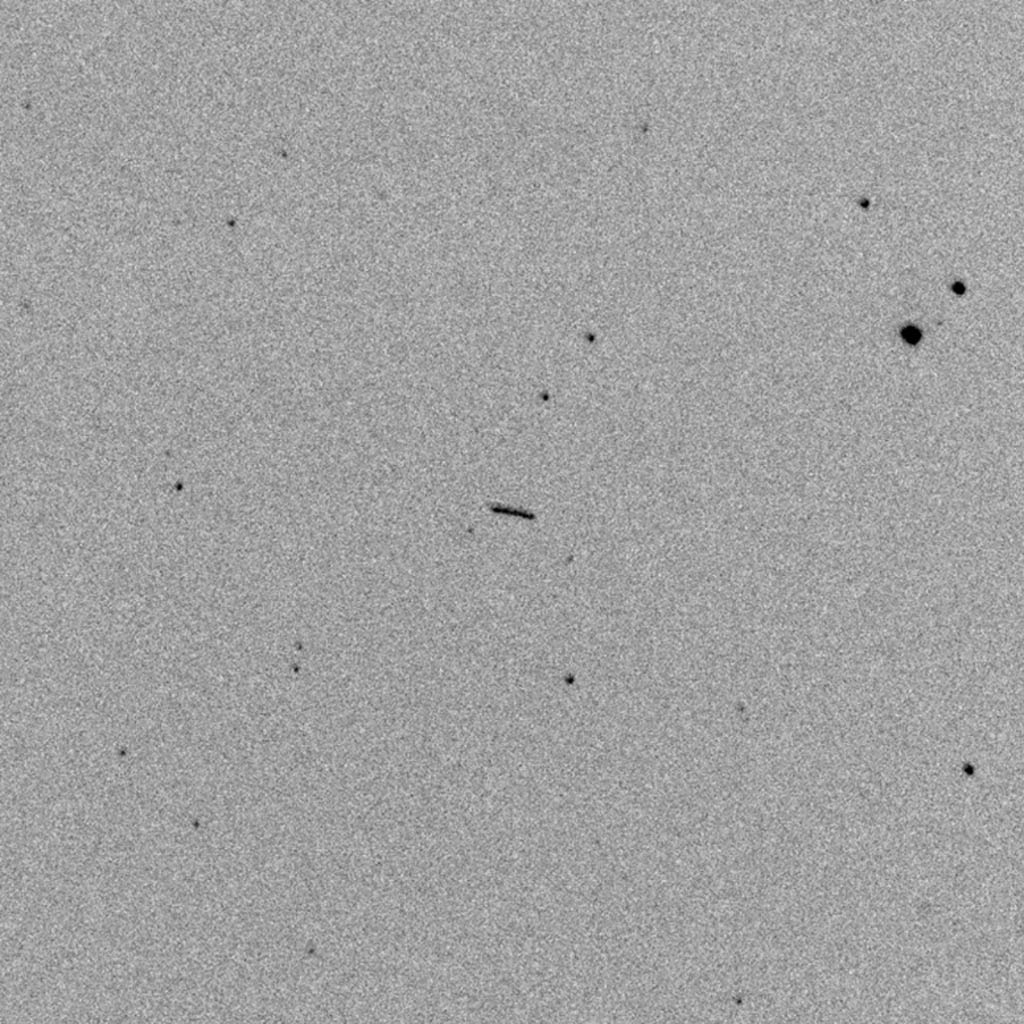
In news that is almost straight out of Don’t Look Up but far less horrifying, an astronomer in Poland detected an asteroid on March 11. The small asteroid, only about a meter in diameter, impacted the Earth to the northeast of Iceland less than two hours after discovery.
This object, now designated asteroid 2022 EB5, is only the fifth asteroid detected before impact. That’s actually kind of a good thing. While the Earth is constantly bombarded by space debris from asteroids and comets, most of that debris is very small, usually dustlike particles. Larger objects in the range of 2022 EB5 are only expected to strike Earth about ten times per year. But they are small and usually difficult to spot until they get pretty close. They also pose no threat to Earth because of their small size, so yay.
Detecting these smaller objects takes the global astronomical community, too. After Krisztián Sárneczky first discovered the object, he reported it to the Minor Planet Center, which sent out alerts to the observational community. At first, the impact chance was estimated to be less than 1%, but as more observations were taken by both Krisztián and other observers, the percentage shot up to 100%.
One of the systems triggered by the object was the European Space Agency’s “Meerkat” monitoring system. That system sent another alert to the ESA’s Near-Earth Objects Coordination Centre, which further disseminated the information to the astronomical community. Again, the asteroid was difficult to observe as it was less than 50,000 kilometers away and moving quickly across the sky.
Sadly, due to the remote location of the impact, no visual evidence was collected. The main confirmation came from infrasound detectors in Greenland and Iceland that recorded the impact, estimated to have released the same amount of energy as two to three kilotons of TNT. That energy correlates to an object about 3–4 meters in diameter, meaning the asteroid was bigger than originally thought, but that could just be a result of the measurement uncertainties.
While this is only the fifth small object detected before impact, it is also the fifth detected since 2008. Our detection technology is improving year over year, and we expect more stories like this one in the future.
More Information
ESA press release
This story was written for the Daily Space podcast/YouTube series. Want more news from myself, Dr. Pamela Gay, and Erik Madaus? Check out DailySpace.org.
This article was originally published by Beth Johnson on medium.com.







News
Related News
Jul 10, 2026
A Remarkably Ancient Visitor: 3I/ATLAS
#3I/ATLAS #Comets, Meteors, and Asteroids #JWST
May 1, 2026
Asteroid Named in Honor of SETI Researcher and Communicator Seth Shostak
#Comets, Meteors, and Asteroids #Seth Shostak #SETI #Astronomy #Big Picture Science #Outreach #Andrew Fraknoi
Apr 23, 2026
SkyMapper Goes Live: Building a Real-Time, Global Network for Astronomy
SkyMapper functions as an observational infrastructure, a system that links instruments, users, and data streams. Its goal is ambitious: to continuously observe and map the entire sky. #Blog #SkyMapper #LaserSETI #SETI #Astronomy #Exoplanet Detection #Comets, Meteors, and Asteroids #Planetary Defense #Technosignatures #Franck Marchis #Lauren Sgro
Apr 3, 2026
SETI Institute In the News: March Roundup 2026
In March 2026, SETI Institute researchers contributed to a wide range of conversations about our solar system and the search for life beyond Earth. From explaining unusual features on Mars and studying meteor airbursts in Earth’s atmosphere to advancing new ways of detecting technosignatures, this work reflects how scientists are continually refining our understanding of both nearby and distant worlds. #SETI Institute in the News #SETI Institute #Community #Mars #Pascal Lee #Peter Jenniskens #Comets, Meteors, and Asteroids #Astronomy #Vishal Gajjar #SETI #AI and Machine Learning #Astrobiology #Nathalie Cabrol #Carl Sagan Center #Seth Shostak #Movie Reviews #Bill Diamond
Mar 20, 2026
SETI Live: Unistellar + Citizen Science (Part 8)
#Blog #Unistellar #Citizen Science #Lauren Sgro #Franck Marchis #Astronomy #NASA Missions and Observatories #SETI Institute #Comets, Meteors, and Asteroids #Artemis II #3I/ATLAS
Jan 22, 2026
2025 in Citizen Science – The Biggest Year Yet!
#Unistellar #Astronomy #Exoplanets #3I/ATLAS #Comets, Meteors, and Asteroids #Planetary Defense #Community
Jul 10, 2026
#3I/ATLAS
#Comets, Meteors, and Asteroids
#JWST
May 1, 2026
#Comets, Meteors, and Asteroids
#Seth Shostak
#SETI
#Astronomy
#Big Picture Science
#Outreach
#Andrew Fraknoi
Asteroid Named in Honor of SETI Researcher and Communicator Seth Shostak
Apr 23, 2026
SkyMapper Goes Live: Building a Real-Time, Global Network for Astronomy
SkyMapper functions as an observational infrastructure, a system that links instruments, users, and data streams. Its goal is ambitious: to continuously observe and map the entire sky.
#Blog
#SkyMapper
#LaserSETI
#SETI
#Astronomy
#Exoplanet Detection
#Comets, Meteors, and Asteroids
#Planetary Defense
#Technosignatures
#Franck Marchis
#Lauren Sgro
Apr 3, 2026
SETI Institute In the News: March Roundup 2026
In March 2026, SETI Institute researchers contributed to a wide range of conversations about our solar system and the search for life beyond Earth. From explaining unusual features on Mars and studying meteor airbursts in Earth’s atmosphere to advancing new ways of detecting technosignatures, this work reflects how scientists are continually refining our understanding of both nearby and distant worlds.
#SETI Institute in the News
#SETI Institute
#Community
#Mars
#Pascal Lee
#Peter Jenniskens
#Comets, Meteors, and Asteroids
#Astronomy
#Vishal Gajjar
#SETI
#AI and Machine Learning
#Astrobiology
#Nathalie Cabrol
#Carl Sagan Center
#Seth Shostak
#Movie Reviews
#Bill Diamond
Mar 20, 2026
#Blog
#Unistellar
#Citizen Science
#Lauren Sgro
#Franck Marchis
#Astronomy
#NASA Missions and Observatories
#SETI Institute
#Comets, Meteors, and Asteroids
#Artemis II
#3I/ATLAS
SETI Live: Unistellar + Citizen Science (Part 8)
Jan 22, 2026
#Unistellar
#Astronomy
#Exoplanets
#3I/ATLAS
#Comets, Meteors, and Asteroids
#Planetary Defense
#Community
2025 in Citizen Science – The Biggest Year Yet!
Research
Related Projects

SkyMapper • SETI • Citizen Science • Astronomy
SkyMapper: Expanding Access to Real-time Astronomy Through a Global Astronomical Network
SkyMapper and the SETI Institute are connecting educators, students and the public to live astronomical observations through a distributed astronomical network. #SkyMapper #SETI #Citizen Science #Astronomy
VPL
Virtual Planetary Laboratory
How can we best assess whether an exoplanet supports life? #VPL
Discovery and Futures Lab
Discovery and Futures Lab
What happens if life beyond Earth is discovered? The Discovery and Futures Lab at the SETI Institute fosters novel and anticipatory research at the intersection of science, society, our planet, and the search for life beyond Earth. #Discovery and Futures Lab
May 17, 2026
SkyMapper: Expanding Access to Real-time Astronomy Through a Global Astronomical Network
SkyMapper and the SETI Institute are connecting educators, students and the public to live astronomical observations through a distributed astronomical network.
#SkyMapper
#SETI
#Citizen Science
#Astronomy
May 5, 2026
Virtual Planetary Laboratory
How can we best assess whether an exoplanet supports life?
#VPL
Apr 16, 2026
Discovery and Futures Lab
What happens if life beyond Earth is discovered? The Discovery and Futures Lab at the SETI Institute fosters novel and anticipatory research at the intersection of science, society, our planet, and the search for life beyond Earth.
#Discovery and Futures Lab
Support Us
Support the
SETI Institute
Scientists are getting closer in their search for life beyond earth. But with limited federal funding for the search for extraterrestrial intelligence, supporters are the reason cutting-edge scientists can keep their eyes on the sky.
